WORK SETTINGS / 04Work settings

Manufacturing Plant Accident Lawyer

  • Updated November 10, 2026
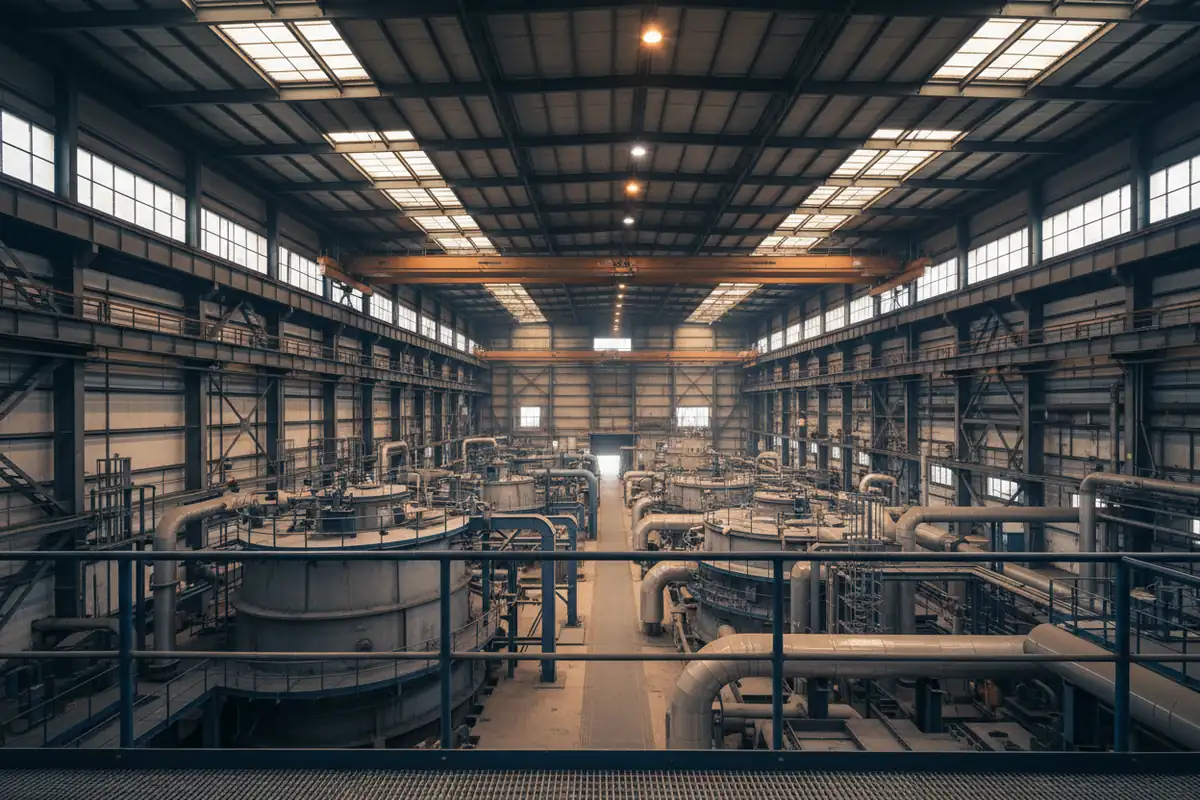
A wide manufacturing plant floor with idle process vessels and pipe runs below a catwalk.
Immediate answer

Hurt at a plant where several companies work? Who may be answerable by type, three OSHA rules for shared sites, the records that matter, and why state law decides.

On this page
  1. Key Takeaways
  2. When a Plant Injury May Involve More Than Your Employer
  3. How Manufacturing Plant Accidents Happen — and What the Regulations Require
  4. Who May Be Responsible When You Are Hurt at a Plant
  5. Records That Often Matter in a Plant Injury Case
  6. Plant Injuries and the Damages State Law May Allow
  7. Filing Deadlines and Fault Rules Under Each State's Law
  8. What Injured Workers Often Weigh Before a Claim
  9. Frequently asked questions
  10. Sources

If you were hurt at a manufacturing plant where several companies work, your employer's workers' compensation is often not the only question. An outside contractor, a maintenance company, an equipment maker or the plant's owner, when it is not your employer, may be answerable under injury law, depending on the facts.

Most people facing a serious plant injury arrive at a page like this in the middle of something hard: a hospital stay or a long recovery, paychecks that have stopped or shrunk, and a growing stack of forms. If you were on a line, a platform or a maintenance job when it happened, you may not even know which company's crew started the machine, set up the chemical, or left the edge open. Families after a death carry all of that and grief on top of it. This page explains how these cases are usually understood in law: who may be responsible on a shared plant site, which federal safety rules often come into it, the records that tend to matter, and why the state and the facts decide so much.

Key Takeaways

A large plant is rarely one company. The employer who signs a worker's paycheck may share the site with the plant's owner or operator, outside contractors, a maintenance company, and the makers of the equipment and chemicals in use. Each of them may be answerable under a different legal theory, and none is answerable simply because it was present.

  • Workers' compensation generally addresses an employer's responsibility, and in most states it is the main route against the employer itself. A claim against a company that is not the employer usually follows ordinary injury law instead.
  • Federal OSHA standards set duties on covered worksites, including the hazard communication standard, 29 C.F.R. § 1910.1200(a), the lockout/tagout rule for outside servicing personnel, 29 C.F.R. § 1910.147(f)(2), and fall protection at unprotected edges, 29 C.F.R. § 1910.28(b)(1).
  • A regulation existing, or even being broken, does not by itself show that anyone was at fault. Whether the legal elements are met depends on what happened.
  • Limitation periods, fault rules and damages rules differ from state to state. No single national rule governs.

In a plant case, the question "who was where, doing what, under whose control" often matters more than in almost any other kind of injury case. It shapes which records are worth gathering and which legal theories may fit.

When a Plant Injury May Involve More Than Your Employer

Workers' compensation is a system, set by each state, that generally provides benefits to an injured worker from the employer's side without the worker having to prove fault. In most states it is also the exclusive remedy against the employer, meaning a worker usually cannot bring an ordinary lawsuit against the employer itself. That exclusivity generally does not extend to other companies. Those rules differ by state, and this page names none of them.

A claim against a company other than the employer is usually called a third-party claim. On a large plant site, the possible third parties often include the plant's owner or operator, when it is a separate company from the employer; one or more outside contractors or maintenance companies; and the companies that made or sold the equipment, machinery or chemicals involved.

Third-party claims follow tort law, the body of law that decides when one person or company must answer for harm to another. Three branches come up most often in plant cases.

  • Negligence means a failure to use reasonable care. A negligence claim generally asks whether a company owed a duty of care, whether it breached that duty, whether the breach caused the injury, and what damages resulted.
  • Products liability is the law that applies when a product is claimed to be defective and that defect is claimed to have caused an injury.
  • Premises liability is the law that applies to the condition of property, and to the duties of those who own or control it toward people lawfully there.

For a worker on a shared site, the injury may be looked at in two ways at once: through workers' compensation on the employer's side, and through tort law against anyone else whose conduct or equipment played a part. Whether a third-party claim exists depends on who controlled the hazard and what duty each company owed. That is why a list of every company remembered on site that day, what each was doing, and whose equipment was in use can be a useful starting point.

How Manufacturing Plant Accidents Happen — and What the Regulations Require

Plant injuries tend to cluster around a few kinds of hazards: process equipment that starts or releases energy while someone is servicing it, elevated platforms and walkways with open sides, chemicals that are handled or stored nearby, and the gaps that open when crews from different companies work on the same machine. Federal standards speak to each of these.

Chemicals on site. The purpose of the hazard communication standard, 29 C.F.R. § 1910.1200(a), is to ensure that the hazards of all chemicals produced or imported are classified, and that information about those classified hazards is transmitted to employers and employees, through programs that include container labeling and other forms of warning, safety data sheets and employee training. According to OSHA's hazard communication page, chemical manufacturers and importers are required to evaluate the hazards of the chemicals they produce or import and prepare labels and safety data sheets for their downstream customers, and all employers with hazardous chemicals in their workplaces must have labels and safety data sheets for exposed workers and train them to handle the chemicals appropriately. On a shared plant, hazard information is supposed to travel from the chemical's maker, to the companies using it, to the workers near it, so the questions of who supplied the chemical and who was responsible for its labels and training often come up.

Servicing and lockout. The lockout/tagout standard covers servicing and maintenance of machines where unexpected start-up or release of stored energy could injure employees. Under 29 C.F.R. § 1910.147(f)(2), whenever outside servicing personnel do work covered by the standard, the on-site employer and the outside employer must inform each other of their lockout or tagout procedures, and the on-site employer must ensure its own employees understand and comply with the restrictions and prohibitions of the outside employer's energy control program. This rule is built for exactly the moment when two companies' crews meet at one machine, which makes whose crew was servicing the equipment, and whose lockout procedure was in use, central facts.

Platforms and edges. Under 29 C.F.R. § 1910.28(b)(1), except as provided elsewhere in that section, the employer must ensure that each employee on a walking-working surface with an unprotected side or edge 4 feet or more above a lower level is protected from falling by one or more of guardrail systems, safety net systems, or personal fall protection systems such as personal fall arrest, travel restraint or positioning systems. On a plant with mezzanines and catwalks, the height of the edge and the protection in place both matter, as does who installed, removed or maintained the guardrail or fall equipment at that spot.

A standard does not by itself show that anyone was at fault. Whether its requirements applied, whether they were met, and whether a failure caused the injury all depend on the facts.


Who May Be Responsible When You Are Hurt at a Plant

Families often ask the same thing first: if the employer is covered by workers' compensation, who else is there? The answer is described here by type of company, never by name.

The plant's owner or operator, when it is not the employer. Premises liability may apply to a company that owns or controls the plant. In general terms, it concerns the duty to keep the property in a reasonably safe condition for people lawfully working there. What that duty requires, and toward whom, varies by state and by how much control the owner kept over the area where the injury happened.

An outside contractor or maintenance company. Negligence is the usual theory here: duty, breach, causation and damages. A maintenance crew that serviced a machine, a contractor that removed a guardrail for its own work, or a crew that coordinated lockout with the host employer may each be looked at under those elements. Contractor negligence as a topic of its own is outside this page.

The maker or seller of equipment. Products liability may apply where a machine, guard, control or other product is claimed to be defective. An injury does not prove a defect. Whether a defect existed and caused the harm depends on the facts, and often on the product itself.

A chemical manufacturer or importer. Within the hazard communication framework described above, these companies classify hazards and prepare labels and safety data sheets for downstream users. Whether that duty was met, and whether any shortfall contributed to an injury, is a factual question.

Comparative fault is the rule that divides responsibility among the people and companies involved, sometimes including the injured worker. Some states reduce what a person may recover by their share of fault; others bar recovery once that share passes a threshold. Those rules differ by state.

More than one of these types may be in the picture at once. A conversation with an attorney can walk through which of these companies controlled what you were working on or near.

Records That Often Matter in a Plant Injury Case

Paperwork is usually the last thing anyone wants to think about after a serious injury, yet in a plant case the records often carry the story of which company did what. The records that usually matter include:

  • Incident reports from the employer, the plant operator or a contractor, and any OSHA inspection records.
  • Medical records documenting the injury, the treatment and the course of recovery.
  • Photos and video of the scene, showing the equipment's condition, the location of the hazard, guarding, edges and signage.
  • The equipment, chemical or product involved, with its labels, safety data sheets and maintenance or service logs.
  • Contracts, work orders and sign-in records showing which companies were on site and what each was responsible for.
  • The names and contact information of coworkers and other witnesses.

Federal law also gives workers certain rights to information. OSHA's worker rights page lists, among others, the right to report an injury or illness and get copies of your medical records, to review records of work-related injuries and illnesses, to see results of tests taken to find workplace hazards, and to request an OSHA inspection and speak to the inspector.

On a multi-employer site, the contracts and work orders can be as important as the photos, because they may show whose job a task was. Injured workers and families often gather what they can reach themselves and note what others hold, such as a contractor's service logs. A consultation can cover which of these records exist in your situation and who has them.

Plant Injuries and the Damages State Law May Allow

Plant accidents can cause crush injuries, fractures, traumatic brain injury, spinal injuries, injuries from falls from elevation, and hearing loss from industrial noise. These are described here only in general terms, and this page gives no medical advice. Burn injuries are outside this page.

Damages are the categories of loss the law may allow a person to recover in a tort claim. They generally fall into two groups.

  • Economic damages are measurable financial losses, such as medical expenses, lost wages, and loss of future earning capacity when an injury affects the ability to work in the years ahead.
  • Non-economic damages address harm that has no receipt, such as pain and suffering, and loss of consortium, which is the loss of companionship and support a spouse or family member suffers because of the injury.

Wrongful death is a claim, created by each state's statute, that allows certain surviving family members to bring a case when a person dies because of another's wrongful conduct. Who may bring it, and what it may cover, differ by state.

Whether any of these categories applies, and what it may amount to, depends on the facts and on the law of the state involved. Workers' compensation benefits run under their own separate rules, and no amount or outcome is assured. For a family weighing medical bills against lost income, the practical difference is this: a loss such as a spouse's lost companionship generally has no place in a workers' compensation benefit, while a third-party claim may be the route where that kind of loss is considered at all.

Filing Deadlines and Fault Rules Under Each State's Law

Two questions run through everything in a plant case: which state's law applies, and who controlled what on the day of the injury.

A statute of limitations is the deadline set by law for filing a lawsuit. Limitation periods differ by state, and so do the rules on when the period starts to run and what exceptions apply. Claims against different kinds of defendants, or claims for wrongful death, may carry different deadlines. This page states no state's deadline and cannot say how much time anyone has.

Fault rules also differ. Under comparative fault, some states reduce recovery in proportion to the injured person's share; others bar recovery above a set threshold. A few states follow contributory fault, a stricter approach. Damages rules, including any caps on certain categories, and wrongful-death rules vary as well.

In practical terms, a deadline that runs against one company can close off a claim against it even while a claim against another company remains open, and a company left out entirely may never be part of the case. Because the deadlines depend on the state and the type of defendant, the dates, the state where the injury happened and the companies involved are all part of a case evaluation.

What Injured Workers Often Weigh Before a Claim

A workers' compensation claim and a third-party claim can often run side by side in many states. How they interact differs by state, including subrogation, which is the right of a workers' compensation payer to be repaid from a third-party recovery, and offsets between the two. That interaction can affect what a third-party claim means in practice.

Timing matters in a second way. A plant keeps operating after an injury, and the condition of a machine or a platform on the day may later be documented only in photos, logs and the memories of the people who were there. Injured workers and families often think early about where those records and those people are.

The identity of every company on site is a factual question in its own right. Badges, work orders, crew names and equipment labels can help tell one company from another, and that answer shapes which companies may be named in a claim. What is already known, what is remembered only partly, and what someone else holds are often worth sorting early.

This page is about large plants where several companies share the work. It does not cover injuries on an ordinary factory floor, which are discussed on the site's factory injury page, or contractor negligence as a standalone subject, which the site treats separately. Forklift cases have their own page on forklift injury claims, and a broader overview appears on the industrial accident attorney page. The federal standards are gathered with official guides in the site's industrial accident resources.

Free case evaluation

No Fee Unless We Win Your Case

A free case evaluation is how it starts. Tell us what happened, and we’ll help you understand your options. You pay no fee unless we win your case.

Industrial Injury Law Group

How it works

  1. Call us or request a free case evaluationTell us what happened, in your own words.
  2. Talk through your caseYour options, and what your case may be worth.
  3. No fee unless we winYou pay no attorney fee unless we win your case.
Free case evaluation

Tell Us What Happened

Frequently asked questions

Can I sue someone other than my employer after a manufacturing plant accident?

Often, yes. Workers' compensation generally addresses the employer's responsibility, but that exclusivity usually does not reach other companies. An outside contractor, an equipment maker, or a plant owner or operator that is not the employer may be answerable under tort law, depending on the facts and the state's law.

What is a third-party claim in a workplace injury case?

It is a civil claim against a company other than the injured worker's employer, such as a contractor, an equipment maker or a property owner. It follows tort law, including negligence, products liability or premises liability, rather than workers' compensation rules, and in many states may run alongside a workers' compensation claim.

What federal safety regulations apply to manufacturing plants?

Several OSHA standards may apply. 29 C.F.R. § 1910.1200(a) concerns classifying chemical hazards and transmitting that information. 29 C.F.R. § 1910.147(f)(2) requires on-site and outside servicing employers to share lockout or tagout procedures. 29 C.F.R. § 1910.28(b)(1) addresses edges 4 feet or more high. None by itself shows fault.

Who may be responsible when a worker is hurt at a plant where several companies are working?

That turns on which company controlled the hazard and what duty each owed. By type, the candidates include the plant's owner or operator under premises liability, a contractor or maintenance company under negligence, and an equipment or chemical maker under products liability or the hazard communication framework.

How long do I have to file a claim after a manufacturing plant accident?

There is no single national deadline. Statutes of limitations differ by state, as do the rules on when the period starts and what exceptions apply. Different defendants or a wrongful-death claim may carry different deadlines, so the timing depends on the state and the facts.

What records usually matter in a manufacturing plant injury case?

Incident and OSHA inspection reports, medical records, scene photos and video, and the equipment or chemical involved with its labels, safety data sheets and maintenance logs. Contracts and work orders showing which companies were on site, and witness names, often matter as much on a shared site.

What damages may the law allow after a serious plant injury?

The law may allow economic damages, such as medical expenses, lost wages and loss of future earning capacity, and non-economic damages, such as pain and suffering and loss of consortium. After a death, a state's wrongful-death statute may apply. What applies depends on the facts and state law; no outcome is assured.

Does a workers' compensation claim prevent a third-party lawsuit?

Not usually by itself. In many states the two can coexist, though the interaction, including subrogation and offsets, differs by state. Whether both are available and how they fit together depends on the state's law and on which companies may be defendants.

Sources

Statutes, regulations and court sources

  1. 0129 C.F.R. § 1910.1200 — Hazard communication (eCFR) · Electronic Code of Federal Regulations
  2. 0229 C.F.R. § 1910.147 — The control of hazardous energy (lockout/tagout) (eCFR) · Electronic Code of Federal Regulations
  3. 0329 C.F.R. § 1910.28 — Duty to have fall protection and falling object protection (eCFR) · Electronic Code of Federal Regulations

Other sources

  1. 04Hazard Communication - Overview, Occupational Safety and Health Administration · Occupational Safety and Health Administration
  2. 05Worker Rights and Protections, Occupational Safety and Health Administration · Occupational Safety and Health Administration