

SAFETY FAILURES / 03Safety failures

Defective Industrial Equipment Lawyer

  • Updated November 11, 2026
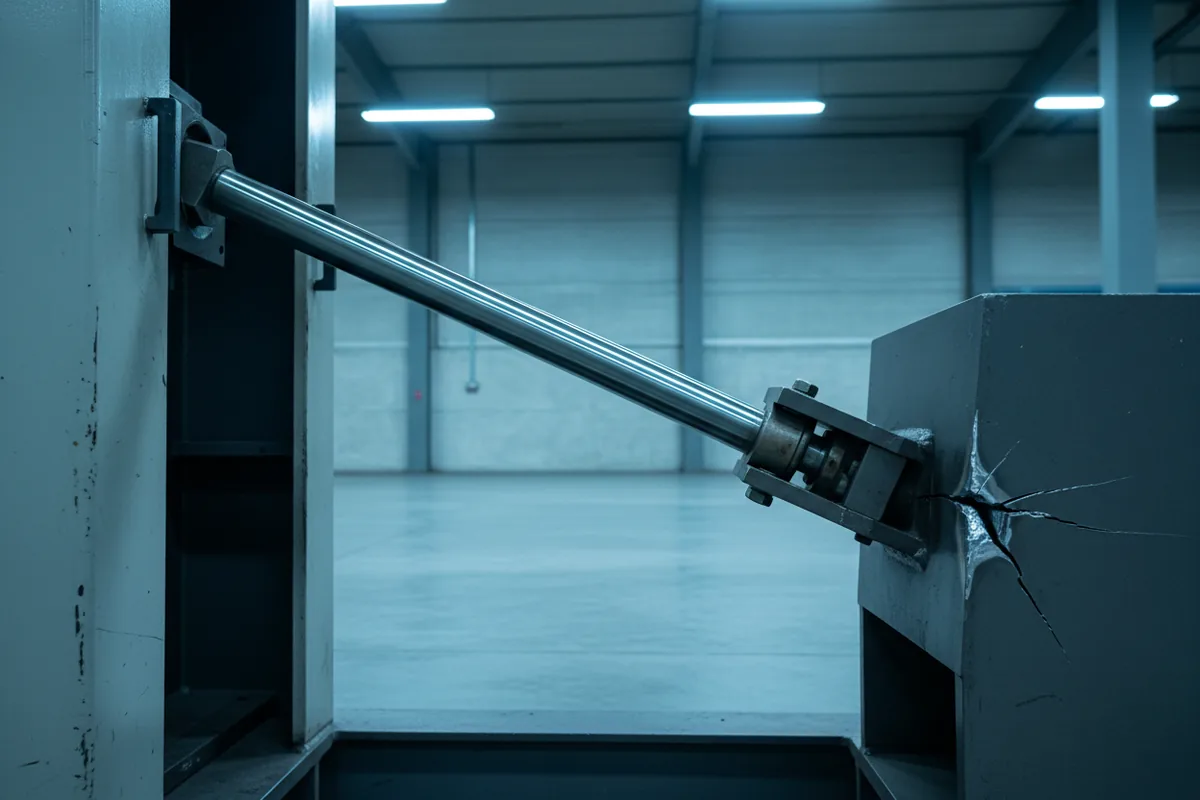
A misaligned hydraulic cylinder on idle manufacturing equipment, showing a visible weld fracture.
Immediate answer

When a machine, forklift or conveyor hurts a worker, product liability law may reach its maker or seller. The three defect types, Texas and Washington examples.

On this page
  1. Key Takeaways
  2. When a Work Injury May Be a Product Liability Case
  3. How Industrial Equipment Fails: The Three Kinds of Product Defect
  4. Who May Be Responsible When Equipment Injures a Worker
  5. What the Law Has Asked in Two States: Texas and Washington Examples
  6. The Employer's Duty and the OSHA Forklift Rule
  7. Evidence That Often Matters in a Defective Equipment Case
  8. Injuries and What the Law May Allow a Plaintiff to Recover
  9. Filing Deadlines and Why the State Where the Injury Happened Controls
  10. Questions Worth Asking Before You Speak With an Attorney
  11. Frequently asked questions
  12. Sources

If you were hurt at work by a machine, forklift, conveyor or safety device, its maker or seller may be answerable under product liability law, separate from workers' compensation. That turns on whether the equipment had a defect in design, manufacture or warnings, and whether the defect caused the injury.

The moment usually comes back in pieces. A guard that should have held did not. A forklift lurched when it should have stopped. A conveyor kept running when a worker reached in to clear it. You may be home now with a cast, a surgery date or a missing paycheck, or you may be a husband, wife, son or daughter trying to understand how a shift at a plant or warehouse ended in a hospital or a funeral. Most people facing this have already heard about workers' compensation and are left wondering whether that is the whole story, and whether the machine itself had something wrong with it.

This page explains when the equipment, and the companies behind it, may become part of an industrial accident case: what the law asks, who may be involved, what evidence tends to matter and how the rules change from state to state.

Key Takeaways

  • A workers' compensation claim and a product liability claim are different things. Product liability is the area of law that asks whether a product was defective when it left the hands of the company that made or sold it, and whether that defect caused harm. An injured worker's situation may involve one, the other or both.
  • The law generally recognizes three kinds of product problem: the design, the way a particular unit was built, and the warnings or instructions that came with it. Each points toward different evidence.
  • More than one company may sit in the chain behind a machine: the maker of the finished equipment, the maker of a component, a distributor, a seller, a leasing company and an outside repair contractor.
  • State law decides most of these questions. Limitation periods, fault rules and damages rules differ from state to state, and older equipment may face time limits measured from its sale or delivery rather than from the injury.
  • The condition of the equipment after the accident can matter as much as anything said about it. A machine that has been repaired, rebuilt or scrapped is harder to study for a defect.

Each of these points depends on the state and on the facts of what happened, and the sections below take them one at a time.

When a Work Injury May Be a Product Liability Case

A product liability case generally asks three things. Was the equipment defective in its design, its manufacture or its warnings? Did that defect exist when the equipment left the control of the company being asked to answer for it? And did the defect cause the injury and the harm that followed? Whether those questions can be answered yes depends entirely on the facts. An injury, however serious, does not by itself show that a machine was defective, and an equipment failure does not by itself show who is responsible.

This matters because a work injury is often treated as a single claim against a single employer. Workers' compensation is the system that covers on-the-job injuries, and its rules differ from state to state. A product liability claim is a separate legal theory aimed at a different set of companies. For some injured workers, the two run side by side.

The facts that usually matter at this stage are concrete ones: what the equipment was and how old it was, how it failed, what the worker was doing at the moment it failed, whether the equipment had been modified, and whether the warnings and manuals that came with it were still on hand. Some of these facts are known right away. Others sit in purchase files, service logs or the machine itself.

If you are trying to work out whether your situation looks like this, the questions above are the ones a case evaluation tends to circle. Who may bring a claim at all, and how the employment facts fit, is covered on the page about who can bring a claim.

How Industrial Equipment Fails: The Three Kinds of Product Defect

A design defect is a problem in the blueprint. The equipment was built exactly as intended, but the intended design carries a danger, so every unit made to that design shares the same risk. A machine whose controls sit where a hand naturally rests near a pinch point, or a lift whose stability is marginal under the loads it was sold to handle, would be described in these terms.

A manufacturing defect is a problem in one unit. The design was sound, but this particular machine was not built to it: a weld left incomplete, a bolt of the wrong grade, a sensor wired backward on the assembly line. The question becomes how this unit differs from the others made to the same specifications.

A warning or instruction defect involves what the user was told. Equipment can be reasonably designed and properly built yet still come with labels, manuals or safety notices that do not explain a danger or how to avoid it. The question is whether the warnings and instructions were adequate for safe use.

For an injured worker or a family, the kind of defect being considered shapes almost everything that follows: which documents matter, which experts might study the equipment, and which company in the supply chain may be involved. A design question points toward the maker's engineering. A manufacturing question points toward the factory and the specific unit. A warning question points toward the labels and the manual.

Some machines raise their own questions. Power presses, industrial robots and missing guards each have related but distinct legal issues, treated on the pages about an industrial press injury and a robotic equipment injury. This page stays with the broader question of a defective product.

Who May Be Responsible When Equipment Injures a Worker

Responsibility in a defective equipment case depends on where in the chain the problem arose. The types of company that may be involved include:

  • the manufacturer of the finished equipment, which designed it, built it and wrote its warnings;
  • the manufacturer of a component part, such as a brake, a sensor, a hydraulic line or a control module, if the problem traces to that part;
  • a distributor or wholesaler that moved the equipment from the maker toward the buyer;
  • a retailer or dealer that sold it;
  • a lessor or rental company that supplied it for use at the site;
  • an outside maintenance or repair company that serviced, adjusted or rebuilt it; and
  • the employer that owns or operates the equipment.

The employer's position is shaped by workers' compensation rules, and those rules differ from state to state. This page names no state's workers' compensation rule. Some states also limit when a seller that did not make a product can be held responsible, as the Texas example below shows.

What this means in practice is that the company most visible to a worker, the employer, may not be the only one connected to the equipment. Tracing who made it, who sold or leased it and who last worked on it is often an early and important part of understanding a case. For someone hurt, the useful starting point is usually what is already known: a nameplate, a dealer sticker, a service tag, a rental agreement.

The wider picture of when a factory, plant or warehouse injury may reach past workers' compensation is set out on the industrial accident attorney page.

What the Law Has Asked in Two States: Texas and Washington Examples

No state's product law is the rule everywhere. Two states' statutes show how much the details can vary.

Texas sets out its products liability rules in Chapter 82 of its Civil Practice and Remedies Code. Under section 82.001 of the Texas Civil Practice and Remedies Code, a "products liability action" means any action against a manufacturer or seller for damages arising out of personal injury, death or property damage allegedly caused by a defective product, whether based in strict tort liability, strict products liability, negligence, misrepresentation, breach of express or implied warranty, or any other theory or combination of theories. The same section defines a "seller" as a person engaged in the business of distributing or otherwise placing a product or any component part in the stream of commerce for any commercial purpose. Section 82.003 provides that a seller that did not manufacture a product is not liable for harm caused by it unless the claimant proves one of the circumstances the section sets out. Under section 82.005, a claimant alleging a design defect carries the burden of proving the elements that section lists by a preponderance of the evidence. Section 82.008 creates a rebuttable presumption that a manufacturer or seller is not liable for an injury caused by the product's formulation, labeling or design if it establishes compliance with applicable mandatory federal safety standards or regulations governing the risk that allegedly caused harm; the claimant may rebut that presumption on the grounds the section lists.

Washington's rule focuses on time and the age of the product. Section 7.72.060 of the Revised Code of Washington provides that a product seller is not liable under that chapter if it proves by a preponderance of the evidence that the harm was caused after the product's useful safe life had expired. Useful safe life, in Washington's words, begins at the time of delivery of the product and extends for the time during which the product would normally be likely to perform or be stored in a safe manner. If the harm was caused more than twelve years after delivery, a presumption arises that the useful safe life had expired, which may be rebutted only by a preponderance of the evidence. A seller may still be liable for harm from a product used beyond its useful safe life if it warranted the product could be used safely for that longer period, if it intentionally misrepresented or concealed facts about the product and that conduct was a proximate cause of the harm, or if the harm came from exposure that first occurred within the useful safe life.

For a worker hurt by a machine that has run on a plant floor for many years, Washington's rule shows how the equipment's age itself can become a central issue. In Texas, the questions may center on what kind of seller was involved and whether federal standards applied. Which state's law governs depends on where the case arises and its facts.

The Employer's Duty and the OSHA Forklift Rule

Federal workplace safety rules speak to employers. Under 29 C.F.R. § 1910.178(q)(1), any power-operated industrial truck not in safe operating condition shall be removed from service, and all repairs shall be made by authorized personnel.

That rule is about what happens at the workplace: whether a forklift that is not safe stays in use and who repairs it. It says nothing about how the forklift was designed or built, and it does not set a standard for a manufacturer's liability. A forklift that was left in service when it should not have been is a separate question from whether that forklift was defective when it left its maker.

For someone hurt by a forklift, this distinction explains why two different kinds of question can come up at once. One concerns how the equipment was maintained and used at the site. The other concerns the product itself. A repair performed by someone other than authorized personnel, for example, may bear on both. Whether a product liability question against a maker also exists depends on what actually failed and why, and the warehouse and forklift context is part of that picture.

Evidence That Often Matters in a Defective Equipment Case

The equipment itself is usually the most important piece of evidence. A product liability claim asks what condition the equipment was in when it left the maker or seller, so changes made after the accident, such as a replaced part, a rebuilt assembly, a software update or a unit shipped back to the manufacturer, can make it much harder to tell what was there before. If you were hurt, the evidence that usually matters includes:

  • the machine, forklift, conveyor or device in the condition it was in after the accident;
  • maintenance logs, inspection records and service history, including outside repair work;
  • the operator's manual, the warning labels on the equipment and any safety data sheets;
  • the employer's incident report and any OSHA investigation records;
  • medical records documenting the injury and its treatment;
  • photos and video of the scene and of the equipment, including nameplates and labels;
  • purchase, lease or rental records showing where the equipment came from; and
  • the names and contact information of coworkers and others who saw what happened.

Much of this is held by others, such as an employer, a dealer or a repair contractor, rather than by the injured worker. Families often find that a phone photo of a data plate or a copy of a rental agreement becomes a starting point for tracing the rest.

If you are gathering what you can and wondering which of these pieces relates to the kind of defect in question, you can request a case evaluation and talk through the records with our attorney.

Injuries and What the Law May Allow a Plaintiff to Recover

Industrial equipment injuries are often severe: crush injuries, amputations, fractures, traumatic brain injuries, burns and spinal cord injuries. Some accidents are fatal. Wrongful death refers to a claim brought after a person dies because of another's wrongful act or a defective product; who may bring it and what it covers are set by state law.

The categories of damages the law may allow generally fall into two groups. Economic damages are the measurable losses, such as past and future medical expenses, lost wages and lost earning capacity. Non-economic damages cover losses without a receipt, such as pain and suffering and loss of consortium, which means the loss of companionship and support a spouse or family member experiences because of the injury or death.

Understanding these categories helps a person see what a case is about, not what it is worth. Which categories are available, how they are measured and whether any limits apply differ by state and depend on the facts. Fault rules can matter too: under section 33.001 of the Texas Civil Practice and Remedies Code, Texas bars a claimant from recovering damages if the claimant's percentage of responsibility is greater than 50 percent, and section 33.012 reduces recovery by the claimant's percentage of responsibility otherwise. That is Texas's rule only. This page offers no medical advice about any injury.

Filing Deadlines and Why the State Where the Injury Happened Controls

A statute of limitations is the deadline set by law for filing a lawsuit. A statute of repose is a different kind of limit: an outer cutoff measured from an event such as the sale or delivery of a product, which can close off a claim for older equipment no matter when the injury happened. Both are set by state law and differ from state to state. No single national deadline applies.

Texas offers one example of each. Under section 16.003 of the Texas Civil Practice and Remedies Code, except as provided by sections 16.010, 16.0031 and 16.0045, suit for personal injury must be brought not later than two years after the day the cause of action accrues, and an action for injury resulting in death must be brought within two years, with the cause of action accruing on the death of the injured person. Chapter 16 also provides that if a person entitled to sue is under a legal disability when the claim accrues, such as being younger than 18, that time is not counted. The same chapter sets a 15-year limit for a products liability action against a manufacturer or seller, running from the date of that defendant's sale of the product, with exceptions including a written warranty of a useful safe life longer than 15 years and certain personal-injury and wrongful-death claims the chapter describes.

Washington's section 7.72.060, discussed above, provides that no claim under its product liability chapter may be brought more than three years from the time the claimant discovered, or in the exercise of due diligence should have discovered, the harm and its cause, subject to the tolling and extension provisions of Washington's chapter 4.16.

A missed deadline can end a claim entirely, which is why the start date and any exceptions matter. This page does not set out every state's deadlines; examples from more states are on the page about deadlines after an industrial injury.

Questions Worth Asking Before You Speak With an Attorney

A conversation with an attorney tends to go further when a few questions have already been thought through. These are not tests, and not every answer will be known.

  • What equipment was involved, and is there any record of who made it and who sold or leased it?
  • How did it fail: what you saw, heard or felt, and what any report or coworker describes?
  • Has the equipment been altered, repaired, moved or returned since the accident, as far as you know?
  • What records exist so far, such as an incident report, medical records or maintenance logs?
  • Has a workers' compensation claim been filed?
  • What do you most want to understand: the legal options, the process, the timeline?

Some families find it helps to write the answers down while memories are fresh, alongside the dates of the accident and of treatment. A case evaluation is a chance to talk through these facts with our attorney; how that conversation is structured is explained on the page about how case evaluation works.

Free case evaluation

No Fee Unless We Win Your Case

A free case evaluation is how it starts. Tell us what happened, and we’ll help you understand your options. You pay no fee unless we win your case.

Industrial Injury Law Group

How it works

  1. Call us or request a free case evaluationTell us what happened, in your own words.
  2. Talk through your caseYour options, and what your case may be worth.
  3. No fee unless we winYou pay no attorney fee unless we win your case.
Free case evaluation

Tell Us What Happened

Frequently asked questions

What is a defective industrial equipment claim?

It is a product liability claim aimed at companies in the supply chain of a machine or device, such as its maker or seller, based on a defect in its design, manufacture or warnings that caused an injury. It is separate from workers' compensation, and state law decides what must be shown.

Can I sue the equipment manufacturer if I was hurt at work?

The law in many situations allows a worker injured by defective equipment to bring a product liability claim against a manufacturer, separate from workers' compensation. Whether that applies depends on what failed, why it failed, the age of the equipment and the state whose law governs.

What are the three types of product defects in an industrial equipment case?

A design defect is a flaw in the blueprint shared by every unit. A manufacturing defect is a flaw in one unit that was not built to its design. A warning or instruction defect involves inadequate labels or manuals. Each type points toward different evidence and often different companies.

Who can be held responsible for a defective equipment injury?

Depending on where the problem arose, the companies involved may include the equipment maker, a component maker, a distributor, a seller, a leasing company or an outside repair company. The employer's position is shaped by workers' compensation rules, which differ by state.

Does altering or repairing the equipment affect a product liability claim?

It can. Because the question is the equipment's condition when it left the maker or seller, later repairs, replaced parts or rebuilds can make that condition harder to establish and can raise questions about whether a later change, rather than the original product, played a role.

What is a statute of repose and how does it affect older equipment claims?

A statute of repose is an outer time limit measured from an event such as sale or delivery, not from the injury. Texas sets a 15-year limit from the defendant's sale, with exceptions. Washington uses a useful-safe-life rule with a twelve-year presumption. Other states differ.

How does the OSHA forklift rule relate to a product liability claim?

Under 29 C.F.R. § 1910.178(q)(1), a forklift not in safe operating condition shall be removed from service, and repairs made by authorized personnel. That is a workplace duty. It does not set a manufacturer's liability standard, and whether a product claim also exists depends on what failed.

What damages may be available in a defective industrial equipment case?

State law decides. The categories the law may allow generally include medical expenses, lost wages and lost earning capacity, along with pain and suffering and loss of consortium. Wrongful death claims follow their own state rules. Availability and measurement depend on the state and the facts.

How long do I have to file a defective equipment lawsuit?

That depends on the state. Texas, for example, generally sets two years for personal injury, with exceptions, and Washington sets three years from discovery for its product liability claims, subject to tolling. Repose limits may also apply. When a deadline starts and what pauses it turn on the facts.

What records are important in a defective industrial equipment case?

The records that usually matter include the equipment in its post-accident condition, maintenance and inspection logs, the manual and warning labels, incident and OSHA reports, medical records, photos and video, purchase or lease records, and witnesses' names and contact details.