

SAFETY FAILURES / 04Safety failures

Contractor Negligence Injury Lawyer

  • Updated November 10, 2026
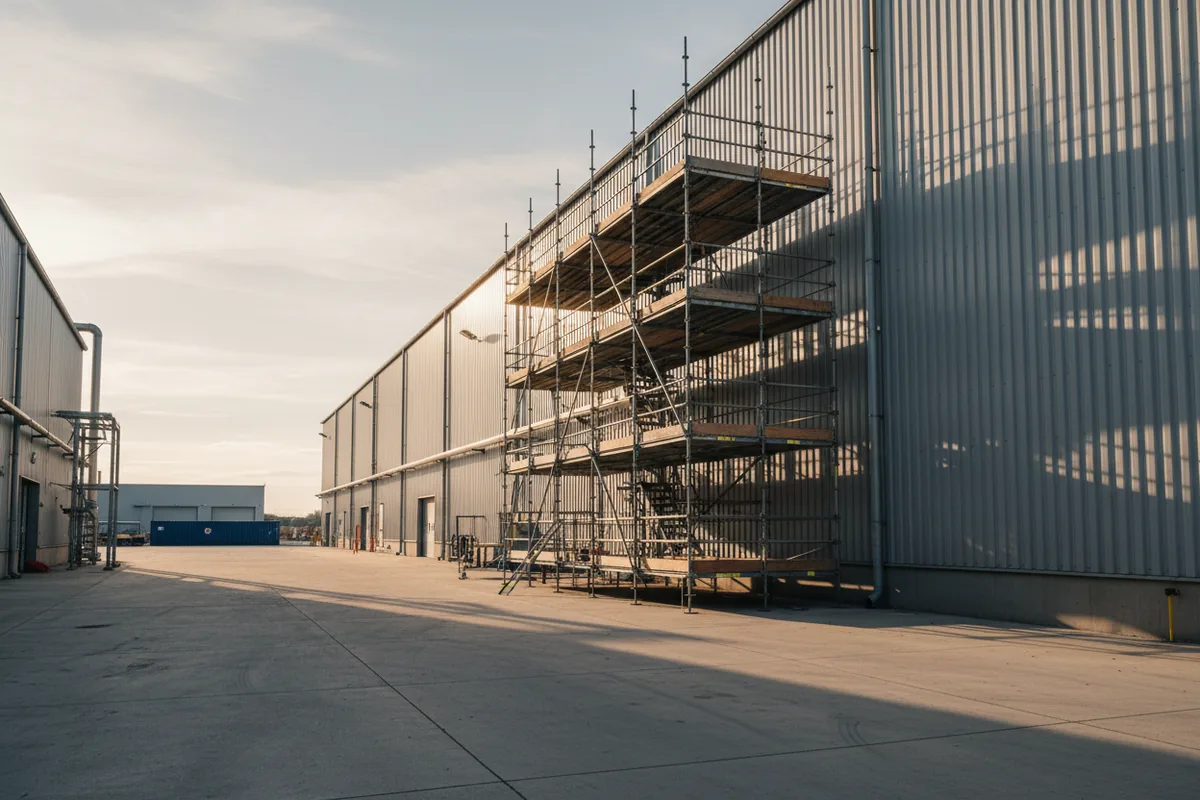
A completed scaffold structure standing idle against an industrial building exterior.
Immediate answer

Hurt at a plant or warehouse by an outside contractor's work? How federal lockout rules, state tort law and the work records fit together in these cases.

On this page
  1. Key Takeaways
  2. Was an Outside Contractor Responsible for Your Injury?
  3. Was the Contractor Following Lockout Rules When You Were Hurt?
  4. Who May Be Responsible When a Contractor's Work Causes an Injury
  5. Which Records Can Show Who Did What on the Day You Were Hurt
  6. How Your Injury Shapes What a Contractor Claim May Cover
  7. Why the State Where You Were Hurt Shapes Almost Everything
  8. Questions Worth Asking Before You Speak With an Attorney About a Contractor Injury
  9. Frequently asked questions
  10. Sources

If an outside contractor's work hurt you at a plant or warehouse, that contractor may be answerable on its own, apart from your employer. A contractor is a separate company with its own duties. Whether it is legally responsible depends on what it was hired to do, how it did the work, whether that conduct caused the injury, and the law of the state where it happened.

Most people facing this situation did not see it coming. A maintenance crew was servicing a line, an electrician was working a panel, a cleaning company was on the night shift, and then someone was hurt. Now there are medical bills, missed paychecks, and a question that keeps returning: was this my employer's doing, the contractor's, or both? For a family after a death, that question comes with grief layered on top. This page walks through how industrial contractor cases are usually approached: the federal safety rule that governs contractors servicing equipment, why state law decides the civil claim, who may be responsible by type, and the records that show who did what.

Key Takeaways

Two companies, not one, are often present on the floor when a contractor injury happens, and each may carry its own legal duties.

  • An outside contractor working at an industrial site is a separate legal actor from the worker's own employer. That company's conduct can be examined on its own terms.
  • Federal safety law speaks directly to contractors servicing machines. Under 29 C.F.R. § 1910.147(f)(2), the on-site employer and the outside employer inform each other of their lockout or tagout procedures. The on-site employer also ensures its own employees understand and comply with the outside employer's program. That is a duty under federal safety law. It does not by itself decide who is liable to an injured worker.
  • Federal law leaves state law in place. Civil liability for an injury is a question of state tort law, and those rules differ from state to state.
  • Workers' compensation from an employer and a claim against a separate contractor are legally distinct. How the two interact is set by each state.
  • The paperwork tends to tell the story. Work orders, permits, sign-in sheets and the contract's scope of work show who was assigned to what, and when.

The rules that decide these cases depend on the state and on the facts. That point applies to every section below, so it is stated once here.

Was an Outside Contractor Responsible for Your Injury?

Many injured workers reasonably assume that workers' compensation is the only route open to them. Workers' compensation is the state-law system of benefits that runs between an employer and its own employees. An outside contractor usually sits outside that relationship, because it is not your employer.

That is where a third-party claim comes in. A third-party claim is a civil negligence claim against someone other than the injured worker's own employer. A contractor hired by the plant or warehouse, rather than by you, is the clearest example. Whether a claim like this can go forward alongside workers' compensation, and how benefits already paid are treated, varies with the jurisdiction.

A negligence claim generally asks four questions:

  • Did the contractor owe a duty of care to the people working around it, including another company's employees?
  • Did it breach that duty, for example in how it shut down, isolated, repaired or reassembled equipment?
  • Did that breach cause the injury?
  • Did the injury result in damages, such as medical costs or lost work?

An injury on its own does not prove that anyone was careless. Each question turns on the evidence.

For you, this means the contractor's conduct is a separate question from your employer's. Asking it does not mean you are blaming your employer, and it does not mean the contractor is at fault. What you already know about the contractor's role often matters: who brought the crew in, what they were working on, and whether you were directed by their people or yours. Those details tend to show which of the four questions the available facts actually reach.

Was the Contractor Following Lockout Rules When You Were Hurt?

These cases usually begin with ordinary outside work layered on top of a running operation. Plants and warehouses bring in outside companies for maintenance, installation, cleaning, repair and electrical work, often near live equipment, stored energy and the people whose regular jobs keep the line moving.

Some common settings:

  • A maintenance contractor servicing a press, a conveyor belt system or packaging equipment while plant employees work nearby.
  • An installation crew setting new machinery or racking and tying it into power.
  • A cleaning contractor working inside or around equipment during a shutdown.
  • An electrical contractor working on panels or circuits that feed machines on the floor.
  • A repair technician restarting equipment after a fix, without everyone in the area being cleared.

The federal lockout/tagout standard is central here. Lockout/tagout means placing a lock or a warning tag on an energy isolating device, such as a disconnect or a valve, so a machine cannot be started while someone is servicing it. Under 29 C.F.R. § 1910.147, the standard covers the servicing and maintenance of machines and equipment where unexpected energization, start-up or release of stored energy could cause injury. It does not cover some kinds of employment, including construction and agriculture. When outside servicing personnel do work within the standard's scope, the coordination duty described in the Key Takeaways applies. The page on lockout and tagout failures explains that standard in more depth.

On the floor, this means two companies are supposed to be working from shared knowledge about who controls the energy to a machine. If you were hurt when equipment moved or energized during contractor work, one fact worth weighing is whether you were ever told the contractor's lockout rules, and by whom. Whether your work fell inside the standard's scope at all can also matter.

Who May Be Responsible When a Contractor's Work Causes an Injury

When a contractor's work leads to an injury at an industrial site, more than one party can be involved. By type, the parties these cases may involve include:

  • The outside contractor that performed the maintenance, installation, cleaning, repair or electrical work.
  • A subcontractor that the contractor brought in for part of the job.
  • The manufacturer or seller of equipment or a part the contractor used or installed.
  • The owner or operator of the facility that controlled the premises.
  • A staffing or labor company that placed workers at the site.

Two legal ideas come up often. Premises liability is the duty a property owner or someone in control of a property may owe to people on it. Product liability may come into play if a machine or part the contractor used was defective. If equipment failed when you were hurt, that failure alone does not show a defect. Whether a product claim exists depends on proof of a defect and of causation.

Who may be responsible depends on three things: who controlled the work, who supplied the equipment or materials, and what the contract required. An installation contract, for instance, may say who was to test a machine before handing it back. A staffing agreement may say whose supervisor directed a placed worker.

For a worker or a family, this means the name on your paycheck is not the only name that may matter, and overlooking a party can leave part of what happened unexamined. Useful clues include who you saw directing the job, whose logo was on the truck or the vests, and whether anyone mentioned another company handling part of the work. The same questions arise in a factory injury where an outside crew was present.

Which Records Can Show Who Did What on the Day You Were Hurt

A work order is often the first document that ties a contractor to a machine, a time and a task. In contractor cases, the documents frequently answer the questions memory cannot: who was assigned, what was authorized, and what safety steps the job called for.

Records that usually matter in these cases include:

  • Work orders and service tickets describing the job, the equipment and the date.
  • Permits for the work, such as energy control or hot-work permits where the site used them.
  • Sign-in and sign-out sheets or badge logs showing who was on site and when.
  • The contract and its scope of work, which may define the contractor's tasks and safety duties.
  • Written lockout or tagout procedures. Under 29 C.F.R. § 1910.147, energy control procedures are generally developed, documented and used. Lockout and tagout devices indicate the identity of the employee who applied them.
  • Safety plans, inspection logs, and incident and near-miss reports.
  • Safety data sheets for any chemicals the contractor brought or used.
  • OSHA inspection records, where an inspection took place.

OSHA's worker rights page states that workers have rights including to report an injury or illness and get copies of their medical records, to review records of work-related injuries and illnesses, and to request an OSHA inspection and speak to the inspector.

Most of these records are held by someone other than the injured worker: the host employer, the contractor or the facility owner. What exists, and how complete it is, varies from site to site. That gap matters: when the documents that place a contractor at a machine are incomplete or missing, the question of who did what can become much harder to answer. On your side, the records that usually matter include your medical records, photos or video, the names of coworkers who saw what happened, and any texts or messages about the job.

How Your Injury Shapes What a Contractor Claim May Cover

Contractor work on industrial equipment often involves energy, weight and machinery. The 1910.147 standard is written around the injury that unexpected start-up or a release of stored energy can cause during servicing.

Injuries in these cases can include crush injuries, machine entanglement, electrical injuries, burns, falls, struck-by injuries, chemical exposure and injuries in confined spaces. That list is not complete. This page describes injuries only in general terms and gives no medical guidance.

The nature and seriousness of an injury bear on the categories of damages the law may allow. An injury that ends a worker's ability to return to the same job, for example, raises questions about future earnings that a shorter recovery may not. Depending on the state, those categories can include medical expenses, lost wages, loss of future earning capacity, and pain and suffering. When a worker dies, a wrongful death claim may be available. That is a claim, defined by state law, that certain family members may bring when a death results from another party's negligence. Each state decides who may bring it and what damages it may include.

None of this says what any claim is worth or whether one exists. Damages rules, including any caps, differ by state and depend on the facts. For an injured worker, the long-term picture often matters as much as the first hospital bill: future treatment, return to work, and what the injury has changed at home. Families after a death often find that the questions about who may bring a claim come before any other.

Why the State Where You Were Hurt Shapes Almost Everything

If you were hurt during contractor work, two bodies of law may touch your situation, and they do different jobs. The federal lockout rule governs what the employers had to do to coordinate; state injury law decides whether anyone owes you for the harm. OSHA's worker page explains that the Occupational Safety and Health Act of 1970 created OSHA, which sets and enforces workplace safety and health standards, and that employers must comply with the General Duty Clause, which requires them to keep their workplaces free of serious recognized hazards.

Those federal duties do not themselves decide a civil injury case. As 29 U.S.C. § 653(b)(4) provides, the federal Occupational Safety and Health Act does not supersede or affect any workers' compensation law, and it does not enlarge, diminish or affect the common law or statutory rights, duties or liabilities of employers and employees with respect to injuries, diseases or death arising out of, or in the course of, employment. A violation of a federal safety rule may be relevant evidence in a state civil case. It does not by itself establish that anyone is liable. How a state treats a safety-rule violation is a question of that state's law.

State law also sets the timing and the fault rules. A statute of limitations is the deadline under state law by which a civil claim must be filed. When it starts to run, and any exceptions to it, are set by each state. Fault can matter too: if more than one party contributed to what happened, possibly including the injured person, many states use a rule called comparative fault to divide responsibility, and some states handle shared fault differently. Because those rules vary, this page does not set out any single state's deadlines or fault rules.

Missing a state's deadline or misreading its fault rule can affect whether a claim is heard at all. Where the facility is located and where the contractor is based can both come up. If those questions are pressing, you can request a case evaluation to talk through how they apply to a contractor injury.

Questions Worth Asking Before You Speak With an Attorney About a Contractor Injury

Before a first conversation, many injured workers and families find themselves already turning over a handful of questions. None of them is a test. They are simply the facts these cases tend to rest on.

  • Who was the contractor, and what was it hired to do that day?
  • What records do you have or know about? These might include an incident report, photos, a work order number, or a text from a supervisor.
  • Has a workers' compensation claim been opened, and where does it stand?
  • What happened, in order? When did the contractor arrive, what was shut down, and what moved or energized?
  • Did anyone see it, from either company?

Each question maps to something the law weighs: who the contractor was points to the party, the records point to who did what, and the workers' compensation status bears on how a third-party claim may interact with benefits. Rough answers, even incomplete ones, help a conversation stay on the legal questions rather than on reconstructing the day. Not every detail is required, and an attorney can help clarify which facts carry the most weight under the law that applies.

This page covers outside contractors at industrial workplaces such as plants and warehouses. It is not a guide to any one state's deadlines or fault rules, and it is not medical guidance. Related industrial events have their own pages, including a forklift injury involving outside crews.

Free case evaluation

No Fee Unless We Win Your Case

A free case evaluation is how it starts. Tell us what happened, and we’ll help you understand your options. You pay no fee unless we win your case.

Industrial Injury Law Group

How it works

  1. Call us or request a free case evaluationTell us what happened, in your own words.
  2. Talk through your caseYour options, and what your case may be worth.
  3. No fee unless we winYou pay no attorney fee unless we win your case.
Free case evaluation

Tell Us What Happened

Frequently asked questions

Can I sue a contractor if I was hurt at my employer's facility?

A contractor that is not your employer is a separate company, and a civil negligence claim against it is a different question from workers' compensation. Whether such a claim exists, and how it interacts with benefits, depends on the state's law and on what the contractor did, what it owed, and whether its conduct caused the injury.

What is the difference between a workers' compensation claim and a third-party claim against a contractor?

Workers' compensation is the state-law benefits system between an employer and its own employees. A third-party claim is a civil negligence claim against someone else, such as an outside contractor, governed by state tort law. Each state decides how the two relate, including how benefits already paid are treated.

What federal safety rules apply when an outside contractor works at an industrial facility?

For servicing covered by the lockout/tagout standard, 29 C.F.R. § 1910.147(f)(2) has the on-site and outside employers inform each other of their procedures. The on-site employer ensures its employees understand and comply with the outside employer's program. This is a federal safety duty, and it does not decide liability.

What records are most important in a contractor negligence injury case?

The records that usually matter are those that place a contractor at a machine at a time: work orders, permits, sign-in sheets, the contract's scope of work, lockout procedures, inspection logs and incident reports. The host employer, the contractor or the facility owner often holds them. Your own medical records and photos matter too.

Who can be held responsible when a contractor causes an industrial injury?

By type, the parties can include the outside contractor, a subcontractor it hired, an equipment manufacturer or seller, the facility owner or operator, and a staffing company. Which of them may be responsible turns on who controlled the work, who supplied the equipment, what the contract required, and state law.

Does it matter which state the injury happened in?

Yes, a great deal. State law sets the statute of limitations, the fault rules such as comparative fault, the damages rules and the wrongful-death rules. These differ from state to state, and no single state's rule applies everywhere.

What does a contractor negligence claim have to show?

Generally, a claim has to show four things: a duty of care, a breach of that duty, that the breach caused the injury, and resulting damages. An injury alone does not establish any of them. Whether each is met depends on the evidence and the applicable state law.

What is a wrongful death claim in a contractor negligence case?

A wrongful death claim is a claim that certain family members, as defined by state law, may bring when a worker's death results from another party's negligence, such as an outside contractor's. Who may bring it and what damages it may include differ by state.

Sources

Statutes, regulations and court sources

  1. 0129 C.F.R. § 1910.147, The control of hazardous energy (lockout/tagout) — eCFR · Electronic Code of Federal Regulations
  2. 0229 U.S.C. § 653 — United States Code, govinfo.gov · GovInfo (U.S. Government Publishing Office)

Other sources

  1. 03Worker Rights and Protections — Occupational Safety and Health Administration (U.S. Department of Labor) · Occupational Safety and Health Administration