

EQUIPMENT / 03Equipment

Industrial Press Injury Lawyer

  • Updated November 10, 2026
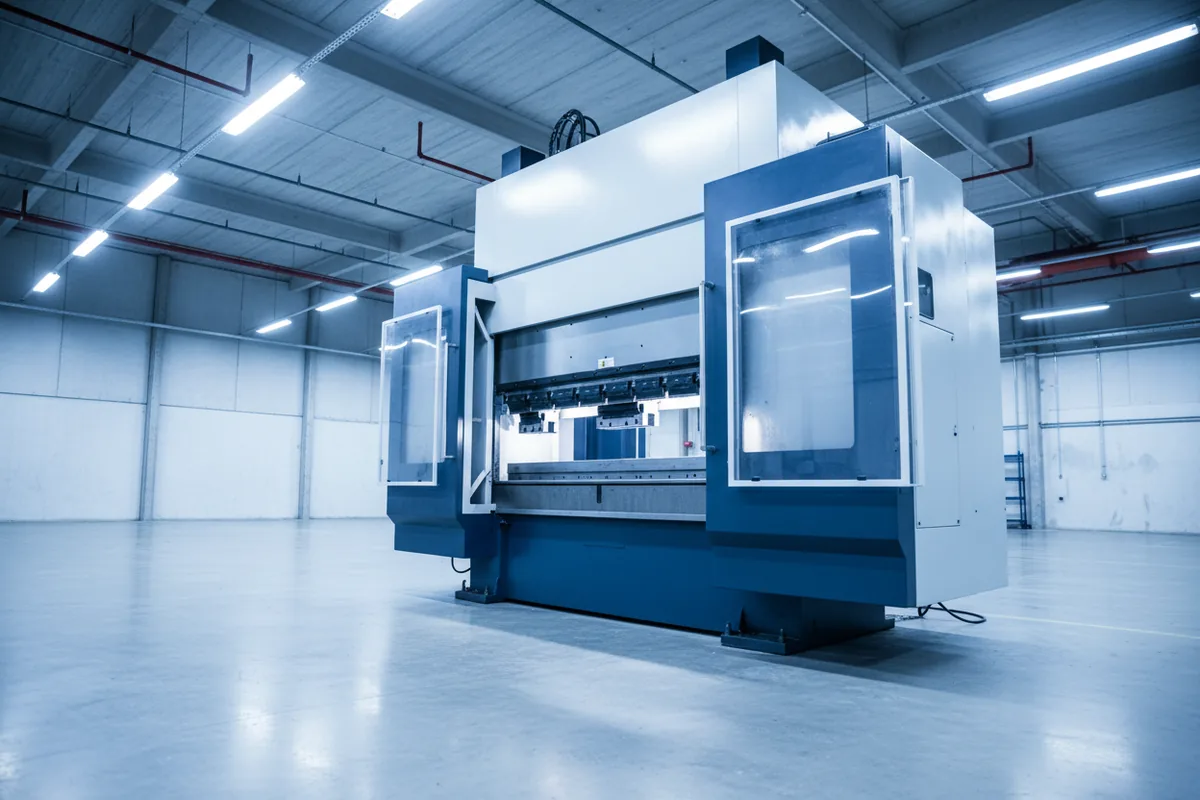
A press brake machine idle on a factory floor with its beam fully raised.
Immediate answer

Hurt by a power press or press brake? What 29 C.F.R. § 1910.217 and § 1910.212 say, who besides an employer may be answerable by type, and the records that matter.

On this page
  1. Key Takeaways
  2. Which Federal Guarding Rule Covers the Press That Injured You
  3. How Industrial Press Injuries Happen
  4. Who May Be Responsible for Your Press Injury — Beyond Your Employer
  5. What to Keep After a Press Injury: Records That Often Matter
  6. When a Press Injury Changes Your Life: Injuries and Damages the Law May Allow
  7. Why the State Where Your Injury Happened Shapes Your Case
  8. Questions Worth Asking Before You Speak With an Attorney
  9. Frequently asked questions
  10. Sources

When a power press or press brake injures a worker, the legal question is usually wider than the employer. A press injury case asks whether the press's maker or rebuilder, a guard or safety device maker, a service company or a separate facility owner may also be legally responsible. The answer turns on the machine involved, federal guarding rules, the records kept and the state's law.

If you were hurt at a press, or you are a family member after a serious or fatal press injury, you may be carrying a lot at once. There are hospital bills, missed paychecks and a body that may not work the way it did. There is also the question nobody on the plant floor seems able to answer: how a machine built to shape metal closed on a person, and whether anyone other than the employer had a part in it. Most people facing a press injury start with workers' compensation and stop there, without knowing that the press, its guards and the people who serviced it can matter too.

This page walks through the federal rules for presses, how these injuries happen, who may be answerable by type, the records that often matter, the injuries and damages the law may allow, and why the state where it happened shapes everything.

Key Takeaways

  • The kind of press matters before anything else. A mechanical power press has its own federal rule. Press brakes and hydraulic and pneumatic power presses are excluded from that rule, and the general machine guarding rule speaks to machines of every kind.
  • The rule for mechanical power presses, at 29 C.F.R. § 1910.217(c)(1)(i), places the duty on the employer. The employer must provide point of operation guards or properly applied and adjusted point of operation devices and ensure they are used on every operation performed on the press.
  • Under 29 C.F.R. § 1910.217(a)(5), press brakes, hydraulic and pneumatic power presses, bulldozers, hot bending and hot metal presses, forging presses and hammers, riveting machines and similar fastener applicators are excluded from that section.
  • The general rule, 29 C.F.R. § 1910.212(a)(3), requires guarding at the point of operation of machines whose operation exposes an employee to injury. It lists power presses among the machines that usually require that guarding.
  • A safety standard describes what was required. It does not by itself show that anyone was at fault.
  • Besides the employer, the parties who may be answerable include the press's manufacturer or rebuilder, a guard or safety device maker, a facility owner that is not the employer, and a maintenance or service company. Who they are depends on the facts.
  • Fault rules, limitation periods, damages rules and workers' compensation rules differ from state to state. No single national rule decides a press injury case.

Many people wonder whether a case involving a press is simply a workplace claim. Often the more useful question is who designed, rebuilt, guarded and serviced that particular machine.

Which Federal Guarding Rule Covers the Press That Injured You

A federal regulation sets the baseline for mechanical power presses. Under 29 C.F.R. § 1910.217(c)(1)(i), the employer must provide and ensure the use of point of operation guards, or properly applied and adjusted point of operation devices, on every operation performed on a mechanical power press. The same section also reaches beyond employers in one respect. Under 29 C.F.R. § 1910.217(a)(4), any person who reconstructs or modifies a mechanical power press is responsible for doing so in accordance with the section's construction requirements. For an injured worker, that sentence can matter: a company that rebuilt the press is named in the rule itself.

The general machine guarding rule defines the term the press rules depend on. Under 29 C.F.R. § 1910.212(a)(3)(i), the point of operation is "the area on a machine where work is actually performed upon the material being processed." On a press, that is the zone where the ram and die close on the workpiece, and where a hand or fingers can be caught. The rule continues that the point of operation of machines whose operation exposes an employee to injury "shall be guarded." Where no specific standard applies, the guard must be designed and constructed to keep any part of the operator's body out of the danger zone during the operating cycle. Special hand tools for placing and removing material may supplement that protection but may not replace the required guarding. The regulation's list of machines that usually require point of operation guarding is partial. It includes guillotine cutters and power presses.

The exclusion in 29 C.F.R. § 1910.217(a)(5) is where many press cases begin. A press brake or a hydraulic press is outside the mechanical power press section. The general requirements of 29 C.F.R. § 1910.212, titled for all machines, still speak to its point of operation.

In practical terms, the machine's type decides which federal rule describes what the employer was required to do, and so what a claim may need to show. Knowing whether the press was mechanical, hydraulic, pneumatic or a press brake is often the first fact an attorney asks about. Even then, a rule's existence does not prove it was broken; whether a requirement applied, was met and played a part depends on the facts.

How Industrial Press Injuries Happen

These cases usually begin at the point of operation, the zone where the ram or die closes on material and where a hand in the wrong place meets the full force of the machine. Press injuries can happen in several general ways.

  • A guard may be absent, removed, bypassed or set so that it no longer kept hands out of the danger zone. Missing guards on any machine are a subject of their own, and this page touches them only as they bear on presses.
  • A point of operation device may be fitted but improperly applied or adjusted, which is the phrase 29 C.F.R. § 1910.217(c)(1)(i) itself uses.
  • A press may fail mechanically, for example by cycling when the operator did not intend it to. Among the control requirements of 29 C.F.R. § 1910.217, the supplied text notes that the control system "shall incorporate an antirepeat feature."
  • Maintenance, repair, rebuilding or modification may leave the press or its guarding in a different state than its design called for.
  • A design, a missing warning or a lack of training may put an operator in a position the guarding did not anticipate.

The mechanism matters legally because it tends to point toward who may be responsible. A guard that was never supplied raises questions about the employer and possibly the press's maker. A device that failed raises questions about its manufacturer. A rebuild or service visit raises questions about whoever did that work.

None of this says what caused any particular injury. Explaining a specific accident takes the machine itself, its maintenance history and the circumstances of that shift. A conversation with an attorney can frame which of those questions apply to what happened to you.

Who May Be Responsible for Your Press Injury — Beyond Your Employer

Workers' compensation is the system that provides benefits to workers injured on the job. How it works, and how it limits suits against an employer, differs from state to state, so this page sets out no state's workers' compensation rule. A separate question is whether someone other than the employer may be answerable. The industrial accident attorney overview covers that question for workplaces generally. On a press, it usually involves three legal theories.

Product liability is a claim that a product was defective in its design, its manufacture or its warnings, and that the defect caused the injury. For a press, the product may be the press itself, a guard, a light curtain or another safety device, or a control system. The parties may include the press's manufacturer, a company that rebuilt or modified it, and the maker of a guard or device fitted to it.

Premises liability is a claim against the owner or operator of a property for an unsafe condition on it. It may matter where the facility is owned by a company other than the worker's employer, as when a worker is placed through a staffing agency or works at another company's plant.

Negligence means failing to use reasonable care. It may come into play against a maintenance, repair or service company that worked on the press or its guarding.

Each theory has elements the state's law defines. In general those are a duty, a breach, causation and damages for negligence, and a defect and causation for product liability. Whether any theory fits depends on the facts and on the law of the state where the injury happened. The factory injury lawyer page treats these questions for plant floors more broadly.

For a worker or family, the employer's benefits may not be the only route the law offers, and the list of parties is not fixed until the facts are known. The thread that ties these theories together is simple: who made this press, who rebuilt it, who supplied its guard and who last serviced it.

What to Keep After a Press Injury: Records That Often Matter

Physical evidence sits at the center of most press cases. The records and items that usually matter include:

  • The press itself and its guards and devices, in the condition they were in when the injury happened. This includes any parts removed or replaced afterward.
  • Maintenance, repair and inspection records for the press and its guarding, including records of any rebuild or modification.
  • OSHA inspection records, citations or reports for the workplace, if any exist.
  • The employer's incident or accident report.
  • Medical records documenting the injury and treatment.
  • The names and contact details of coworkers and others who saw the incident or know the machine.

These items document the machine's condition, the employer's safety history and how the injury happened. Over time a press may be repaired, returned to production or replaced, and logs may be updated or discarded in the ordinary course of business. Families often find that the questions they most want answered depend on records kept by someone else, which is why it helps to know early which items are within reach and which sit with the employer or others.

Some workplace records are described by the federal government as available to workers. OSHA's Worker Rights and Protections page says workers have the right to report an injury or illness and get copies of their medical records, to review records of work-related injuries and illnesses, and to see results of tests taken to find workplace hazards. The same page offers a way to check an employer's OSHA inspection history. It also states that workers have the right to work on machines that are safe. Federal standards and their plain-language guides are gathered on this site's industrial accident resources page.

When a Press Injury Changes Your Life: Injuries and Damages the Law May Allow

Press injuries are often severe because of the force involved. They can include crush injuries to the hands and arms, amputations, fractures, degloving, burns, traumatic injuries from entanglement or from parts ejected from the machine, and death. Amputations are a topic of their own, and this page mentions them only in passing. Nothing here is medical advice. How an injury is treated is a matter for the people providing the care.

Damages are the losses the law may allow a person to recover in a civil claim. The way press injuries unfold explains why some categories loom large. A crushed or lost hand may mean surgeries and care that continue long after the hospital stay, and it can end work that depends on that hand. Depending on the state, the categories can include:

  • Medical expenses, past and future, meaning the cost of treatment already received and treatment reasonably expected. For a crush injury or amputation, the future part of this category often carries particular weight.
  • Lost wages, meaning the pay missed while unable to work.
  • Loss of earning capacity, meaning a reduced ability to earn in the future, as when an injury rules out the skilled hands-on work a person did before.
  • Pain and suffering, meaning the physical pain and emotional toll of the injury.
  • Wrongful death damages. A wrongful death claim is brought by certain family members or an estate when a person dies because of another's wrongful act, and the state's law decides who may bring it and what it covers.

Fault-sharing rules affect damages too. Comparative fault reduces recoverable damages by the injured person's own share of fault. Under the stricter contributory fault approach, any fault by the injured person can bar recovery altogether. States differ in which approach they follow, and some states also cap certain damages.

These categories describe what the law may allow, not what any case will bring. They are an attempt to capture how the injury has changed work, daily life and the household's future. No amount, average or prediction appears here, because whether damages are available, and in what amount, depends on the facts and the state's law.

Why the State Where Your Injury Happened Shapes Your Case

The state where a press injury happened usually supplies the law for any civil claim. Federal OSHA standards describe workplace safety duties for covered employers nationwide. A personal injury or wrongful death claim, however, is decided under the state's law, and a federal standard does not by itself establish that anyone is liable.

A statute of limitations is the deadline by which a claim must be filed in court. Each state sets its own periods for personal injury, product liability and wrongful death claims. Each also decides when the period starts to run and what exceptions apply. Some states also have a statute of repose, an outer limit for certain product claims measured from a date tied to the product rather than to the injury. This page states no deadline, because no single period applies nationally.

Fault rules, wrongful death rules, damages caps and the workers' compensation rules that determine what a worker may claim against an employer also differ. The rules depend on the state and the facts. Neither the place where the employer is headquartered nor the place where the press was built decides them on its own.

The same injury can therefore be governed by quite different rules depending on location. The state and the date of the injury are where every deadline question starts, and a conversation with an attorney is the place to learn how those rules bear on a particular situation.

Questions Worth Asking Before You Speak With an Attorney

Before a case evaluation, a few questions help bring the important facts into focus. None of these is a test. They are simply the facts that tend to shape which theories and parties may matter.

  • What kind of press was it: a mechanical power press, a press brake, or a hydraulic or pneumatic press? This matters because 29 C.F.R. § 1910.217 and the general rule describe different requirements.
  • Who owned the press, who owned the building and who maintained the machine? A rebuilder, an outside service company or a separate facility owner may matter as much as the employer.
  • Were guards or devices present, in place and working when the injury happened? Had anything been removed, adjusted or replaced recently?
  • What records do you or your family have, or know of? These might include medical records, an incident report, photos, coworkers' names or anything about maintenance or inspections.
  • What was the employment relationship? Being a direct employee, a temporary worker placed by an agency or an independent contractor can change which legal routes may be available.

These questions do not have to be answered fully beforehand. Some answers are found only in records that others hold. If you want to talk through a press injury like this one, you can request a case evaluation to discuss the machine, the guarding and the people involved with our attorney. Injuries on related equipment, such as conveyor belt injuries, raise similar guarding questions under the same general rule.

Free case evaluation

No Fee Unless We Win Your Case

A free case evaluation is how it starts. Tell us what happened, and we’ll help you understand your options. You pay no fee unless we win your case.

Industrial Injury Law Group

How it works

  1. Call us or request a free case evaluationTell us what happened, in your own words.
  2. Talk through your caseYour options, and what your case may be worth.
  3. No fee unless we winYou pay no attorney fee unless we win your case.
Free case evaluation

Tell Us What Happened

Frequently asked questions

What is the difference between a mechanical power press and a press brake under OSHA rules?

They fall under different federal rules. 29 C.F.R. § 1910.217 sets requirements for mechanical power presses. Its paragraph (a)(5) excludes press brakes and hydraulic and pneumatic power presses, among other machines. The general rule for all machines, 29 C.F.R. § 1910.212(a)(3), requires point of operation guarding where a machine's operation exposes an employee to injury.

Can I bring a claim against the press manufacturer if my employer had workers' compensation?

The two are separate legal routes. Workers' compensation runs against the employer under rules that differ by state. A product liability claim runs against the press's maker or rebuilder, or a guard maker. Whether both routes are open in a particular situation depends on the facts and the state's law.

What does "point of operation guarding" mean?

It means protection at the place where the machine actually works the material. On a press, that is where the ram and die close. Under 29 C.F.R. § 1910.212(a)(3), the guard must keep the operator's body out of the danger zone during the cycle where no specific standard applies. Hand tools may supplement guarding but may not replace it.

Who may be responsible for a press brake injury at work?

Besides the employer, the parties may include the press brake's manufacturer or rebuilder, the maker of a guard or safety device, a facility owner that is not the employer, and a company that serviced the machine. Press brakes sit outside the mechanical power press section. Which parties, if any, may be answerable depends on the facts and state law.

How long do I have to file a claim after a press injury?

The deadline is set by each state's statute of limitations, and it differs from state to state. So do the date it starts to run, its exceptions and any separate wrongful death period. Because no single rule applies nationally, this page states no deadline for any situation.

Does an OSHA violation prove that my employer was at fault?

No, not by itself. A standard describes what was required. A civil claim is decided under state law, which generally asks about duty, breach, causation and damages. An OSHA record may be part of the picture, but whether it bears on fault depends on the facts.

What records are most important to preserve after a press injury?

The records that often carry the most weight show the machine's condition. These include the press and its guards as they were at the time, maintenance and inspection logs, any OSHA inspection records and the employer's incident report. Medical records and witnesses' names document the injury and the events around it.

What damages may be available in an industrial press injury case?

State law decides the categories and limits. Commonly named categories include past and future medical expenses, lost wages, loss of earning capacity, and pain and suffering. A wrongful death claim adds its own categories for family members. Comparative or contributory fault rules and any caps can change what is allowed. No amount is predicted here.

Sources

Statutes, regulations and court sources

  1. 0129 C.F.R. § 1910.217, Mechanical power presses (eCFR) · Electronic Code of Federal Regulations
  2. 0229 C.F.R. § 1910.212, General requirements for all machines (eCFR) · Electronic Code of Federal Regulations

Other sources

  1. 03Worker Rights and Protections, Occupational Safety and Health Administration (U.S. Department of Labor) · Occupational Safety and Health Administration