WORK SETTINGS / 03Work settings

Distribution Center Injury Lawyer

  • Updated November 10, 2026
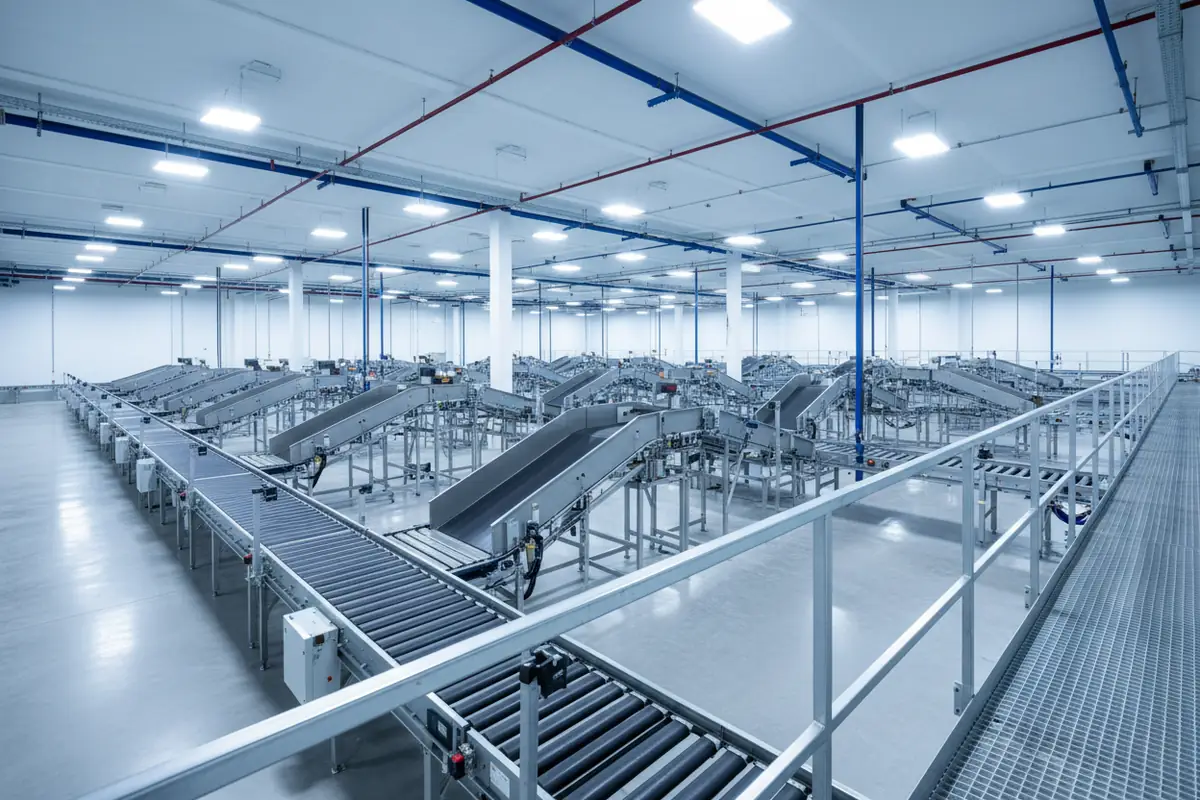
An empty automated sortation conveyor system inside a large distribution centre.
Immediate answer

Hurt at a distribution or fulfillment center? Four OSHA rules, the non-employer parties who may be answerable, and the records that tend to matter.

On this page
  1. Key Takeaways
  2. When a Distribution Center Injury May Support a Legal Claim
  3. If You Were Hurt on the Floor: How Injuries Happen in Distribution and Fulfillment Centers
  4. Is Anyone Besides Your Employer Answerable? Who May Be Responsible for Your Injury
  5. What Shows What Happened to You: Records That Often Matter in These Cases
  6. Injuries and What the Law May Allow a Claimant to Recover
  7. Why State Law Governs — and Why It Differs
  8. Frequently asked questions
  9. Sources

If you were hurt at a distribution or fulfillment center, workers' compensation is often only part of the legal picture. When someone other than your employer, such as the center's operator, a staffing agency, an equipment maker or a service company, played a part in what happened, a separate civil claim against that party may be possible, depending on the facts and your state's law.

Most people facing a distribution center injury come to this question in the middle of something hard: a shift that ended in an ambulance, a back that will not let them lift a child, a scanner and a quota they cannot return to yet, or, for a family, a phone call from a supervisor that nobody was ready for. Medical bills arrive before anyone has explained what happened. The paychecks have stopped or shrunk. And the layers of who ran the building, who signed the paycheck and who maintained the equipment can make it hard to tell who, if anyone, is answerable.

This page walks through what the law asks in these cases, how injuries in these facilities tend to happen, the kinds of parties who may be responsible, the records that usually matter, and why the state where it happened shapes almost everything.

Key Takeaways

  • Two legal paths can run side by side. Workers' compensation and a third-party civil claim are distinct, and in some cases both apply to the same injury.
  • The employer is not always the only party in the building. A distribution center can involve a company that runs the facility, a staffing agency that placed the worker, a manufacturer that built the forklift or conveyor, and a contractor that serviced it. Workers' compensation coverage through the employer does not necessarily bar a claim against one of those non-employers whose conduct contributed to the injury.
  • Federal safety rules describe specific duties. OSHA regulations address aisle clearance, material storage, forklift operator competence and fall protection in places where mechanical handling equipment is used. Those duties help frame what safe operation looks like, though a rule alone does not establish fault.
  • Federal regulators are paying attention to this industry. OSHA's warehousing page states that its National Emphasis Program on Warehousing and Distribution Center Operations applies OSHA-wide and that inspections under the updated program began July 31, 2026. An inspection is not a finding about any particular injury.
  • There is no single national rulebook for the claim itself. Limitation periods, fault rules and damages rules differ from state to state.
  • The records behind a fast-paced operation can tell a story. Camera footage, scanner and rate data and training records often matter, and recording systems do not keep everything forever.

For an injured worker or a family, these layers matter early because they shape what is worth keeping and what questions to bring to a conversation with an attorney.

The law usually asks four things before a civil claim succeeds: that someone owed a duty of care, that they breached it, that the breach caused the injury, and that the injury produced real harm, called damages. Whether those are met depends entirely on the facts. No checklist on a web page can answer it, but knowing what the law looks for helps you see which facts carry weight.

Several legal theories tend to come up in distribution center cases.

Premises liability asks whether the party that owns or controls the property where you were hurt had a duty to keep it reasonably safe. At a distribution center, that can mean aisle layout, rack condition, mezzanine edges and dock areas. When the company that runs the building is not the injured worker's employer, premises liability is often where the analysis starts. Whether the duty was breached, and whether that breach caused the harm, turns on what the conditions were and who controlled them.

Product liability is the law that applies when a product, here a forklift, a conveyor, a rack system or similar equipment, is alleged to have a defect that caused an injury. The law asks whether there was a defect and whether it caused the harm. An accident by itself does not show that equipment was defective; machines can fail for reasons unrelated to how they were designed or built, including how they were maintained or used.

Third-party claims tie these together. The employer is generally addressed through workers' compensation. A third party is anyone else: a facility operator that is not the employer, a staffing agency, an equipment manufacturer or seller, or a maintenance contractor. The question is whether one of them had a role in the conditions or the equipment involved.

Fault rules also matter. If you are worried that something you did contributed to what happened, comparative fault is the rule in many states that a claimant's own share of responsibility can reduce what the law allows, and in some versions can bar recovery past a certain point; other states follow a stricter contributory fault rule. Which rule applies depends on the state.

One more point runs through the whole page: a safety standard such as an OSHA regulation describes a duty the law imposes. It does not, by itself, establish that anyone was at fault for a particular injury.

If you are trying to figure out whether your situation fits any of this, the useful starting facts are who employed you, who ran the facility, what equipment was involved and who serviced it.

If You Were Hurt on the Floor: How Injuries Happen in Distribution and Fulfillment Centers

OSHA describes warehousing as a "rapidly growing, fast-paced industry," with potential hazards including powered industrial trucks (forklifts), ergonomics, material handling, hazardous chemicals, slip, trip and fall hazards, and robotics. According to OSHA's warehousing overview, the most common injuries are musculoskeletal disorders, mainly from overexertion in lifting and lowering, and being struck by powered industrial trucks and other materials handling equipment. Distribution and fulfillment centers add their own pace: picking and packing against rates, forklifts and pedestrians sharing aisles, high racks, conveyors and mezzanines.

Four federal rules speak directly to those conditions.

Aisles and clearances. Under 29 C.F.R. § 1910.176(a), where mechanical handling equipment is used, sufficient safe clearances must be allowed for aisles, at loading docks, through doorways and wherever turns or passage must be made; aisles and passageways must be kept clear and in good repair, with no obstruction that could create a hazard; and permanent aisles and passageways must be appropriately marked. For a picker walking an aisle a forklift also uses, this is the rule about whether there was room to be safe. What a person may weigh next is how the aisle was laid out and marked that day, and whether anything was blocking it.

Stacked and stored material. Under 29 C.F.R. § 1910.176(b), storage of material must not create a hazard, and bags, containers, bundles and similar items stored in tiers must be stacked, blocked, interlocked and limited in height so that they are stable and secure against sliding or collapse. For someone working beneath high racks, this is the rule about whether what was overhead should have stayed put. A worker or family may think about how the load was stacked and who stocked that rack. Falling stock has its own page on this site, so this page touches it only here.

Forklift operators. Under 29 C.F.R. § 1910.178(l)(1), the employer must ensure that each powered industrial truck operator is competent to operate the truck safely, as shown by successfully completing the training and evaluation the rule specifies, and, except for training purposes and as the rule otherwise permits, must ensure that training is completed before allowing the employee to operate. For a pedestrian worker, this is the rule about whether the person driving nearby had been trained and evaluated. A family may want to know who was operating, and for whom that operator worked. The forklift injury lawyer page goes deeper on forklift cases.

Elevated edges. Under 29 C.F.R. § 1910.28(b)(1), except as the section otherwise provides, the employer must ensure that each employee on a walking-working surface with an unprotected side or edge 4 feet or more above a lower level is protected from falling by one or more of guardrail systems, safety net systems, or personal fall protection systems such as personal fall arrest, travel restraint or positioning systems. The section carries exceptions, including one for the working side of certain loading rack and loading dock platforms when specific conditions are met. For a worker on a mezzanine or raised platform, this is the rule about what stood between the edge and the floor below. The questions that follow are what protection existed at that edge and who installed and maintained it.

Each of these describes a duty. Whether it was breached, and whether a breach caused a specific injury, depends on the facts.


Is Anyone Besides Your Employer Answerable? Who May Be Responsible for Your Injury

Many families reasonably wonder how there can be anyone to look to besides the employer. In a distribution center, several kinds of parties can be present at once, each with a different legal connection to what happened.

The facility operator, when it is not the employer. Some workers are employed by one company while another runs the building. An operator that is not the employer may carry a premises liability duty to keep the conditions it controls reasonably safe, which can include aisle clearance, storage and fall protection at elevated edges. If you worked for one company inside another company's building, this is often the first relationship to sort out.

The facility owner, when it is separate from the operator. A property owner that leases the building to an operator may or may not carry a duty, depending on how much control it kept and on the state's premises liability rules.

A staffing agency. Many distribution center workers are placed through agencies. OSHA's warehousing page lists temporary workers as a related topic. An agency may carry legal exposure as a co-employer or under rules specific to staffing arrangements, and those rules differ by state. Sometimes the agency's status affects whether it is treated like the employer or like a third party.

An equipment manufacturer or seller. When a forklift, conveyor, rack system or other equipment is alleged to have a defect, product liability may reach the company that designed, built or sold it. That claim turns on proof of a defect and of causation, not on the fact that an injury happened.

A maintenance contractor. A service company that repaired a forklift, adjusted a conveyor or worked on the facility may face a negligence claim if its work contributed to the injury. Federal rules require, for example, that a power-operated industrial truck not in safe operating condition be removed from service and that repairs be made by authorized personnel, under 29 C.F.R. § 1910.178 paragraph (q)(1).

Identifying which of these types may apply takes knowing the facts and the state's law: who employed whom, who controlled the area, who owned and serviced the equipment. Those relationships are often among the first things a case evaluation can help clarify. Factory settings raise similar layered-responsibility questions, which the factory injury lawyer page covers.

What Shows What Happened to You: Records That Often Matter in These Cases

If you were hurt, the records that usually matter are the ones a fast, monitored operation produces as a matter of routine. Injured workers and families often find that the documents and data, more than memory, show what conditions were like at the moment of injury.

Camera footage can show the aisle, the forklift's path, the rack or the mezzanine edge. Recording systems keep footage for differing lengths of time, which is why its existence is often an early question.

Scanner and rate data, the records of picking and packing pace, can reflect how fast a worker was being asked to move and what task was underway at the time.

Training records, including the certification the employer must keep under the forklift operator rule cited above, can show whether the operator involved had been trained and evaluated. That certification must include the operator's name, the date of training, the date of evaluation and the identity of the person who trained or evaluated.

Incident and injury reports include the facility's own internal report and any entry in the employer's work-related injury records. OSHA's worker rights page states that workers have the right to report an injury or illness and get copies of their medical records, and to review records of work-related injuries and illnesses.

Maintenance and inspection logs record when equipment was serviced, inspected and repaired, and by whom, which can matter to a maintenance contractor or equipment claim.

Medical records document the injury, the treatment and the outlook as the treating providers describe them.

Families also often keep the names of coworkers who saw what happened, photos of the area and any written communication about the incident. Taken together, these records can show which party controlled what, which is the thread that connects the facts to the defendant types above.

When the records are scattered across an employer, an agency and a facility operator, it can help to talk them through with an attorney; you can request a case evaluation to discuss which records exist and who may hold them.

Injuries and What the Law May Allow a Claimant to Recover

The injuries seen in distribution centers follow the work itself. Beyond the musculoskeletal and struck-by injuries OSHA identifies as most common, described above, other patterns include crush injuries when a forklift or falling material pins a worker, and fall injuries from mezzanines and elevated platforms. This page describes injuries only in general terms and offers no medical guidance.

For a worker who cannot return to the same job, or a family managing care at home, the question is what a civil claim addresses that workers' compensation may not. The categories of damages courts commonly recognize in injury cases include medical expenses, past and future; lost wages; loss of earning capacity, meaning a reduced ability to earn in the future; and pain and suffering. These are what the law may allow, not what any claimant will receive, and whether a category applies depends on the facts and the state.

Wrongful death is a claim brought when a person dies because of another's wrongful conduct. Where a worker dies, the state's wrongful death law decides who may bring the claim, such as a spouse, children or an estate representative, and what damages are available. Those rules differ by state.

Damages rules in general also vary. Some states limit certain categories, and the fault rules described earlier can reduce or bar what the law allows. A family weighing next steps may find it useful to keep track of medical bills, pay records and how the injury has changed daily life, since those details connect to the categories above.

Why State Law Governs — and Why It Differs

Federal OSHA rules describe workplace safety duties nationwide, but the injury claim itself is generally decided under state law. For someone hurt in one state while employed by a company based in another, that distinction matters. The rules depend on the state and the facts. That is why this page states no deadline, no fault percentage and no damages limit: none is the rule everywhere.

For anyone wondering how long a claim stays open, the answer comes from a statute of limitations, the deadline for filing a lawsuit. Each state sets its own, and when the period starts to run and what exceptions apply also vary. Missing it can affect whether a claim may be brought at all, and this national page does not set out any state's period.

Fault rules differ. Some states use pure comparative fault, some modified comparative fault, and a few use contributory fault. Those differences can change what a claimant may recover.

Workers' compensation rules differ by state as well, including who is covered, what benefits are paid and how far the workers' compensation remedy limits other claims against the employer.

Damages rules, including any caps, the categories allowed and wrongful death rules, differ too. A separate federal time limit appears on OSHA's worker rights page, which states that a worker who believes an employer retaliated for exercising rights under OSHA's whistleblower protection laws can file a whistleblower complaint within 30 days of the retaliation. That is a complaint to OSHA, not an injury lawsuit.

Because the state where the injury happened decides so much, it is one of the first facts a conversation with an attorney turns on. The site's industrial accident attorney page explains these layers across factories, plants and warehouses, and the warehouse accident lawyer page covers warehouses in general.

Free case evaluation

No Fee Unless We Win Your Case

A free case evaluation is how it starts. Tell us what happened, and we’ll help you understand your options. You pay no fee unless we win your case.

Industrial Injury Law Group

How it works

  1. Call us or request a free case evaluationTell us what happened, in your own words.
  2. Talk through your caseYour options, and what your case may be worth.
  3. No fee unless we winYou pay no attorney fee unless we win your case.
Free case evaluation

Tell Us What Happened

Frequently asked questions

Can I sue someone other than my employer if I was hurt at a distribution center?

In some situations, yes. A claim against a non-employer, such as a facility operator, staffing agency, equipment manufacturer or maintenance contractor, is a separate path from workers' compensation. Whether one exists depends on who was involved, what each party controlled and the law of the state where the injury happened.

What is the difference between a workers' compensation claim and a third-party injury claim?

Workers' compensation is the state benefit system for work injuries and is generally the path against the employer; its rules differ by state. A third-party claim is a civil lawsuit against someone else whose conduct contributed to the injury, and it turns on duty, breach, causation and damages. Sometimes both apply.

What federal safety rules apply to distribution centers?

Four OSHA rules discussed here cover clear, marked aisles where mechanical handling equipment is used, stable stored material, forklift operator competence, and fall protection at unprotected edges 4 feet or more above a lower level. Each describes a duty; whether it was breached in one case depends on the facts.

Does an OSHA violation prove that someone was at fault for my injury?

No. A regulation describes a duty, and an OSHA inspection or citation is a regulatory step, not a finding of civil liability for a specific injury. A civil claim still requires showing duty, breach, causation and damages under the applicable state's law.

What records tend to matter most in a distribution center injury case?

Camera footage, scanner and rate data, forklift training and certification records, incident reports, maintenance logs and medical records often carry the most weight. Together they can show the pace of work, the condition of equipment and who controlled the area at the moment of injury.

How long do I have to file a claim after a distribution center injury?

That depends on the state. Each state sets its own statute of limitations, including when it starts to run and what exceptions apply, so no national period exists. Which state's rule governs, and how it applies to the dates involved, is one of the things a case evaluation can address.

Can a staffing agency be held responsible for a distribution center injury?

Possibly, depending on the facts and the state. An agency may be treated as a co-employer or fall under rules specific to staffing arrangements, and those rules vary. The employment relationship and who controlled the work at the time often decide how an agency is treated.

What damages may be available in a distribution center injury case?

The categories courts commonly recognize include past and future medical expenses, lost wages, loss of earning capacity and pain and suffering. Where a worker dies, state wrongful death law decides who may bring the claim and what is available. Whether any category applies depends on the facts and the state.

Sources

Statutes, regulations and court sources

  1. 0129 C.F.R. § 1910.176, Handling materials—general (eCFR) · Electronic Code of Federal Regulations
  2. 0229 C.F.R. § 1910.178, Powered industrial trucks (eCFR) · Electronic Code of Federal Regulations
  3. 0329 C.F.R. § 1910.28, Duty to have fall protection and falling object protection (eCFR) · Electronic Code of Federal Regulations

Other sources

  1. 04Worker Rights and Protections, Occupational Safety and Health Administration · Occupational Safety and Health Administration
  2. 05Warehousing - Overview, Occupational Safety and Health Administration · Occupational Safety and Health Administration