

AFFECTED WORKERS / 04Affected workers

Delivery Driver Injured at a Warehouse or Distribution Center

  • Updated November 11, 2026
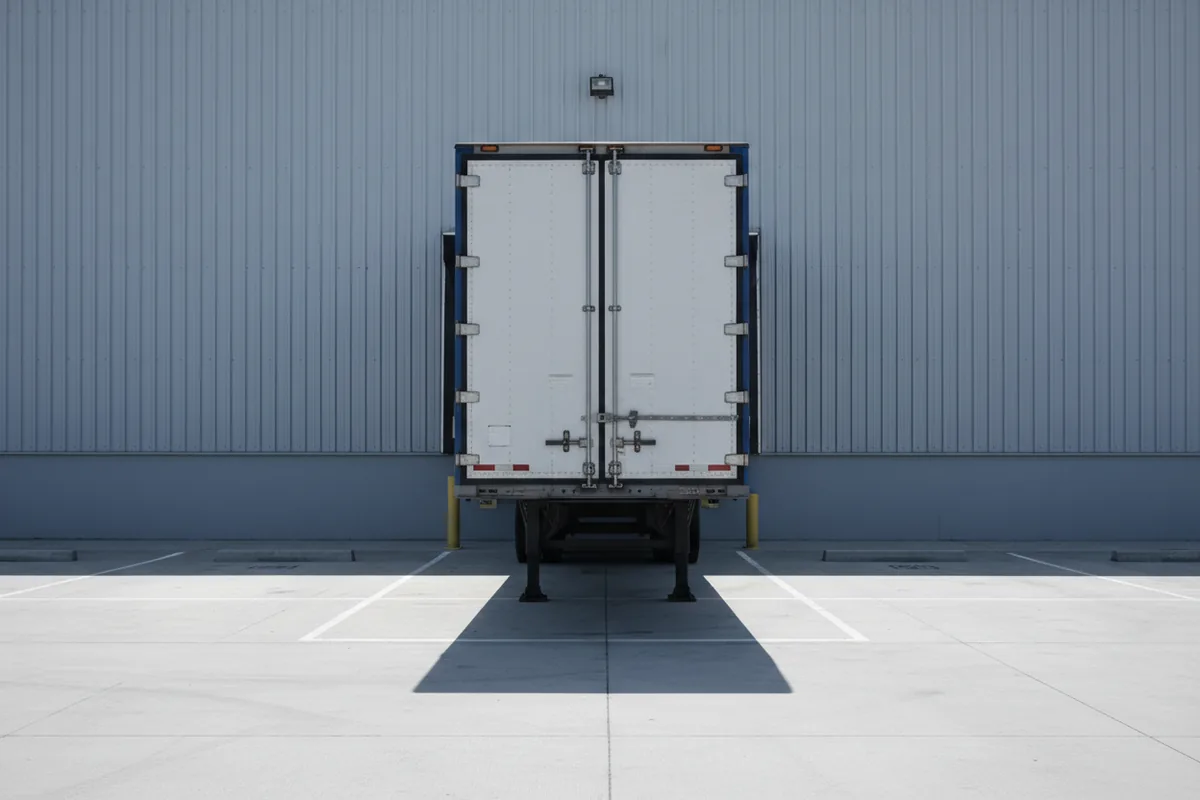
A sealed semi-trailer parked at a distribution centre dock on an empty apron.
Immediate answer

A delivery driver hurt at someone else's warehouse is not that site's employee. Who may be responsible, three OSHA dock rules and the records that matter.

On this page
  1. Key Takeaways
  2. When a Delivery Driver's Injury May Give Rise to a Claim
  3. Federal Safety Rules That Apply at Loading Docks and Warehouses
  4. Who May Be Responsible for Your Injury at a Third-Party Site
  5. Records That Usually Matter After a Warehouse Injury
  6. Injuries Delivery Drivers Commonly Sustain at Industrial Sites
  7. Why the Rules Differ Depending on Your State
  8. What a Case Evaluation With Our Attorney Can Cover
  9. Frequently asked questions
  10. Sources

If you drove a delivery into someone else's warehouse, plant or distribution center and were hurt there, the company running that site is not your employer. A civil claim against it, its property owner or an equipment maker may exist alongside any workers' compensation through your own employer. Whether one does depends on the facts and your state's law.

Most people facing this are trying to make sense of a day that started as a routine drop-off. You backed into a dock, checked in, waited for the unload, and then a forklift came around a corner, a dock plate shifted under your feet, the trailer rolled, or freight came down off a pallet. Now there are medical appointments, missed loads and a paycheck that may not cover the month. You may also be hearing two different stories: one from your own carrier about workers' compensation, and silence from the site where it actually happened. This page explains why the site's operator stands in a different legal position than your employer, which federal dock and forklift rules are involved, who may be responsible by type, and which records tend to matter.

Key Takeaways

  • The site you were delivering to did not employ you. That single fact changes the legal picture, because a visiting driver's relationship with the site is governed by general injury law rather than by that site's own employment arrangements.
  • Federal safety rules for loading docks and forklifts, including 29 C.F.R. § 1910.178(k)(1) and 29 C.F.R. § 1910.26(d), set duties for the employer whose own workers are exposed. They describe how a dock is meant to run. They do not, by themselves, decide whether the site owes a visiting driver anything.
  • Three legal theories usually come up. Premises liability is the body of law about the duty a property's owner or operator owes to people who come onto it. Negligence is the failure to use reasonable care. Product liability covers injuries caused by a defective product. Each requires its own showing of a duty, a breach of it, causation and damages.
  • Limitation periods, fault rules and damages rules differ from state to state. No single rule applies everywhere, and this page states none as if it did.
  • The paperwork of a delivery is unusually useful. A bill of lading, a gate or check-in log and the site's own incident report can fix who was where, and when, in a way memory cannot.
  • A workers' compensation claim through your own employer and a civil claim against the site are separate tracks. How they affect each other is a question of state law.

When a Delivery Driver's Injury May Give Rise to a Claim

The central question in these cases is whether the site's operator, its owner or another party owed a duty to the visiting driver and failed to meet it, and whether that failure caused the injury. No injury, however serious, answers that question by itself.

The facts that usually matter start with why you were there and what you were doing. A driver who checked in, was assigned a door and was waiting, strapping or walking a dock as part of the delivery is on the property for the site's business. The patterns this page addresses look like this: a driver struck by the site's forklift while standing on the dock or in a trailer; a dock plate or dockboard that shifted or dropped; a trailer that moved while the driver was in it or stepping into it; and freight that fell from a rack, a pallet or an unsecured load. In each one, the next question is who controlled the thing that caused the harm. The site's operator usually runs the forklifts and the dock. A property owner may control the building. A contractor may have serviced the equipment.

That control question matters to you because it decides whether the injury stays inside your own employer's workers' compensation system or whether a separate civil claim against someone else may also be in play. The two are legally distinct, and one does not automatically rule out the other, although state law governs how they interact. What you may want to weigh is simple to state and harder to answer: whose forklift, whose dock plate, whose trailer chocks, whose rack.

Loading docks as a hazard in their own right are explained on this site's loading dock page. Road crashes involving the driver's own vehicle are outside this page. For the wider picture of warehouse injuries, the page on warehouse accident claims sets out how those cases are framed.

Federal Safety Rules That Apply at Loading Docks and Warehouses

Three federal regulations speak directly to the moment a delivery driver is most exposed: when the site's equipment and the driver's trailer meet at the dock. For you, their value is practical. They describe what the dock was supposed to look like when you were on it, which gives a fixed point to compare against what actually happened.

The forklift rule comes first. The federal powered industrial truck standard covers fork trucks, tractors, platform lift trucks, motorized hand trucks and other specialized industrial trucks powered by electric motors or internal combustion engines. Under 29 C.F.R. § 1910.178(k)(1), "The brakes of highway trucks shall be set and wheel chocks placed under the rear wheels to prevent the trucks from rolling while they are boarded with powered industrial trucks." In plain terms, before a forklift drives into a trailer, the truck is meant to be braked and chocked so it cannot roll. If your trailer moved during loading, this is the rule that describes what was supposed to be in place, and a natural next question is who was responsible for setting the chocks that day.

The dockboard rule is second. Under 29 C.F.R. § 1910.26(d), the employer must ensure that "Measures, such as wheel chocks or sand shoes, are used to prevent the transport vehicle (e.g. a truck, semi-trailer, trailer, or rail car) on which a dockboard is placed, from moving while employees are on the dockboard." A dockboard is the plate that bridges the gap between the dock and the trailer bed. If the plate shifted under you because the trailer crept, this rule is where the conversation tends to start.

The clearance rule is third. Under 29 C.F.R. § 1910.176(a), "Where mechanical handling equipment is used, sufficient safe clearances shall be allowed for aisles, at loading docks, through doorways and wherever turns or passage must be made," and aisles and passageways "shall be kept clear and in good repair." If you were struck by a forklift in a crowded dock area, this describes the space the equipment was meant to have.

There is an important limit. Each rule is written as a duty the site owes its own employees, not you as a visiting driver. So a missing chock or a blocked aisle does not, on its own, give you a claim; whether a site's compliance or noncompliance bears on a civil claim is a question for the applicable state's law. OSHA's worker rights page also explains that employers must comply with the General Duty Clause of the OSH Act, which requires them to keep their workplaces free of serious recognized hazards. A conversation with an attorney can cover how rules like these fit what happened at a particular dock.

Who May Be Responsible for Your Injury at a Third-Party Site

Families often ask whether there is one company to point to. Sometimes there is. Often there is more than one, and each stands in a different legal position. For you, the number of possible parties matters because each one may hold different records, carry different insurance and answer to a different legal theory.

The site's operator is the business that ran the dock where you were hurt. If its conditions or its forklift drivers caused your injury, the questions usually fall under premises liability and negligence: whether it kept the property reasonably safe for people it could expect there, including drivers like you making deliveries, and whether its own employees operated forklifts and dock equipment with reasonable care.

The property owner may be a different company from the operator. Whether an owner shares responsibility can depend on who controlled the area under the lease, what the owner knew, and the state's law.

An equipment manufacturer or seller may be involved if a forklift, a dock plate, a dock leveler or a restraint was defective. Product liability asks whether the product had a defect and whether that defect caused the injury. An accident does not prove a defect, and the claim turns on that showing rather than on the fact that someone was hurt.

A maintenance contractor that serviced the forklift, the dock leveler or the doors may face a negligence claim if its work fell short of reasonable care and that shortfall caused the harm.

A staffing or logistics company can matter too. If a staffing agency supplied the forklift operator, that agency's relationship to the operator and to the injury may be relevant. The page on temporary worker injuries explains how staffing arrangements shape these cases.

More than one party may share responsibility, and your own conduct may be raised as well. Comparative fault is the rule in many states that divides responsibility among everyone whose carelessness contributed to an injury. States differ: some use pure comparative fault, some use a modified version with a threshold, and a small number keep contributory negligence, which can bar recovery. Those rules affect what a claimant may recover. An injury does not by itself establish anyone's fault. If you are unsure which of these parties controlled what hurt you, sorting that out is a common starting point in a conversation with an attorney.

Records That Usually Matter After a Warehouse Injury

A delivery leaves a paper trail that most other accidents do not, and that trail is often where a case takes shape. If you were hurt at a site you were delivering to, the records that usually matter include the following.

The bill of lading and the check-in records come first. The bill of lading, the gate log, the appointment confirmation and any dock door assignment show that the driver was at the site for its business, when the driver arrived, and where the trailer was placed. They answer questions that otherwise turn into disputes.

The site's incident report is the operator's own account of what happened, if one was prepared. It may name the forklift operator, the door, the time and the people present. An incident report does not establish what caused an injury, but it is the site's first written version of events.

Photos and video of the dock, the trailer, the dock plate, the forklift, the chocks or their absence, and any spilled or fallen freight capture conditions that change once the dock goes back to work. Sites with cameras on their docks may hold footage of their own.

Medical records from the first treatment onward document the injury, the treatment and how the injury affects work. Records from follow-up care show how recovery unfolded.

Witness names and contact details matter, whether the witness is another driver in the next door, a dock worker or a supervisor. Drivers move on to other routes, and a name with a phone number is easier to work with later than a description.

Equipment maintenance and inspection logs for the forklift, the dock leveler or the dock plate are usually held by the site or its contractor, and they can show the equipment's history before the day of the injury.

Injured workers and their families often gather what they can of the first four and leave the rest to the legal process. A case evaluation with our attorney can cover which of these records bear most on what happened at a particular site.

Injuries Delivery Drivers Commonly Sustain at Industrial Sites

The injuries in these cases tend to follow the way the accident happened. A forklift strike can cause blunt-force and crush injuries, particularly when a driver is pinned against a trailer wall, a dock edge or a rack. A dock plate or dockboard that shifts can cause falls and injuries to the legs, ankles and feet. A trailer that moves while a driver is stepping in or out can lead to falls, crush injuries or entrapment between the trailer and the dock. Falling freight or an unsecured load can cause head, neck and back injuries. This page describes injuries only in these general terms and gives no medical advice.

For a driver, the harm reaches past the injury itself. A commercial driver who cannot climb into a cab, handle a load or sit through a long shift may lose work for weeks or longer, and the effect on a career can outlast the treatment.

The law may allow several categories of damages in a civil claim, depending on the state: medical expenses, past and future; lost wages and lost earning capacity; and pain and suffering. The exact categories, how they are measured and whether any are capped differ by state, and availability turns on the facts. No outcome is assured.

When a driver dies from injuries sustained at a site, wrongful death law, the body of state law that allows certain family members or an estate to bring a claim for a death caused by another's wrongful conduct, governs who may bring the claim and what damages may be available. Those rules differ by state as well. For a family in that position, the first questions are usually who has the legal right to act and which state's law applies.

Why the Rules Differ Depending on Your State

The same accident at two docks in two different states can be analyzed under different rules, because most of the law that decides these cases is state law.

How the site had to treat you as a visitor depends on where the dock is. In some states, the duty a property owes depends on which category a visitor falls into, such as invitee, licensee or trespasser. Other states have moved away from that framework toward a general duty of reasonable care. Where you fit as a delivery driver, and what duty followed, is a state-law question.

The interaction between workers' compensation and a civil claim also differs. Whether benefits paid through the driver's own employer are offset against a civil recovery, whether the employer's insurer has a right to be repaid from it, and to what extent, are matters each state's law decides.

A statute of limitations is the deadline for filing a lawsuit. Limitation periods for personal injury and for wrongful death differ by state, as do the point at which the period begins to run and the exceptions that may apply. This page states no deadline, because no single one applies everywhere.

Fault rules differ, as the section on responsibility explains, and so do damages rules. Some states cap non-economic or punitive damages, and others do not.

A state's rule appears on this site only on that state's own page, from that state's official sources. For the federal standards and the OSHA material in one place, the site's industrial accident resources page collects them. If you are weighing how your state's rules may apply to what happened at the dock, you can request a case evaluation to discuss it with our attorney.

What a Case Evaluation With Our Attorney Can Cover

A case evaluation is a conversation about what happened: the site, the dock door, the equipment and the people involved. It does not require you to have the answers first. Many drivers arrive knowing only that they were hurt at a place that was not their employer's, and that is enough to begin. What is at stake for you is whether a claim beyond workers' compensation may exist, and the conversation is where that question starts to be sorted out.

The conversation can cover the delivery itself, from the appointment and check-in through the moment of the injury. It can cover whose forklift was involved, who operated it, whether a staffing company supplied that operator, and whether a contractor serviced the dock equipment. It can address which legal theories may apply to those facts, whether premises liability, negligence or product liability, and which parties may be relevant. It can touch on the bill of lading, the gate log, the incident report, photos, medical records and witness names, and on how the law of the state involved shapes the analysis.

Some limits are worth stating plainly. If the driver was employed by the warehouse, plant or distribution center where the injury happened, the legal posture is different, and the analysis on this page does not fit. Drivers hurt at fulfillment operations may also find the page on distribution center injuries useful, and those hurt at a manufacturing site the page on factory injuries.

A case evaluation is not a promise of any outcome or that our attorney will take a matter.

Free case evaluation

No Fee Unless We Win Your Case

A free case evaluation is how it starts. Tell us what happened, and we’ll help you understand your options. You pay no fee unless we win your case.

Industrial Injury Law Group

How it works

  1. Call us or request a free case evaluationTell us what happened, in your own words.
  2. Talk through your caseYour options, and what your case may be worth.
  3. No fee unless we winYou pay no attorney fee unless we win your case.
Free case evaluation

Tell Us What Happened

Frequently asked questions

Can a delivery driver sue a warehouse where they were injured if they are not that warehouse's employee?

In many states, yes, a civil claim against the site's operator, owner or another responsible party may be possible under premises liability or negligence law. That is separate from workers' compensation through the driver's own employer. Whether a claim exists depends on what happened, who controlled the condition that caused the injury, and the state's law.

Does workers' compensation from my own employer prevent me from making a claim against the warehouse?

Not automatically. Workers' compensation through your own employer and a civil claim against the site are legally separate. Whether benefits are offset, or repaid from a civil recovery, is decided by state law and differs from one state to another.

What federal safety rules apply to loading docks and forklifts at warehouses?

Federal rules require, among other things, that highway trucks be braked and chocked while forklifts board them, that measures such as wheel chocks or sand shoes keep a transport vehicle from moving while employees are on a dockboard, and that safe clearances be allowed at loading docks. These are duties of the employer whose own workers are exposed.

Who may be responsible when a delivery driver is hurt by a forklift at a warehouse?

That depends on who controlled the forklift and the area. Possible parties include the site's operator, the property owner, a staffing company that supplied the operator, a maintenance contractor, and the manufacturer or seller if the forklift was defective. State law governs how responsibility is divided among them.

What records matter most after a delivery driver is injured at a warehouse?

The delivery paperwork often matters most: the bill of lading and check-in records place the driver at the site. The site's incident report, photos and video, medical records, witness names and equipment maintenance logs fill in what happened and why.

How long does a delivery driver have to bring a claim after a warehouse injury?

No single deadline applies nationally. Limitation periods for injury and wrongful-death claims are set by each state, along with when the period starts and what exceptions apply. A conversation with an attorney familiar with the applicable state's law can address the deadline for a particular situation.

What if the delivery driver was partly at fault for the warehouse accident?

It depends on the state. Some states use pure comparative fault, some use a modified version with a threshold, and a few keep contributory negligence. How a driver's share of fault affects a claim turns on which rule applies and on the facts.

What damages may a delivery driver recover after a warehouse injury?

The categories the law may allow include medical expenses, lost wages and earning capacity, and pain and suffering. Where a driver died, state wrongful-death law decides who may bring a claim and what may be available. The categories, their limits and any caps differ by state, and no outcome is assured.

Sources

Statutes, regulations and court sources

  1. 0129 C.F.R. § 1910.178, Powered industrial trucks (eCFR) · Electronic Code of Federal Regulations
  2. 0229 C.F.R. § 1910.26, Dockboards (eCFR) · Electronic Code of Federal Regulations
  3. 0329 C.F.R. § 1910.176, Handling materials—general (eCFR) · Electronic Code of Federal Regulations

Other sources

  1. 04Worker Rights and Protections, Occupational Safety and Health Administration, U.S. Department of Labor · Occupational Safety and Health Administration