

EQUIPMENT / 04Equipment

Robotic Equipment Injury Lawyer

  • Updated November 10, 2026
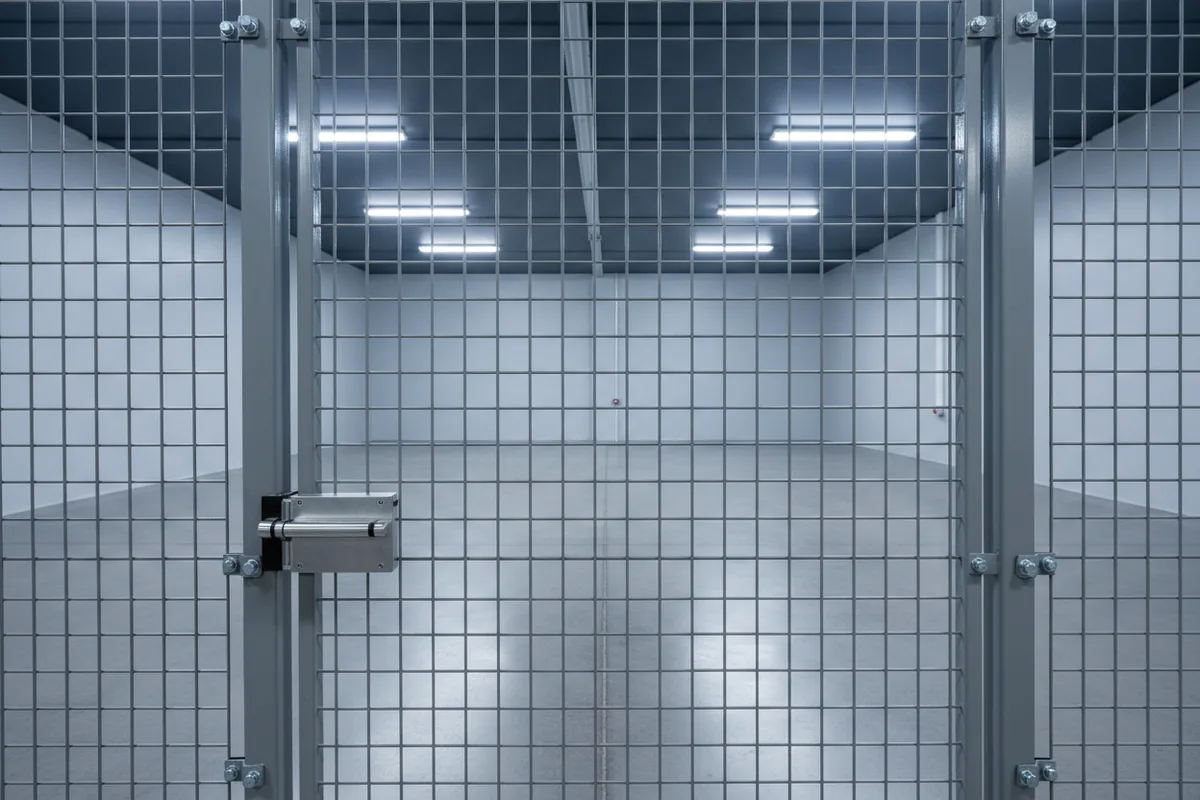
Safety fencing and an interlock gate latch surrounding an empty robotic work cell.
Immediate answer

Hurt by an industrial robot at work? How OSHA's machine-guarding and lockout rules apply, who besides an employer may be answerable, and which records matter.

On this page
  1. Key Takeaways
  2. How Robotic Equipment Injuries Happen
  3. Which Safety Rules Apply When a Robot Injures a Worker
  4. Who Besides Your Employer May Be Responsible
  5. What the Records From a Robot Cell Can Show About What Happened
  6. Injuries a Robotic Equipment Accident Can Cause and What They Mean for a Claim
  7. Why the State Where You Were Hurt Shapes Your Claim
  8. Frequently asked questions
  9. Sources

When an industrial robot injures a worker, the employer is often not the only party connected to the machine. Depending on the facts and the state, the robot's manufacturer, the integrator that installed and programmed the cell, a maintenance contractor, or a site operator that is not the employer may each carry separate legal responsibility.

If you were struck or pinned inside a robot's reach, or a machine started while you were setting it up or clearing a fault, you are probably dealing with surgery, time off the line and a paycheck that has stopped or shrunk. If you are a spouse, a parent or an adult child after a death on a plant floor, you may be trying to understand how a machine that was supposed to be fenced off or shut down moved at all. Most people in this position are asking two things: what actually happened inside that cell, and whether anyone besides the employer had a hand in it.

This page explains how robot injuries tend to happen, the two federal workplace safety standards most often involved, the kinds of parties who may be answerable, the records that usually matter, and why the state where it happened shapes everything that follows.

Key Takeaways

A robotic equipment injury can travel down two legal roads at once. One is the workers' compensation system, which deals with the employer. The other is a claim against a third party, meaning a business other than the employer whose work touched the machine. These are separate paths with separate rules, and the existence of one does not answer whether the other is available. Workers' compensation rules differ by state, and this page does not describe any state's version. For an injured worker, this means a workers' compensation claim may not be the whole picture.

The third parties that come up most often are defined by their role: the robot's manufacturer, the integrator who installed and programmed the cell, a maintenance company that serviced it, and the operator of the site when that operator is not the injured worker's employer. In a single cell, different companies may fill these roles, and responsibility can be shared.

Federal standards set baseline duties. Machine guarding under 29 C.F.R. § 1910.212(a)(1) and the energy control program under 29 C.F.R. § 1910.147(c)(1) describe what must be in place, but a standard does not by itself show that anyone was at fault. Whether a standard was met, and whether any shortfall caused the injury, turns on the facts.

A robot cell is usually reprogrammed, repaired and returned to production after an incident, so the cell a worker remembers may not be the cell that exists weeks later. That is why the records described below carry so much weight.

Limitation periods (the time limits for filing a lawsuit), fault rules and damages rules all come from state law and differ from state to state. Nothing here states any one state's rule.

How Robotic Equipment Injuries Happen

OSHA describes industrial robots as "programmable multifunctional mechanical devices designed to move material, parts, tools, or specialized devices through variable programmed motions to perform a variety of tasks," used for work such as material handling, assembly, welding, machine loading and unloading, painting and spraying, according to its robotics overview. The same page states that "many robot accidents occur during non-routine operating conditions, such as programming, maintenance, testing, setup, or adjustment," and that during many of these operations "the worker may temporarily be within the robot's working envelope where unintended operations could result in injuries."

The work envelope is the full space a robot's arm and tooling can reach. During normal production, workers are meant to stay outside it. Injuries usually happen in the moments when someone has to step in.

Being struck or pinned inside the reach is the most common picture. A robot arm moves with force and speed, and a cell is often tight, bounded by fencing, fixtures, conveyors and other machines. A worker caught between the arm and a fixed object has little room to get clear.

An unexpected start during setup, programming or maintenance is the second. A worker teaching a new position, clearing a jammed part or changing tooling may believe the robot is idle when it is waiting on a signal, holding stored energy, or able to be restarted from another station.

Failure of perimeter guarding or interlocks is the third. Fences, gates, light curtains and door switches are meant to stop the robot when someone enters. A bypassed gate switch, a misaligned light curtain, or an opening in the fencing can let a person reach the envelope while the robot is live.

Programming or integration errors are the fourth. A path written incorrectly, a speed setting left too high, or a safety zone configured in the wrong place can produce movement nobody planned for.

If you were hurt, you may remember only the instant of impact. The fuller account usually lives in the cell's layout and safeguards, its fault logs, its programming files and its maintenance history. Robots share these patterns with other powered machines, including industrial press injuries and conveyors.

Which Safety Rules Apply When a Robot Injures a Worker

OSHA's robotics page states that "There are currently no specific OSHA standards for the robotics industry." In practice, robot cells are measured against general machine-safety standards. Two are central.

The first is machine guarding. Under 29 C.F.R. § 1910.212(a)(1), "One or more methods of machine guarding shall be provided to protect the operator and other employees in the machine area from hazards such as those created by point of operation, ingoing nip points, rotating parts, flying chips and sparks." The regulation gives examples of guarding methods: "barrier guards, two-hand tripping devices, electronic safety devices, etc." For someone hurt inside a cell, the question is not only whether a fence existed, but whether the guarding actually protected people in the machine area, and whether it was working that day.

The second is the control of hazardous energy, often called lockout/tagout: shutting a machine off, isolating it from its power sources, and locking or tagging those sources so it cannot start while someone works on it. Under 29 C.F.R. § 1910.147(c)(1), "The employer shall establish a program consisting of energy control procedures, employee training and periodic inspections" to ensure that before any employee services or maintains a machine "where the unexpected energizing, start up or release of stored energy could occur and cause injury, the machine or equipment shall be isolated from the energy source, and rendered inoperative."

That standard has limits written into it. It applies to servicing and maintenance. Normal production operations are generally not covered, but servicing during production is covered if an employee must remove or bypass a guard or other safety device, or must place part of the body into the point of operation or an associated danger zone during a machine cycle. Minor tool changes, adjustments and other minor servicing during production are excluded if they are routine, repetitive and integral to production and are done using alternative measures that provide effective protection. The standard also excludes several kinds of work, including construction and agriculture employment.

For a worker hurt while clearing a jam or teaching a robot, what task was underway can decide which rule applies. A person in that position may weigh whether a written procedure, training and lockout devices existed for that task.

Neither standard, by itself, shows that anyone was at fault. Whether a standard applied, whether it was met, and whether a shortfall caused the injury are factual questions. These standards also speak mainly to employers; a claim against a third party rests on different law. A conversation with an attorney can help sort out how the task, the guarding and the lockout program fit together. More on lockout appears on the page about lockout/tagout failure injuries.

Who Besides Your Employer May Be Responsible

Many injured workers reasonably wonder why anyone other than their employer would matter. Workers' compensation typically governs the employer's side of a workplace injury, while a business that is not the employer stands outside that system. A claim against such a business is a third-party claim, and it rests on ordinary injury law, which is state law.

The manufacturer is the company that designed and built the robot. A claim against a manufacturer is usually a product liability claim: a claim that a product was defective and that the defect caused the injury. Such claims are commonly framed three ways. A design defect claim asks whether the design itself made the product unreasonably dangerous. A manufacturing defect claim asks whether a particular unit departed from its intended design. A failure-to-warn claim asks whether the instructions or warnings were inadequate for a hazard. Whether any of these fits depends entirely on the facts. Defective machinery more broadly is treated on the site's defective equipment page.

If the robot that hurt you was set up for your plant by an outside company, that company is the integrator: it installs, programs and configures the robot for the job, lays out the cell, chooses and wires the guarding, and writes the motion paths and safety zones. Because so much of a cell's safety is decided at that stage, a claim may ask whether the integrator acted with reasonable care in designing, installing or programming it.

A maintenance company that serviced the robot or its safeguards may face a negligence claim. Negligence means failing to use reasonable care, with that failure causing harm. The question is usually what the company was hired to do and how it did it.

A site operator that is not the employer, for example a facility owner where a staffing agency's or contractor's worker was placed, may face a premises liability or negligence claim. Premises liability is the body of law about the duties of those who control property toward people on it.

If you were hurt, the practical work at this stage is mapping relationships: who sold the robot, who built the cell, who serviced it, who controlled the floor. A conversation with an attorney can go through those relationships and which of them carried a duty under the law of the state involved. The same mapping applies on a factory floor or at a distribution center.

What the Records From a Robot Cell Can Show About What Happened

The records from a robot cell often tell the story of an injury more completely than anyone's memory can. They document the state of the machine before and at the moment of the incident, who was responsible for which piece of the system, and whether the required safeguards were in place. If the cell is reprogrammed or repaired and these records are changed or lost, the account they hold may be hard or impossible to reconstruct.

If you were hurt, layout and safeguard documents can show where the fencing, gates, light curtains, interlocks and emergency stops stood around you, and how they were meant to work.

Programming and integration records, such as robot programs, safety-zone settings and commissioning documents, can show how the robot was told to move and where it was told to stop at the moment you were near it.

Maintenance and inspection logs show what was repaired, replaced or adjusted, and by whom. The lockout standard calls for periodic inspections of energy control procedures, so those inspection records can matter too.

Fault and error logs from the robot controller can record alarms, stops, restarts and mode changes around the time of the incident.

Training records show what the injured worker and others in the cell were taught about the machine and about lockout.

Incident reports, internal and any made to OSHA, record what was reported at the time. An incident report records an account; it does not by itself establish what caused an injury.

Medical records connect the injury to the event and document treatment. OSHA's worker rights page lists among workers' rights the right to "Report an injury or illness, and get copies of your medical records" and to "Review records of work-related injuries and illnesses."

Photos and video of the scene and of the injury, and witnesses' names and contact information, round out what injured workers and families often gather.

Much of this sits with the employer, the integrator or a contractor, not with the worker. For a family trying to understand a death, that can feel like being shut out of the very information they need. Where these records exist, and who holds them, is one of the first questions an attorney can help sort out.

Injuries a Robotic Equipment Accident Can Cause and What They Mean for a Claim

The forces a robot arm carries, combined with the tight geometry of a cell, mean the injuries tend to be serious. They include crush injuries, fractures, amputations, traumatic brain injury, spinal cord injury, and burns from electrical systems or tooling. Some of these accidents are fatal. This page describes injuries only in general terms and gives no medical advice; a person's own physicians describe their injuries and treatment.

The law of each state decides which kinds of losses, often called damages, may be recovered. If you were hurt, the losses injury law commonly recognizes include your medical expenses, past and future; the wages you lost; any loss of earning capacity, meaning a reduced ability to earn in the years ahead; and pain and suffering. When a worker dies, wrongful death law, which lets certain family members bring a claim for a death caused by another's wrongful conduct, may allow its own categories of damages.

Whether any category applies, and how it is measured, depends on the state's damages rules and on the facts: the injury, the treatment, the work the person did and can still do, and whether a third party is legally responsible at all. Workers' compensation benefits run on their own rules, which also differ by state. The medical and employment records described above are the same records that document these categories, so gaps in them can leave a loss undocumented.

Why the State Where You Were Hurt Shapes Your Claim

There is no single national rule for most of what decides an injury case. State law sets the limitation period, the deadline for filing a lawsuit, including when that clock starts and what exceptions apply. State law sets the fault rule, which decides how a worker's own share of fault, if any, affects a claim; states use different versions of comparative fault and contributory fault. State law sets damages rules and wrongful-death rules, including who may bring a death claim. This page does not state any state's deadline or fault rule.

For an injured worker or a grieving family, this is where the stakes become concrete. The limitation period decides whether a claim can be filed at all, and the fault rule can matter a great deal when a worker was inside the envelope during a task that may or may not have called for lockout. Which state's law applies can itself be a question when the robot was built in one place, integrated in another and installed somewhere else.

A person in this position may want to consider which state the injury happened in, where each company involved is based, and the dates of the injury and diagnosis. Those dates and places are the starting point for understanding which deadline applies. If questions about a state's time limits or fault rules are on your mind, you can request a case evaluation to discuss them with our attorney. More background on federal standards and worker rights appears in the site's industrial accident resources.

Free case evaluation

No Fee Unless We Win Your Case

A free case evaluation is how it starts. Tell us what happened, and we’ll help you understand your options. You pay no fee unless we win your case.

Industrial Injury Law Group

How it works

  1. Call us or request a free case evaluationTell us what happened, in your own words.
  2. Talk through your caseYour options, and what your case may be worth.
  3. No fee unless we winYou pay no attorney fee unless we win your case.
Free case evaluation

Tell Us What Happened

Frequently asked questions

Can I sue someone other than my employer if a robot hurt me at work?

Workers' compensation typically governs claims involving the employer, but a business that is not the employer stands outside that system. Depending on the facts and the state's law, a separate claim may be possible against the robot's manufacturer, the integrator, a maintenance company, or a site operator that is not the employer.

What is a robot cell integrator and why does it matter?

An integrator installs, programs and configures a robot for a specific job. Because it often designs the cell's layout, guarding and motion programming, its work can be examined separately from the robot's original design, which is why the integrator's identity is one of the first facts worth knowing.

Does an OSHA violation prove that someone was at fault for my injury?

No. A standard describes what must be in place, and those standards speak mainly to employers. Whether a standard applied, whether it was met, and whether any shortfall caused the injury are separate factual questions, and a third-party claim turns on state injury law rather than the standard alone.

What federal safety standards apply to industrial robots?

OSHA states there are currently no specific OSHA standards for the robotics industry. General standards apply instead, including machine guarding under 29 C.F.R. § 1910.212(a)(1) and the energy control program for servicing and maintenance under 29 C.F.R. § 1910.147(c)(1).

What records matter most in a robotic equipment injury case?

Controller fault logs and programming files are often the least familiar and the most telling, alongside layout and safeguard documents, maintenance and inspection logs, training records, incident reports, medical records, photos, video and witnesses' names. Many of these are held by the employer or a contractor rather than the worker.

How long do I have to file a claim after a robot injury?

That depends on the state. Each state sets its own limitation period, its own starting point and its own exceptions, and the answer can also depend on which state's law applies when several companies in different places were involved. This page states no period.

What if I was partly at fault for the accident?

A worker's own share of fault is handled by state fault rules, which differ from state to state under comparative fault and contributory fault systems. How it plays out also depends on the facts, such as what task was underway and what procedures and training existed for it.

What damages can a robotic equipment injury claim include?

Categories commonly recognized include medical expenses, past and future, lost wages, loss of earning capacity, and pain and suffering, with wrongful-death categories available to certain family members after a death. Which apply is governed by state law and the facts; this page states no amounts.

Sources

Statutes, regulations and court sources

  1. 0129 C.F.R. § 1910.212, General requirements for all machines (eCFR) · Electronic Code of Federal Regulations
  2. 0229 C.F.R. § 1910.147, The control of hazardous energy (lockout/tagout) (eCFR) · Electronic Code of Federal Regulations

Other sources

  1. 03Robotics - Overview, Occupational Safety and Health Administration · Occupational Safety and Health Administration
  2. 04Worker Rights and Protections, Occupational Safety and Health Administration · Occupational Safety and Health Administration