HAZARDS / 04Hazards

Loading Dock Accident Lawyer

  • Updated November 10, 2026
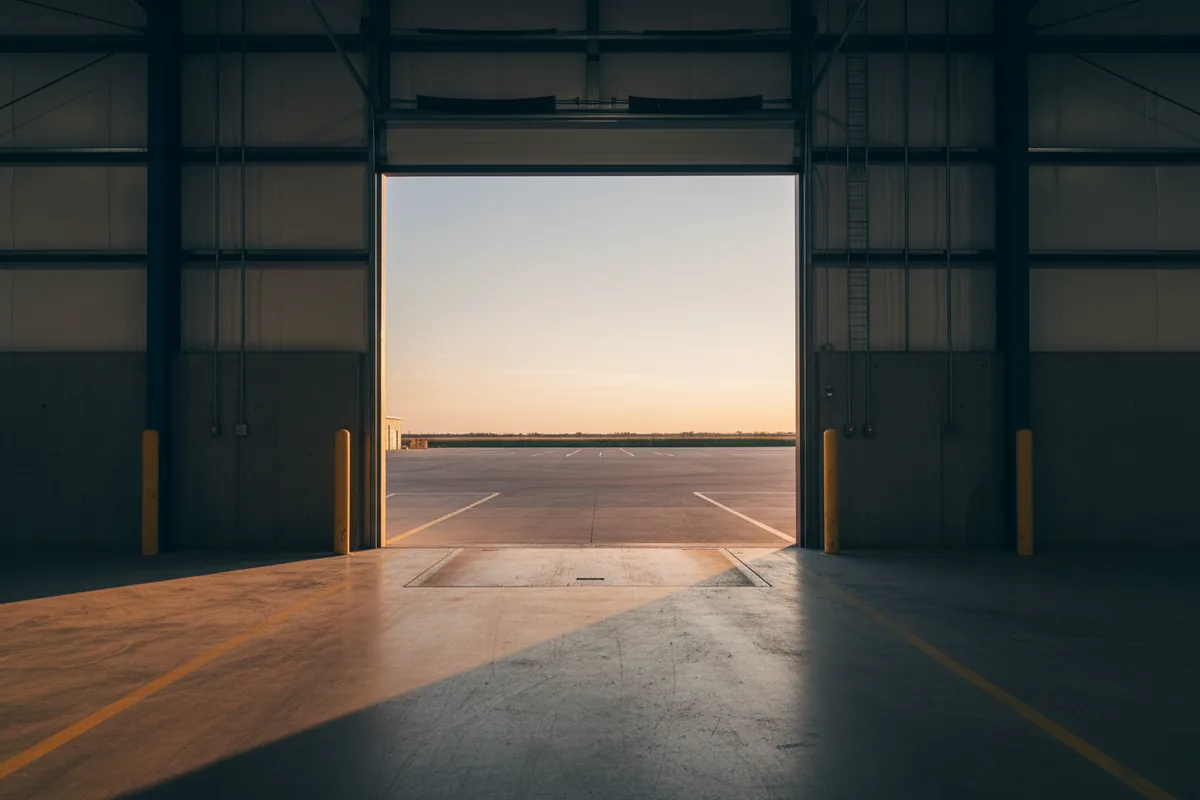
An open warehouse dock door looks out toward an empty truck court.
Immediate answer

Loading dock injuries: what three OSHA dockboard, wheel-chock and fall rules say, who may be answerable besides an employer, and the records that matter.

On this page
  1. Key Takeaways
  2. What the Rules Required at the Dock Where You Were Hurt
  3. Which Accident Pattern Fits What Happened to You
  4. Who May Be Responsible for Your Loading Dock Injury
  5. Records That Can Show What Happened at Your Dock
  6. What Your Injury, or a Family Member's Death, Can Mean for a Claim
  7. Workers' Compensation or a Third-Party Claim: Which Track Fits Your Dock Injury
  8. Questions Worth Asking Before You Speak With a Loading Dock Accident Attorney
  9. Frequently asked questions
  10. Sources

If you were hurt at a loading dock, or lost someone in a dock accident, a claim may reach beyond workers' compensation. That depends on who controlled the dock, the trailer and the equipment. Federal safety rules set baseline duties for dockboards, wheel chocks and fall protection. Which parties may be answerable, and under what rules, turns on the facts and the state.

Most people facing a loading dock injury come to this page in the middle of something hard: a trailer that rolled away from the dock while a forklift was inside, a dock plate that slid out from under a pallet jack, a fall of several feet onto concrete. There may be surgery behind you or ahead of you, paychecks that stopped, and a family trying to understand how an ordinary shift turned into this. Many readers are also trying to answer a quieter question: whether anyone besides the employer had a hand in what happened.

Industrial Injury Law Group is a law practice focused on industrial accidents in warehouses, distribution centers, plants and the docks that connect them to trucks and rail cars. This page explains how loading dock cases are usually analyzed: the federal rules involved, how these accidents happen, who may be responsible, the records that tend to matter, and how workers' compensation and other claims fit together.

Key Takeaways

A loading dock is a meeting point of several businesses, and that is what makes these cases different from many workplace injuries. The dock may belong to one company, the worker may be employed by another, the trailer may be operated by a carrier, and the dock plate or vehicle restraint may have been built by a manufacturer none of them control.

  • Federal regulations set minimum requirements at the dock. Under 29 C.F.R. § 1910.26, dockboards must support the maximum intended load, portable dockboards must be secured, and measures such as wheel chocks or sand shoes must keep the transport vehicle from moving while employees are on the dockboard. Under 29 C.F.R. § 1910.178(k)(1), a highway truck's brakes are set and wheel chocks placed under the rear wheels while it is boarded with powered industrial trucks. Under 29 C.F.R. § 1910.28(b)(4), employees on a dockboard are protected from falls of 4 feet or more by guardrails or handrails, with narrow exceptions.
  • A safety standard does not by itself show that anyone was at fault. Whether a rule applied, whether it was met, and whether a lapse caused the injury are questions of what actually happened.
  • Responsibility can extend past the employer to the dock's operator when it is a different business, the carrier or driver, the maker or seller of dock equipment, and a company that maintained it.
  • Workers' compensation rules differ by state. A claim against someone other than the employer may, in some situations, exist alongside a workers' compensation claim.
  • Limitation periods, fault rules and damages rules differ from state to state. No single national rule governs these cases, and this page does not set out any one state's rules or deadlines.

Which of these points carries weight in a given case comes down to a few practical facts: who owned and ran the dock, who employed the injured person, who controlled the vehicle, and what state the dock is in.

What the Rules Required at the Dock Where You Were Hurt

The core federal rule for dock plates is 29 C.F.R. § 1910.26, and it places these duties on the employer. In practical terms, it describes what a stable crossing between dock and trailer is supposed to look like. Each dockboard, also called a dock plate or bridge plate, must be capable of supporting the maximum intended load. Dockboards put into initial service on or after January 17, 2017 must be designed, built and maintained to keep transfer vehicles from running off the edge, unless the employer demonstrates there is no hazard of that happening. Portable dockboards must be secured by anchoring them or by equipment that keeps them from moving out of a safe position. Where securing one is not feasible, there must be enough contact between the dockboard and the surface to keep it in place. Measures such as wheel chocks or sand shoes must keep the truck, semi-trailer, trailer or rail car from moving while employees are on the dockboard. Portable dockboards must also have handholds or other means for safe handling.

If a plate shifted or a trailer moved under you, the natural next question is which of these measures was in place that day.

The forklift rule is narrower. Under 29 C.F.R. § 1910.178(k)(1), the brakes of highway trucks shall be set and wheel chocks placed under the rear wheels to prevent the trucks from rolling while they are boarded with powered industrial trucks. The same section adds, in paragraph (k)(3), that fixed jacks may be necessary to support a semitrailer and prevent upending when the trailer is not coupled to a tractor. This rule speaks to the moment a forklift drives into a trailer, which is when many serious dock injuries occur, and it is why families often ask who set, or was expected to set, the brakes and chocks.

Fall protection on dockboards comes from 29 C.F.R. § 1910.28(b)(4). The employer must ensure that each employee on a dockboard is protected from falling 4 feet or more to a lower level by a guardrail system or handrails. Those are not required only when three conditions all hold: the dockboard is used solely for materials-handling with motorized equipment, the employees are not exposed to fall hazards greater than 10 feet, and they have been trained under § 1910.30. For someone who fell, whether that exception fit the work being done is a factual question worth looking at closely.

None of these standards, on its own, establishes fault. They mark a baseline, and inspection records, incident reports and maintenance logs often show whether that baseline was followed. These are the federal rules; OSHA's worker rights page also directs workers to their nearest federal or State Plan office, and this page does not describe any state program.


Which Accident Pattern Fits What Happened to You

These accidents tend to fall into four patterns. Each points to a different rule and a different set of people who may have had a duty.

The first is trailer movement. A trailer can creep away from the dock face, or pull away entirely, while a dockboard is in place and a worker or forklift is crossing it. The gap that opens can drop a forklift between dock and trailer or pin a worker. This pattern connects most directly to the wheel-chock and vehicle-restraint duties in § 1910.26 and the brake-and-chock rule in § 1910.178(k)(1). When the trailer was uncoupled from its tractor, support under the front of the trailer can also become an issue. Where the injury involved being caught between the trailer and the dock, the analysis overlaps with that of workplace crush accidents.

The second is a dock plate that shifts or fails. A portable plate that was not anchored can slide under the load of a pallet jack. A plate rated below the weight crossing it can buckle. Here the load-capacity and securing requirements of § 1910.26 matter, along with the design and condition of the plate itself.

The third is a forklift going off the dock edge. A powered industrial truck can run off an open dock door with no trailer present, or off the side of a dockboard. The run-off protection requirement for newer dockboards and the general rules for forklift operation are relevant here. The broader topic of forklift and warehouse injuries covers more of those rules.

The fourth is a fall from the dock itself, a worker stepping off an open edge or falling from a dockboard to the ground. The fall-protection duty in § 1910.28(b)(4), and its exception, frame much of that analysis.

The sequence of events matters more than any single moment: where the trailer was, whether it was coupled, what equipment was on the plate, and what condition everything was in. That sequence decides which rules, and which parties, come into the picture.

Who May Be Responsible for Your Loading Dock Injury

Many injured workers reasonably assume that only their employer could be involved. At a loading dock, that is often not the whole picture, and the type of business involved shapes the legal theory that may apply.

The dock operator or property owner, when it is not the injured person's employer, may be examined under premises liability, the body of law about the duty a property owner or operator may owe to people lawfully on its property to keep it reasonably safe. A warehouse that receives a staffing agency's workers, or a shipper whose dock a contractor's crew is unloading, are examples of relationships where this question comes up.

The carrier or the driver of the transport vehicle may be examined under negligence, the general rule that a person or business can be responsible for harm caused by failing to use reasonable care. Questions here often center on who was expected to set brakes, chock wheels or keep the trailer in place before anyone boarded it.

The manufacturer of a dock plate, dock leveler or vehicle restraint may be examined under products liability, the law that can make a maker responsible when a product was defective and the defect caused the injury. Both a defect and causation must be shown. A failure alone does not prove either.

A seller or distributor of dock equipment may also face products liability claims in some states. A company hired to inspect or repair dock equipment may be examined under negligence in that work.

A truck driver hurt at someone else's dock is in a related but distinct position that the site treats on its delivery workers page. This page focuses on people working at the dock.

Whether any of these parties is responsible turns on what happened and where. A conversation with our attorney can go through who controlled the dock, the vehicle and the equipment, which is usually where identifying the parties begins.

Records That Can Show What Happened at Your Dock

A loading dock injury that becomes a legal question is usually answered with documents and physical things, not memories alone. The records that often matter include:

  • incident reports filed with the employer or with the business that runs the dock
  • OSHA inspection records or citations, if an inspection took place
  • inspection and maintenance logs for the dock plate, leveler and vehicle restraint
  • surveillance or dock camera footage
  • records showing whether wheel chocks were placed and whether the vehicle's brakes were set, along with any bills of lading or yard logs showing which trailer was at the door
  • the dock plate, restraint device or other equipment involved, if it has been kept in its post-accident condition
  • medical records documenting the injury and treatment
  • the names and contact details of coworkers, drivers and others who saw what happened

Workers also have some access of their own under federal law. According to OSHA's worker rights page, workers have the right to report an injury or illness and get copies of their medical records, to review records of work-related injuries and illnesses, and to request an OSHA inspection and speak to the inspector. The same page states that it is illegal for an employer to retaliate against a worker for complaining to OSHA, and that a worker who believes retaliation occurred can file a whistleblower complaint within 30 days of the retaliation.

Some of this material changes with time. Equipment may be repaired or replaced, and footage exists later only if it was kept. Families often find that the plate or restraint itself, more than any report, ends up showing how it behaved.

What Your Injury, or a Family Member's Death, Can Mean for a Claim

The forces at a dock are large: a loaded trailer, a forklift carrying a pallet, a drop of several feet onto concrete. The injuries reflect those forces.

Crush injuries can occur when a trailer moves or a dock plate shifts and a worker is caught between a forklift, the trailer and the dock. Fractures and other orthopedic injuries are common results of falls from the dock face or a dockboard. Traumatic brain injuries can follow a fall from dock height, and spinal cord injuries can follow a fall or a forklift dropping off an edge. Amputations and degloving injuries can result when a limb is caught in equipment or between moving loads. Some of these accidents are fatal.

When an accident causes a death, surviving family members may have a wrongful death claim, a legal claim brought by family members, or by a representative on their behalf, when someone's death was caused by another's wrongful conduct. Who may bring it and what it can include are set by each state's law.

In a claim against a party other than the employer, the law may allow several categories of damages. These can include medical expenses, past and future; lost wages and lost earning capacity; pain and suffering; and, in a death case, the losses a state's wrongful-death law recognizes. What any category covers turns on the injury, its effect on work and daily life, proof of fault and causation, and the state's rules, including whether caps or reductions apply. This page gives no medical guidance; it describes injuries only to explain how the law treats them.

Workers' Compensation or a Third-Party Claim: Which Track Fits Your Dock Injury

Two different legal tracks often run side by side after a dock injury, and confusing them is one of the most common sources of worry for injured workers.

Workers' compensation is a state-run system for workplace injuries, generally designed to provide benefits without proof that the employer was at fault. In exchange, it usually limits what can be recovered from the employer. How it works, what it pays and how it interacts with a lawsuit differ by state.

A third-party claim is a personal injury claim against someone other than the employer: the dock operator, the carrier or driver, the equipment maker or seller, or a maintenance company. Unlike workers' compensation, fault generally has to be shown, and the categories of damages described above may be available. A worker may have both a workers' compensation claim and a third-party claim, only one, or neither. When a workers' compensation claim is paid and a third-party claim also succeeds, state law may also address how the two interact.

Fault rules differ too. Under comparative fault, a rule used in many forms across states, an injured person's recovery is reduced by their own share of fault, and in some versions barred beyond a certain share. Under contributory fault, a rule a few states keep, an injured person found at fault at all may be barred from recovering.

Each claim also has its own deadline. A statute of limitations is the period within which a lawsuit must be filed, and these periods differ by state and by type of claim.

Because these rules shift from claim to claim, the relationship between the injured person and each business at the dock is often the starting point. If it would help to talk through which claims may fit the facts and the state where the injury happened, you can request a case evaluation.

Questions Worth Asking Before You Speak With a Loading Dock Accident Attorney

A conversation about a dock injury goes further when the basic facts are in view. These questions are worth thinking through, even where the answers are not yet known:

  • Who operated the dock, and who owned the building or property where it sits?
  • Who employed the injured person? Was it the same business that ran the dock, a staffing agency, a contractor or someone else?
  • Who drove or controlled the trailer or truck, and was it coupled to a tractor at the time?
  • Were wheel chocks, a vehicle restraint or other securing measures in place? Was a portable dock plate anchored?
  • What equipment was involved, such as the dock plate, leveler, restraint or forklift, and who maintained it?
  • Was an incident report filed, and with which company?
  • Did an OSHA inspection or citation follow the accident?
  • In what state did the injury happen?

The last question matters more than it might seem, because limitation periods, fault rules and damages rules all follow the state. The other answers determine which legal theories may come into play and which records are worth locating. The industrial accident claims page and the federal safety standards page cover related ground for injuries at plants and warehouses beyond the dock.

Free case evaluation

No Fee Unless We Win Your Case

A free case evaluation is how it starts. Tell us what happened, and we’ll help you understand your options. You pay no fee unless we win your case.

Industrial Injury Law Group

How it works

  1. Call us or request a free case evaluationTell us what happened, in your own words.
  2. Talk through your caseYour options, and what your case may be worth.
  3. No fee unless we winYou pay no attorney fee unless we win your case.
Free case evaluation

Tell Us What Happened

Frequently asked questions

Can I sue someone other than my employer after a loading dock accident?

Depending on the facts and state law, a claim against a party other than the employer may be possible. That could include the dock operator, the carrier or driver, or the maker of dock equipment. It is separate from workers' compensation and depends on who controlled the dock, the vehicle and the equipment.

What federal rules apply to loading dock safety?

Three OSHA regulations are central: 29 C.F.R. § 1910.26 on dockboard load capacity, securing and wheel chocks; 29 C.F.R. § 1910.178(k)(1) on setting brakes and chocking wheels before forklifts board highway trucks; and 29 C.F.R. § 1910.28(b)(4) on dockboard fall protection and its exception. None establishes fault on its own.

What if the dock where I was hurt belonged to a company I don't work for?

That situation is where premises liability often comes in. A dock operator that is not the employer may owe a duty to keep its premises reasonably safe, a duty separate from the employer's workers' compensation obligations. Whether a claim exists depends on the facts and state law.

What records are most useful after a loading dock accident?

Records that often matter include incident reports, OSHA inspection records or citations, equipment maintenance logs, camera footage, wheel chock and restraint records, the equipment itself, medical records and witness names. Together they show the dock's condition at the moment of the accident.

Does a loading dock accident always involve a workers' compensation claim?

Not necessarily. Workers' compensation concerns an employee and their employer. A contractor, or a delivery worker hurt at another company's dock, may be in a different position. Workers' compensation rules differ by state, and the employment relationship often decides which track applies.

What is premises liability and how does it apply to a loading dock injury?

Premises liability is the law about a property owner's or operator's duty to keep its property reasonably safe. At a dock, it may apply when a business other than the employer controlled the dock surface, equipment or procedures. Whether it applies depends on the facts and the state's law.

Can the maker of a dock plate or restraint system be held responsible?

Products liability law may allow a claim against a manufacturer, and in some states a seller, if the dock plate, leveler or restraint was defective and the defect caused the injury. Both must be shown. A failure during an accident does not by itself prove a defect.

How long do I have to bring a claim after a loading dock accident?

No single national deadline applies. Limitation periods differ by state and by type of claim, and a workers' compensation claim and a third-party claim may each follow different timelines. The state where the injury happened sets the period that applies.

Sources

Statutes, regulations and court sources

  1. 0129 C.F.R. § 1910.26, Dockboards (eCFR) · Electronic Code of Federal Regulations
  2. 0229 C.F.R. § 1910.178, Powered industrial trucks (eCFR) · Electronic Code of Federal Regulations
  3. 0329 C.F.R. § 1910.28, Duty to have fall protection and falling object protection (eCFR) · Electronic Code of Federal Regulations

Other sources

  1. 04Worker Rights and Protections, Occupational Safety and Health Administration, U.S. Department of Labor · Occupational Safety and Health Administration