HAZARDS / 01Hazards

Machine Entanglement Injury Lawyer

  • Updated November 10, 2026
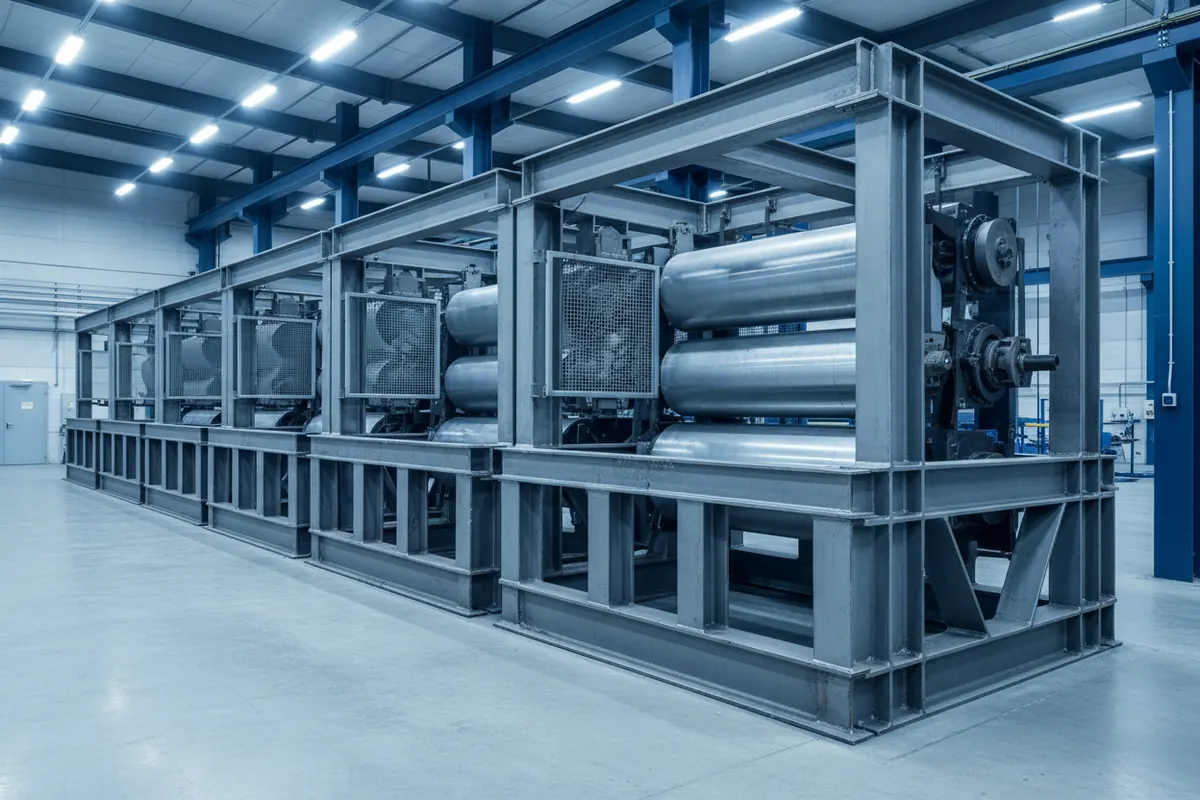
An idle industrial roller mill with closed infeed guards on a clean factory floor.
Immediate answer

Caught in a machine at work? How 29 C.F.R. § 1910.212 guarding rules apply, who besides an employer may be answerable by type, and which records matter.

On this page
  1. Key Takeaways
  2. When a Machine Entanglement Case May Qualify
  3. How a Machine Entanglement Accident Like Yours Can Happen
  4. Who May Be Responsible for Your Injury
  5. Which Records Help Show What Happened to You
  6. What These Injuries Do to a Body and What Damages Law May Allow
  7. How State Law and Jurisdiction Where You Were Hurt Shape What Comes Next
  8. Frequently asked questions
  9. Sources

If your hand, glove, sleeve or hair was caught in a machine at work, the injury may involve more than workers' compensation. Federal rules require guarding against hazards such as rotating parts and ingoing nip points. Depending on the facts and your state's law, a machine's maker, a service company or a site operator other than your employer may be legally answerable.

An entanglement happens in a fraction of a second. What follows lasts much longer: surgery, weeks or months away from work, bills arriving before a paycheck does, and the question of how a machine that ran every day could do this. Most people facing an injury like this, or a family facing a death, are trying to understand three things at once: what went wrong with the machine, who besides the employer had a hand in its condition, and what the law allows. This page walks through those questions for workers hurt by rotating shafts, rollers, belts, gears and nip points in plants, factories and warehouses.

Key Takeaways

  • The federal machine-guarding rule, 29 C.F.R. § 1910.212(a)(1), requires one or more methods of machine guarding to protect the operator and other employees in the machine area from hazards such as those created by point of operation, ingoing nip points, rotating parts, flying chips and sparks.
  • Under 29 C.F.R. § 1910.212(a)(2), guards are to be affixed to the machine where possible, secured elsewhere if attachment to the machine is not possible, and must not offer an accident hazard in themselves.
  • The protection runs to bystanders too. The rule names "other employees in the machine area," so a worker caught while walking past or clearing a jam is within the language of the standard, not just the person running the machine.
  • A guarding rule describes what was required. It does not, on its own, show that anyone was at fault; whether a missing or inadequate guard contributed to an injury is a question of fact.
  • Responsibility can reach past the employer to the company that designed or built the machine, a maintenance or service company that removed a guard and did not replace it, or the operator of the site when that operator is not the injured worker's employer.
  • Limitation periods, fault rules and damages rules come from state law and differ from state to state. Workers' compensation rules differ by state as well, and this page states none of them.

When a Machine Entanglement Case May Qualify

The facts that usually matter in an entanglement case follow a recognizable shape. A machine had a moving part capable of catching a person: a rotating shaft, a pair of rollers turning toward each other, a belt running over a pulley, a set of meshing gears. A guard was absent, inadequate, removed or defeated. A hand, glove, sleeve or hair was drawn in, and an injury followed. The federal rule names several of these hazards directly, listing ingoing nip points and rotating parts among those that guarding must protect against in 29 C.F.R. § 1910.212(a)(1).

That pattern is the starting point, not the conclusion. A civil claim, meaning a lawsuit for money damages against someone other than through workers' compensation, generally rests on one of two legal paths.

The first is negligence, the failure to use reasonable care. The law generally asks four things: that the party owed a duty of care to the injured person, that it breached that duty, that the breach caused the injury, and that the injury produced damages. A service company that worked on a machine, or a site operator that controlled the floor, may owe a duty depending on its role.

The second is product liability, the body of law that can hold a maker or seller of a product responsible for injuries the product causes. Here the law generally asks whether the machine was defective, in its design, its manufacture or its warnings, and whether that defect caused the injury.

For you, this means the injury itself is not the case. The case is what the evidence shows about the machine, the guard and the people who controlled them. What you may weigh at this stage is less "do I have a claim" and more "what do I actually know about this machine": who made it, who serviced it, who ran the building, and what changed before the day it happened.

Workers' compensation may also apply to a workplace injury, and its rules differ by state. A civil claim against a third party and a workers' compensation claim can exist side by side, and how they interact is a matter of each state's law.

Some entanglements happen on conveyors, and some end in amputation; this site treats conveyor belt injuries and amputation each on its own page. This page stays with the entanglement itself.


How a Machine Entanglement Accident Like Yours Can Happen

If you were hurt, the accident probably began with ordinary work. Someone reaches in to clear a jam, feeds material by hand, adjusts a part on a running line, or simply stands close to an exposed shaft. Rotating parts can catch loose clothing, a glove's cuff or long hair and wind it in. Ingoing nip points, where two parts turn toward each other or a belt meets a pulley, pull whatever they catch into the gap.

The federal standard speaks to exactly the moment you may be trying to make sense of. Under 29 C.F.R. § 1910.212(a)(1), the machine you were working on, or near, was to have one or more methods of guarding, and the regulation gives examples of what that can look like: barrier guards, two-hand tripping devices and electronic safety devices. Under 29 C.F.R. § 1910.212(a)(2), guards are to be attached to the machine where possible and secured elsewhere if they cannot be, and a guard must not itself create an accident hazard. Where work is actually performed on the material, the point of operation, the same section requires guarding on machines whose operation exposes an employee to injury, and it says that special hand tools for placing and removing material may supplement that guarding but are not to be used in lieu of it.

The physical routes to an entanglement tend to fall into a few groups:

  • A guard that was never installed, or was installed in a way that left a nip point or shaft exposed.
  • A guard removed for maintenance, cleaning or speed, and not put back.
  • A guard that was present but inadequate for how the machine was actually used.
  • A machine that started or kept moving while someone was servicing it, which raises questions about lockout and tagout failures as well as guarding.

For an injured worker, the condition of the guard on the day of the accident, and how it came to be in that condition, often becomes the center of the case. Whether a missing or inadequate guard actually caused the injury, and whose responsibility the guard was, depends on the facts.

Protective equipment is a separate subject. OSHA's personal protective equipment page describes PPE, including gloves and coveralls, as equipment worn to minimize exposure to hazards, and states that employers must provide it when engineering, work practice and administrative controls are not feasible or do not provide sufficient protection. The same page notes that equipment that does not fit properly "can make the difference between being safely covered or dangerously exposed." In other words, OSHA treats PPE as a layer alongside controls like machine guards, not a replacement for them. For a family trying to understand an accident, a question that may be worth weighing is whether the gloves or clothing involved were part of the hazard rather than protection from it.

Who May Be Responsible for Your Injury

Many injured workers reasonably assume the only party in the picture is their employer. Often the machine passed through several hands before it hurt anyone, and each hand may carry its own legal duty. Responsibility depends on each party's role and what it actually did or failed to do, not on the fact that an accident occurred.

The machine's manufacturer. If the machine that caught you was defective, the company that designed and built it may be answerable under product liability. That could mean a design that left a nip point exposed when a guard was feasible, a manufacturing flaw, or warnings and instructions that did not adequately address the entanglement hazard. For an injured worker, this path matters because it is a civil claim against someone other than the employer, separate from workers' compensation. Whether a design was defective is a question of evidence, and an accident alone does not prove a defect.

A seller or distributor. Depending on state law, a company that sold or supplied the machine may also be within the reach of product liability rules, which can add another party to the picture when the maker is hard to reach.

A maintenance or service company. Outside contractors often service, repair or rebuild industrial equipment. If a guard was taken off during service and not reinstalled, or work was done in a way that defeated a safety device, the service company's conduct may become part of the case under ordinary negligence principles. For you, that turns the question of who last worked on the machine into a question about who may be answerable.

The site's operator, when it is not the employer. Staffing arrangements, shared facilities and multi-employer worksites mean the company that controls the floor is not always the company that issues the paycheck. A site operator that controlled the equipment or the work area may owe duties of its own, which can matter most to workers placed through a staffing agency.

The employer. Claims against an employer generally run through workers' compensation, but the rules, including whether and when anything beyond workers' compensation is possible, differ by state. This page does not state any state's workers' compensation rule.

The list of possible defendants is often longer than it first appears, and it is defined by records: purchase documents, service contracts and staffing agreements. A question you may want to consider is simply who, other than your employer, touched that machine or controlled that space. Identifying every party in that chain is one of the first things a conversation with an attorney can help clarify, along with how a factory injury case or a broader industrial accident case tends to be framed.

Which Records Help Show What Happened to You

If you were hurt, or a family member was, the record of the entanglement is usually scattered across the employer, the machine's paperwork, the hospital and the people who were there. Each of the following tends to matter for its own reason.

  • Incident and accident reports prepared by the employer or filed with OSHA, which often record the first account of what happened and when.
  • Photographs and video of the machine, the guard or the place a guard should have been, and the surrounding area, which can show the machine's condition close to the time of the accident.
  • The machine itself, along with its make, model, serial number, the manufacturer's manuals and warnings, and its maintenance and repair records, which can show how it was designed, what changed and who worked on it.
  • Medical records documenting the injury, the emergency care and the treatment since, which connect the accident to the harm.
  • The names and contact information of coworkers, supervisors and anyone else who saw the accident or knew the machine's condition.
  • Any OSHA inspection or citation records, if an inspection took place.

Several of these categories connect to rights OSHA describes on its worker rights and protections page. That page lists, among workers' rights, the right to work on machines that are safe, to request an OSHA inspection and speak to the inspector, to report an injury or illness and get copies of medical records, and to review records of work-related injuries and illnesses. It also points to tools for checking an employer's OSHA inspection history. An inspection record or a citation is a record of what the agency found or alleged; it does not by itself decide who is legally responsible for an injury.

In a guarding case, what the machine looked like and who last worked on it are often harder to reconstruct than the injury itself. What a family may weigh is which of these records they already have, which sit with the employer or a contractor, and which may not exist. A conversation about the incident reports, photos and maintenance history is a natural next step for many people at this stage, and you can request a case evaluation to discuss what you have.

What These Injuries Do to a Body and What Damages Law May Allow

If you or a family member was caught, the harm was likely severe, because the machine keeps moving after it catches. Entanglement injuries can include degloving, where skin and tissue are pulled away from the underlying structure; crush injuries; fractures; nerve damage; deep lacerations and lasting scarring; and injuries involving part or all of a hand or limb. Some end in amputation, which this site addresses on its own page, and some are fatal. This page describes these injuries only in general terms and gives no medical advice.

Damages are the money the law may allow an injured person, or a family after a death, to recover from a party found legally responsible. In a civil case, the categories the law may allow generally include:

  • Medical expenses, both past and those expected in the future.
  • Lost wages for time away from work.
  • Loss of earning capacity, where an injury affects the ability to do the same work going forward.
  • Pain and suffering.
  • Disfigurement and scarring.

Where a worker died, state wrongful-death laws, which allow certain family members to bring a claim for a death caused by another's wrongful conduct, may allow damages of their own. Who may bring that claim and what it may include differ by state.

For an injured worker, the damages picture is built from the records of daily life after the accident: treatment notes, work restrictions, pay history and what the injury has changed at home and on the job. Whether any category is available, and in what amount, depends on the facts, on proof of responsibility and on the state's law; nothing about an injury's severity alone settles it. A family weighing what comes next may find it useful to think about the future as well as the past, since future care and lost earning ability are often the least visible parts of the harm.

How State Law and Jurisdiction Where You Were Hurt Shape What Comes Next

Federal guarding rules are national, but most of the rules that decide your injury case are not. They come from the state where the case arises, and they depend on the state and the facts.

A statute of limitations is a law that sets a deadline for filing a civil lawsuit. If a claim is filed after the deadline, a court may dismiss it no matter how strong it is. Limitation periods differ by state, they can differ by the type of claim, and there is no single national period. This page does not state any state's deadline.

If questions have come up about whether you did something that contributed to the accident, such as reaching in or wearing loose gloves, comparative fault is the rule that addresses them. It divides responsibility among the parties whose conduct contributed to an accident, which can include the injured person. In states that follow it, your own share of fault may reduce what can be recovered, and in some states a large enough share may bar recovery. A few states follow an older rule, contributory fault, under which a person's own fault can bar recovery more broadly. Which rule applies depends on the state.

Damages rules differ too, including whether a state limits, or caps, certain kinds of damages. Workers' compensation rules also differ by state.

For an injured worker or a family, the same accident could be treated differently depending on where it happened and which parties are involved. Something you may want to consider is simply where the accident took place and where each company involved is based. The reliable way to understand how these state rules apply to a specific accident is a conversation with an attorney who works with the law of the state involved. For official guides and federal standards in one place, the site's industrial accident resources page collects them.

Free case evaluation

No Fee Unless We Win Your Case

A free case evaluation is how it starts. Tell us what happened, and we’ll help you understand your options. You pay no fee unless we win your case.

Industrial Injury Law Group

How it works

  1. Call us or request a free case evaluationTell us what happened, in your own words.
  2. Talk through your caseYour options, and what your case may be worth.
  3. No fee unless we winYou pay no attorney fee unless we win your case.
Free case evaluation

Tell Us What Happened

Frequently asked questions

What federal rules require machine guards on industrial equipment?

29 C.F.R. § 1910.212(a)(1) requires one or more guarding methods to protect operators and other employees in the machine area from hazards including ingoing nip points and rotating parts. Section 1910.212(a)(2) requires guards affixed to the machine where possible and not themselves an accident hazard. A rule's existence does not by itself establish fault.

Can I bring a claim against someone other than my employer after a machine entanglement?

Depending on the facts, parties other than an employer may bear responsibility: the machine's manufacturer under product liability, a service company that removed or failed to replace a guard, or a site operator that is not the employer. Whether such a claim exists depends on the facts and the state's law.

What is a statute of limitations and why does it matter in a machine injury case?

It is a deadline for filing a civil lawsuit, and a claim filed late may be dismissed regardless of its merits. Periods differ by state and by type of claim, and no single period applies nationwide. A conversation with an attorney is the reliable way to learn which deadline applies to a particular accident.

Does workers' compensation cover a machine entanglement injury?

Workers' compensation may apply to a workplace machine injury, but what it covers, how much, and how it affects claims against an employer differ by state. This page does not state any state's workers' compensation rule. A third-party civil claim, where the facts support one, is a separate path.

What records tend to matter most after a machine entanglement accident?

Records that often matter include incident reports, photos and video of the machine and guard, the machine's model, serial number, manuals and maintenance history, medical records, witness names, and any OSHA inspection or citation records. Together they show the machine's condition, who worked on it and how the injury happened.

What does comparative fault mean in a machine injury case?

Comparative fault divides responsibility among everyone whose conduct contributed to an accident, sometimes including the injured worker. A person's own share may reduce recovery or, in some states, bar it. A few states use contributory fault instead. The rule that applies depends on the state where the case arises.

What damages may be available after a machine entanglement injury?

The law may allow damages for past and future medical expenses, lost wages, loss of earning capacity, pain and suffering, and disfigurement; after a death, wrongful-death damages may be available. Whether any applies, and in what amount, depends on the facts and the state's law, including any caps.

Does OSHA's personal protective equipment guidance replace the requirement for machine guards?

No. OSHA's personal protective equipment page describes PPE as required when engineering, work practice and administrative controls are not feasible or not sufficient, a layer alongside controls like guards. The guarding rule in 29 C.F.R. § 1910.212 separately requires guarding on the machine, and says hand tools supplement rather than replace it.

Sources

Statutes, regulations and court sources

  1. 0129 C.F.R. § 1910.212, General requirements for all machines (eCFR) · Electronic Code of Federal Regulations

Other sources

  1. 02Personal Protective Equipment - Overview, Occupational Safety and Health Administration · Occupational Safety and Health Administration
  2. 03Worker Rights and Protections, Occupational Safety and Health Administration · Occupational Safety and Health Administration