Industrial Injury Law Group

Forklift Injury Lawyer

  • Updated November 10, 2026
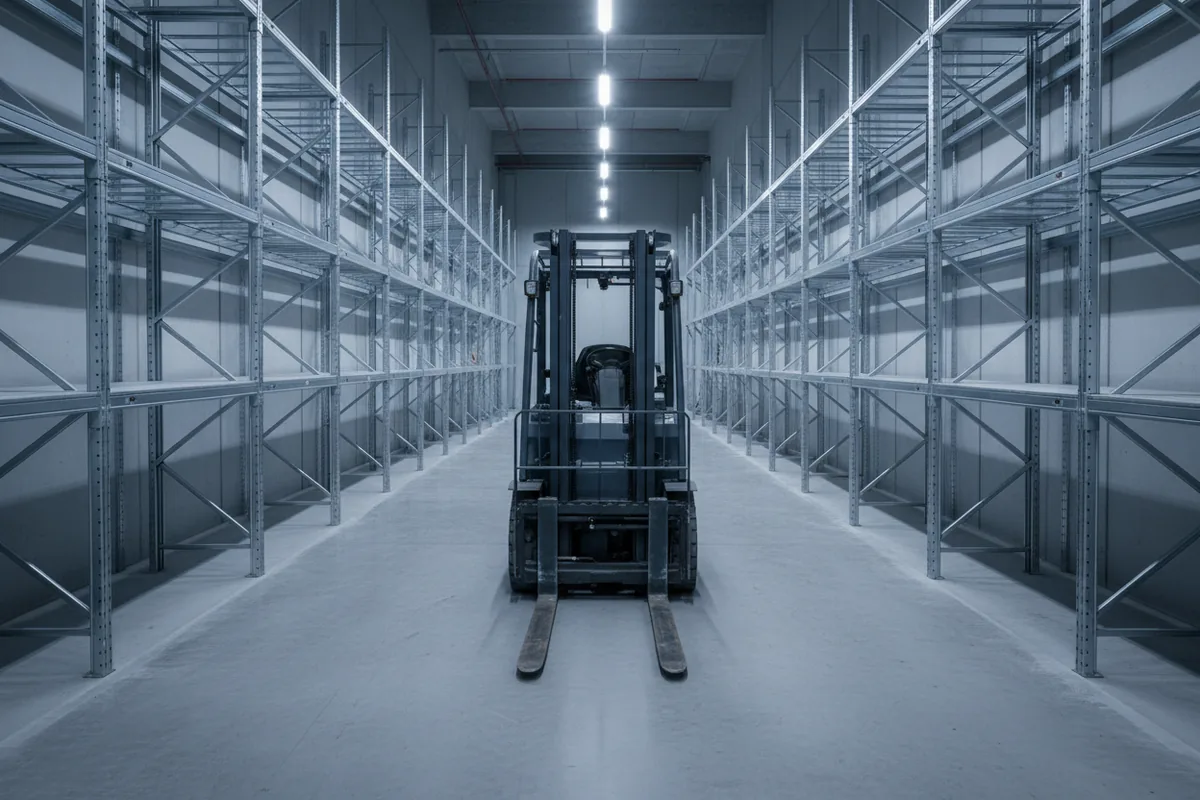
A stand-up reach forklift parked idle in a narrow warehouse racking aisle.
Immediate answer

Hurt by a forklift at work? What 29 C.F.R. § 1910.178 requires on training and unsafe trucks, who besides the employer may be answerable, and which records matter.

On this page
  1. Key Takeaways
  2. What Qualifies as a Forklift Injury Case, and Where Your Accident Fits
  3. How Forklift Accidents Happen, and What the Rules Say About Your Truck and Operator
  4. Who May Be Responsible for Your Injury Beyond Your Employer
  5. Records That Can Shape What Your Forklift Injury Case Shows
  6. Injuries a Forklift Accident Can Cause and What Damages Law May Allow
  7. Why the State Where You Were Hurt Shapes Your Forklift Injury Claim
  8. Frequently asked questions
  9. Sources

If a forklift or another powered industrial truck injured you, or killed someone in your family, at a warehouse, plant or distribution center, a forklift injury case asks two questions. Who besides the employer may be legally answerable: the truck's maker or seller, a rental or service company, a site operator or a staffing agency? And what do the training, maintenance and camera records show about how it happened?

Most people facing this are dealing with something that happened in seconds: a truck that tipped, a load that came off the forks, a forklift that came around a rack into a walkway. Afterward come the surgeries or the funeral, the missed paychecks, the forms from the employer's insurer, and a question that rarely gets a straight answer: was this just "a workplace accident," or did someone outside the company have a hand in it? This page is written for the injured worker, for the spouse or parent sitting beside them, and for families after a death.

The sections below describe the facts these cases usually turn on, how the federal forklift standard fits in, the kinds of parties who may be responsible, the records that matter, and why the state where it happened shapes almost everything else.

Key Takeaways

  • The federal forklift standard, 29 C.F.R. § 1910.178, sets safety requirements for the fire protection, design, maintenance and use of powered industrial trucks. It reaches well beyond the classic sit-down forklift: tractors, platform lift trucks and motorized hand trucks are covered too.
  • An employer's workers' compensation coverage is often not the only legal path. The company that made, sold, rented or serviced the truck, or that ran the site, is a different party from the employer, and the law can treat it differently.
  • A third-party claim, meaning a civil claim against someone other than the employer, rests on its own legal theory. It is a separate matter from workers' compensation, with its own elements, proof and deadlines.
  • The paper trail inside a facility can matter as much as anyone's memory of the event. The standard itself calls for operator certification and for trucks to be examined before being placed in service, so records of both may exist.
  • Limitation periods, fault rules and damages rules differ by state. No single national rule decides a forklift injury claim.
  • A regulation describes what a business is required to do. It does not, by itself, establish that anyone was at fault. Whether the legal elements of a claim are met depends on what happened.

What Qualifies as a Forklift Injury Case, and Where Your Accident Fits

These cases usually begin with one of a handful of events. A truck tips over, often with the operator still on it. A pedestrian is struck by a moving truck in an aisle or crossing. A load falls from raised forks onto someone below. A truck and its operator go off the edge at a loading dock, a situation the site treats more fully elsewhere. Or two trucks, or a truck and a rack, collide in a narrow aisle. Each of these can happen to the operator, to a co-worker on foot, or to a driver or vendor visiting the site.

What the law asks depends on the kind of claim. A negligence claim, the ordinary personal-injury claim, generally asks four things. Did someone owe a duty of reasonable care? Did they breach it? Did that breach cause the injury? And did the injury cause real losses, called damages? Product liability is the area of law that addresses injuries caused by a defective product. It asks whether the product had a defect and whether that defect caused the injury. A truck that tipped is not, for that reason alone, a defective truck, and an injury is not proof that anyone was careless.

Two different legal paths can come into play after a workplace forklift injury. One is workers' compensation, the system through which employers cover work injuries. The other is a civil claim against a third party, someone other than the employer. Depending on the facts and the state, one, both or neither may be available.

If you were hurt, the facts that usually matter first are simple to state, even if they take time to pin down: who employed you, who owned the truck, who maintained it, who controlled the building, and what the truck and the people around it were doing in the moments before. For a family after a death, the same facts matter, and state law also decides who may bring the claim.

How Forklift Accidents Happen, and What the Rules Say About Your Truck and Operator

Picture the moments before the injury. An operator was driving an electric pallet jack, a stand-up reach truck or a classic forklift. Someone may have been walking the same aisle. A load may have been raised high, or the truck may have had a problem someone had already noticed. The federal standard speaks to each of those pieces: what kind of truck it was, whether the operator was trained, and whether the truck should have been running at all.

The kind of truck comes first. If the machine that hurt you was not a classic forklift, it may still fall under the standard. Under 29 C.F.R. § 1910.178(a)(1), the section's safety requirements on fire protection, design, maintenance and use reach "fork trucks, tractors, platform lift trucks, motorized hand trucks, and other specialized industrial trucks powered by electric motors or internal combustion engines." It does not apply to compressed air or nonflammable compressed gas-operated trucks, to farm vehicles, or to vehicles intended primarily for earth moving or over-the-road hauling. That is why the type of truck, and its power source, can be worth noting early.

The operator's training comes next. Under 29 C.F.R. § 1910.178(l)(1), "the employer shall ensure that each powered industrial truck operator is competent to operate a powered industrial truck safely, as demonstrated by the successful completion of the training and evaluation specified in this paragraph (l)." The same paragraph requires that the training be completed before an employee is permitted to operate a truck, except for training purposes and as the rule otherwise permits. Put simply, the operator is meant to have been both taught and evaluated, not just handed the keys. Families often wonder whether the operator had been trained on that particular kind of truck, in that particular building. The rule's topic list includes visibility, vehicle stability, pedestrian traffic, narrow aisles, ramps and load stacking, which is why that question tends to matter.

Then there is the truck's condition. Under 29 C.F.R. § 1910.178(q)(1), "any power-operated industrial truck not in safe operating condition shall be removed from service," and "all repairs shall be made by authorized personnel." Related provisions require examining trucks before they are placed in service, at least daily or after each shift where trucks run around the clock, and require that defects be reported and corrected immediately. In plain terms, a truck with a known problem is not supposed to keep running. Where brakes, steering, a mast or a horn may have been involved, the question of who knew about the condition, and when, often moves to the center.

The circumstances that come up around these rules are familiar: operators working without the training the rule describes, trucks kept in use while needing repair, speed, loads that block the operator's view, pedestrians sharing aisles with trucks, and loads stacked, raised or carried in ways the truck was not set up for.

None of these requirements decides a case on its own. Whether a rule was followed, and whether a gap actually caused the injury, are questions the evidence has to answer. Matching what happened to what the rule required is one of the things a conversation with an attorney can help sort out.


Who May Be Responsible for Your Injury Beyond Your Employer

When a worker is hurt, the employer is the obvious name. In many forklift cases it is not the only one. The parties below, by type, are the ones these cases most often consider.

The forklift's manufacturer or seller may be considered under product liability. The questions are whether the truck had a defect in its design, its manufacture or its warnings, and whether that defect caused the injury. The standard's own text bears on this. It requires prior written approval from the manufacturer before modifications that affect capacity and safe operation, and replacement parts equivalent in safety to the original design. That is why the truck's history after it left the factory is often part of the inquiry.

A rental company that supplied the truck is a separate business with its own role. Its responsibility, if any, turns on what condition the truck was in when it arrived and what the rental arrangement assigned to whom.

A maintenance or service company that inspected or repaired the truck may be considered under negligence. The question is whether its work met the standard of reasonable care and whether any shortfall contributed to the accident.

The operator of the site, when it is not the injured worker's employer, can matter too. In shared warehouses and distribution centers, the company controlling the building, its traffic patterns and its pedestrian walkways may be a different company from the one on the paycheck.

A staffing agency can matter when the worker was placed at the site by one. The agency's relationship to the worker and to the site, and what each company was responsible for, can bear on who answers for what.

Which of these parties, if any, may be responsible is a question of fact and of the law where the accident happened. A person in your position may want to weigh who owned, rented, serviced and controlled the truck and the space. Those are the questions a conversation with an attorney can work through. The related page on a warehouse accident lawyer covers warehouse injuries more broadly, and the site's industrial accident legal services page sets out the wider framework.

Records That Can Shape What Your Forklift Injury Case Shows

Paper and video often decide what a forklift case can show, because the moment itself is usually over before anyone understands it. The records that tend to matter fall into a few groups.

The first group is operator training and evaluation records. Because 29 C.F.R. § 1910.178(l)(1) ties competence to completed training and evaluation, these records go to the heart of that requirement. For an injured worker or family, this means a written record of the operator's training may exist: the standard also requires the employer to certify each operator's training and evaluation, and that certification must show the operator's name, the date of the training, the date of the evaluation and who performed the training or evaluation. The standard requires an evaluation of each operator's performance at least once every three years. Refresher training is required in situations that include observed unsafe operation, an accident or near-miss, and assignment to a different type of truck.

The second group is maintenance and inspection logs. The rule in 29 C.F.R. § 1910.178(q)(1) on removing unsafe trucks from service, together with the daily or per-shift examination requirement, means records about the truck's condition may exist. These include inspection checklists, repair orders and work by an outside service company.

The third is camera and surveillance footage. Many warehouses and plants have cameras on aisles, docks and doors.

The fourth is incident reports and OSHA records. OSHA's worker rights page states that workers have the right to report an injury or illness and get copies of their medical records. It also lists the rights to review records of work-related injuries and illnesses and to see results of tests taken to find workplace hazards. The same page lists a tool to check an employer's OSHA inspection history.

The fifth is witness names and contact information: co-workers, other operators, supervisors and anyone on foot nearby. The last is medical records that document the injury and the treatment that followed.

If you were hurt, the material injured people and families often end up relying on includes photos of the truck and the scene, the names of people who saw it, and their own notes about what was said afterward. A person in this position may want to weigh which records are in their own hands and which sit with a company. That difference often shapes what comes next.

Injuries a Forklift Accident Can Cause and What Damages Law May Allow

Forklift accidents involve heavy machines, raised loads and hard floors. The injuries discussed in these cases are often serious. They include crush injuries, traumatic brain injuries, spinal cord injuries, fractures and internal injuries, and some accidents are fatal. This page describes those categories only in general terms and gives no medical advice. What an injury means for a particular person is a question for the doctors treating them.

In law, damages are the losses a claim may seek. The categories commonly discussed in personal-injury cases include medical expenses, past and future, and lost wages. Loss of earning capacity covers a reduced ability to earn in the future. Pain and suffering is the physical and emotional harm itself. Wrongful death is the claim the law may allow surviving family members to bring when a death is caused by another's wrongful act or neglect. In wrongful-death cases, the law may allow damages for the family's own losses.

Every one of these categories is something the law may allow, not something any reader is assured of. Whether a category is available, and how it is measured, turns on the medical records and the specific facts. Damages rules, including any caps and the categories a state recognizes, differ from state to state. For an injured worker, a practical point follows. What workers' compensation provides and what a civil claim may seek are governed by different rules, which is one reason the question of other responsible parties matters.

Why the State Where You Were Hurt Shapes Your Forklift Injury Claim

Federal safety standards like 29 C.F.R. § 1910.178 apply nationally to the workplaces they cover. OSHA's worker rights page describes the federal right to work in a safe place and says that employers must keep the workplace free from known safety and health hazards. The civil claim after a forklift injury, though, is decided by state law, and that law differs from state to state.

Several rules change at the state line. One is the statute of limitations, the deadline for filing a lawsuit. It is set by each state, and it can differ for personal-injury, product-liability and wrongful-death claims. Another is fault, which matters if anyone suggests the injured worker shared some of the blame. Under comparative fault, a person's recovery may be reduced by their own share of responsibility, and some states use a version that bars recovery past a certain share. A few states use contributory fault, a stricter rule under which a person's own fault can bar recovery altogether. Damages caps and wrongful-death rules, including who may bring the claim, also vary. Workers' compensation rules, and how they interact with a claim against a third party, are set state by state as well. This national page does not set out any one state's deadlines or rules.

For an injured worker or a grieving family, the state where it happened shapes which deadline governs, how fault is divided and what a claim may seek. If it would help to talk through which state's law may apply to what happened and what those rules mean, you can request a case evaluation.

One more point from OSHA's page bears on workers who raised safety concerns. The page states that it is illegal for an employer to fire, demote, transfer or otherwise retaliate against a worker for complaining to OSHA. It also states that a worker who believes the employer retaliated can file a whistleblower complaint within 30 days of the retaliation.

Free case evaluation

No Fee Unless We Win Your Case

A free case evaluation is how it starts. Tell us what happened, and we’ll help you understand your options. You pay no fee unless we win your case.

Industrial Injury Law Group

How it works

  1. Call us or request a free case evaluationTell us what happened, in your own words.
  2. Talk through your caseYour options, and what your case may be worth.
  3. No fee unless we winYou pay no attorney fee unless we win your case.
Free case evaluation

Tell Us What Happened

Frequently asked questions

What is a forklift injury lawyer for?

A forklift injury lawyer handles the legal questions that follow a powered industrial truck accident. These include whether negligence, product liability or wrongful death may apply, and which parties besides the employer may be connected to the truck or the site. Whether any claim exists depends on the facts and the state.

What happens legally if a forklift crashes and someone is hurt?

Two separate paths may open. One is a workers' compensation claim through the employer. The other is a civil claim against a third party such as a manufacturer, rental company, service company, site operator or staffing agency. Which paths are available depends on the facts and the law of the state.

Who can be held responsible for a forklift injury besides my employer?

The categories usually considered are the forklift's manufacturer or seller, a rental company that supplied the truck, a maintenance or service company, the site operator when it is not the employer, and a staffing agency that placed the worker. Whether any of them is responsible depends on the facts and state law.

What does federal law require of employers operating forklifts?

Under 29 C.F.R. § 1910.178(l)(1), the employer must ensure each operator is competent to operate the truck safely, as shown by completed training and evaluation. Under 29 C.F.R. § 1910.178(q)(1), a truck not in safe operating condition must be removed from service. These requirements do not by themselves establish fault.

What records typically matter in a forklift injury case?

Operator training, evaluation and certification records often matter, as do maintenance and inspection logs, facility camera footage, incident reports and any OSHA records. Witness names and medical records round out the picture. Injured people and families often find that some records are in their hands while others sit with one or more companies.

How long do I have to file a forklift injury claim?

The deadline is set by state law, and it differs from state to state and by type of claim, including personal injury and wrongful death. Workers' compensation notice and filing deadlines also vary by state. This page gives no specific period because the governing rule depends on where the accident happened.

What should I know before speaking with a forklift injury attorney?

A case evaluation is a conversation about what happened. It can cover where and when the accident occurred and the truck involved. It can also cover who employed you, owned the truck and ran the site, along with the records that exist and the legal theories that may apply. Nothing about the outcome is assured.

Sources

Statutes, regulations and court sources

  1. 0129 C.F.R. § 1910.178, Powered industrial trucks, including paragraphs (a)(1), (l)(1) and (q)(1) (eCFR) · Electronic Code of Federal Regulations

Other sources

  1. 02Worker Rights and Protections, Occupational Safety and Health Administration, U.S. Department of Labor · Occupational Safety and Health Administration