

AFFECTED WORKERS / 02Affected workers

Maintenance Worker Injury Lawyer

  • Updated November 10, 2026
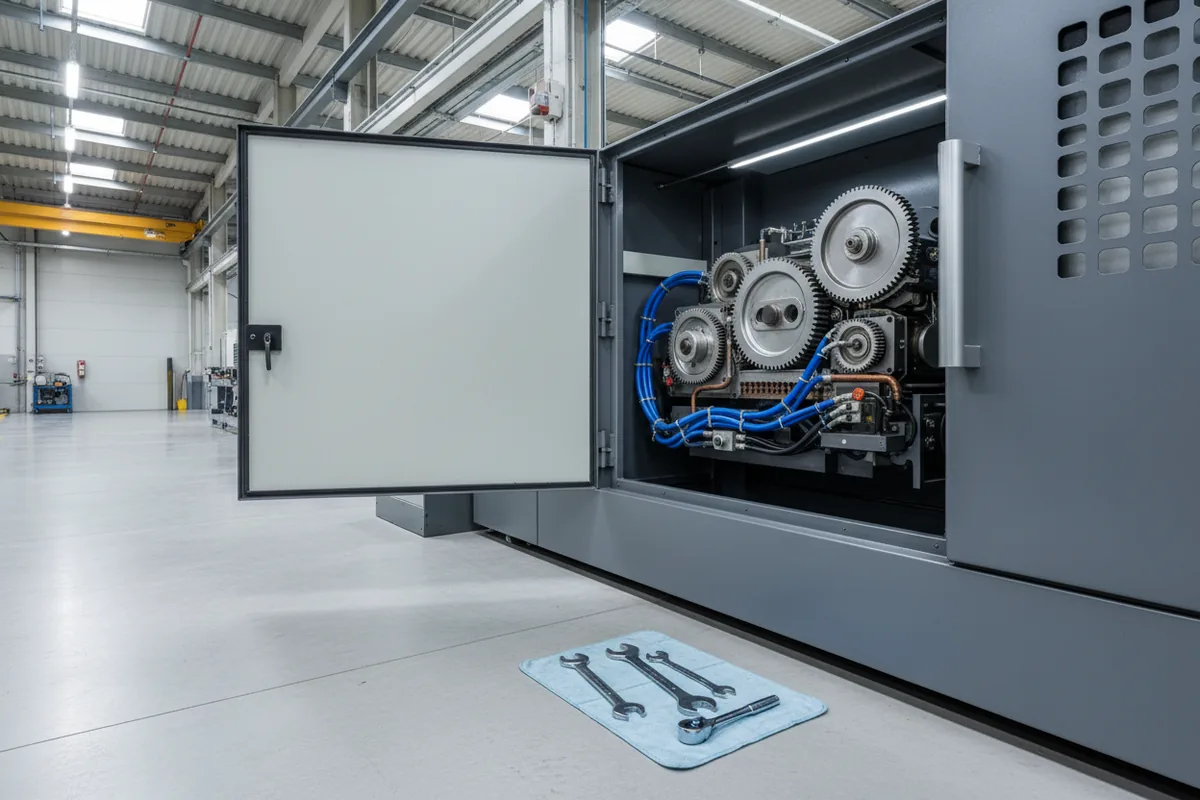
An open machine access panel with tools laid out on a factory floor below.
Immediate answer

Hurt while servicing or clearing a machine? How the federal lockout standard treats maintenance work, who may be answerable by type, and which records matter.

On this page
  1. Key Takeaways
  2. Why the Law Treats Servicing Differently From Running a Machine
  3. Did the Training You Received Matter to What Happened?
  4. Who May Be Responsible When a Maintenance Worker Is Hurt
  5. When You Work for a Contractor, Not the Site Owner
  6. The Records That Can Show What Happened During Servicing
  7. Injuries Maintenance Workers Sustain and What the Law May Allow
  8. Why the State Where You Were Hurt Shapes Your Options
  9. Frequently asked questions
  10. Sources

A maintenance worker hurt while fixing, cleaning, adjusting or clearing a machine may have legal options beyond the employer's workers' compensation system. Federal law treats servicing as its own hazard, because that is when stored energy and unexpected start-up can injure the person working on the equipment. Responsibility may reach the machine's maker, a site operator or another contractor, depending on the facts.

If you were hurt reaching into a jammed machine, replacing a part or clearing a line, or if you are a family member sitting with someone who was, the questions come quickly. Why did the machine move when it was supposed to be off? Was anyone besides the employer involved? How will the medical bills and the missed paychecks be handled while recovery takes its course? Most people facing an injury like this have never had to think about energy control procedures, contractor coordination or the difference between a workers' compensation claim and a civil case, and they are trying to understand all of it while in pain or grieving.

This page explains how industrial accident law looks at injuries during servicing and maintenance work in warehouses, factories and plants: what the federal lockout standard says, who may be answerable by type, the records that usually matter, and why the law of the state where it happened shapes everything else.

Key Takeaways

The central idea on this page is that a maintenance injury is usually analyzed through the moment of servicing itself, not just the injury that followed. The federal lockout and tagout standard, 29 C.F.R. § 1910.147, is written for the servicing and maintenance of machines and equipment, not for ordinary production work. That distinction often decides which rules applied to the job you were doing.

  • Servicing is the moment the standard is built around: unexpected energization, start-up or release of stored energy while someone is working on the equipment.
  • The employer is not the only party whose conduct may matter. A machine's manufacturer, a site operator that is not the employer, and another contractor working at the same time can each enter the picture.
  • Workers' compensation rules differ by state, and this page states no state's rule.
  • An injury, however serious, does not by itself show that anyone was at fault. Questions of duty, breach, defect and causation are answered by how the injury happened.
  • This page states no dollar figures and predicts no outcome.

The details of the job, such as who assigned it, who owned the machine and who else was on site, often carry as much weight as the medical records. Those details tend to fade, which is why many people write them down while they are still clear in memory.

Why the Law Treats Servicing Differently From Running a Machine

Federal law draws a line between running a machine and working on it. Under 29 C.F.R. § 1910.147(a)(1), the standard "covers the servicing and maintenance of machines and equipment in which the unexpected energization or start up of the machines or equipment, or release of stored energy could cause injury to employees," and it sets "minimum performance requirements" for controlling that energy. The same paragraph lists work the standard does not cover, including construction and agriculture employment, certain maritime employment, installations under the exclusive control of electric utilities for power generation, transmission and distribution, certain electrical hazards covered by a different subpart, and oil and gas well drilling and servicing.

Stored energy is the energy that can remain in a machine after it has been switched off. A compressed spring that snaps back, hydraulic pressure still held in a line, or a raised part that drops under its own weight can each move a component, release pressure or close a gap without anyone pressing a button.

Under 29 C.F.R. § 1910.147(a)(2), the standard applies to "the control of energy during servicing and/or maintenance." Normal production operations are not covered, with conditions: servicing during production is covered only if an employee must remove or bypass a guard or other safety device, or must place part of the body where work is performed on the material or where an associated danger zone exists during a machine operating cycle. Minor tool changes, adjustments and other minor servicing during production are not covered if they are routine, repetitive and integral to production, provided the work is done using alternative measures that give effective protection. The paragraph also excludes certain cord-and-plug equipment controlled by unplugging and certain hot tap operations on pressurized pipelines.

What this means for someone hurt while clearing a jam or changing a part: the standard recognizes, in writing, a hazard that ordinary operation does not carry, but it does not by itself establish fault. The questions that follow are practical ones, such as whether the job fell inside the standard, and whether an energy control program was in place and followed. The specific ways lockout and tagout procedures fail are covered on this site's separate page on lockout failures.

Did the Training You Received Matter to What Happened?

Many injured workers reasonably wonder whether the training they received had anything to do with what happened. The standard builds training into the program itself. Under 29 C.F.R. § 1910.147(c)(1), the employer "shall establish a program consisting of energy control procedures, employee training and periodic inspections" so that, before any employee services or maintains a machine where unexpected energizing, start-up or release of stored energy could occur and cause injury, the machine is "isolated from the energy source, and rendered inoperative."

Training is tied to the specific procedures. The standard requires written procedures that clearly outline the scope, purpose, authorization, rules and techniques for controlling hazardous energy, including specific steps for shutting down, isolating, blocking and securing equipment, for placing, removing and transferring lockout or tagout devices, and for testing to verify that energy control measures work. It also requires a periodic inspection of the procedure at least annually, performed by an authorized employee other than the ones using the procedure being inspected; where lockout is used, that inspection includes a review with each authorized employee of that employee's responsibilities.

OSHA's own worker page says workers have the right to "receive workplace safety and health training in a language you understand" and to "work on machines that are safe" (Worker Rights and Protections, OSHA).

Training, then, is meant to be more than a remembered safety talk; it connects to documented procedures and inspections. Training records, inspection records and written procedures can show whether training happened, what it covered and whether it was recorded, and those documents can shape how a case is analyzed.

Who May Be Responsible When a Maintenance Worker Is Hurt

Responsibility is sorted by type of party and by what each one controlled. Three types come up most often after the employer.

The machine's manufacturer is the first. Product liability is the area of law that asks whether a product was defective, in its design, its manufacture or its warnings and instructions, and whether that defect caused the injury. If a machine lacked adequate guarding or came without adequate warnings, product liability law may apply, though a machine moving unexpectedly does not by itself show a defect. A seller or distributor of equipment may also be examined under the same body of law in some states.

A site operator that is not the employer is the second. Premises liability is the law that asks whether the party controlling a property owed a duty to the person hurt there, breached it, and caused the resulting harm and damages. When a maintenance worker employed by one company is servicing equipment at a plant run by another, the operator's role may matter.

Another contractor working at the same time is the third. When more than one employer's crews are on site, the federal standard sets a coordination duty, discussed in the next section, and a failure in that coordination may be relevant. This site's page on contractor negligence injury cases goes further into that question, and workers placed through an agency may find the page on temporary worker injuries closer to their situation.

Workers' compensation from the employer and a civil claim against a third party are legally distinct, and the rules on whether both can be pursued differ by state. The owner of the machine, the controller of the site and the other crews present are often different entities. A conversation with an attorney can help map which of them were involved and what each controlled.

When You Work for a Contractor, Not the Site Owner

Maintenance work is often done by someone who does not work for the site's owner, and the standard addresses that directly. Under 29 C.F.R. § 1910.147(f)(2)(i), "whenever outside servicing personnel are to be engaged in activities covered by the scope and application of this standard, the on-site employer and the outside employer shall inform each other of their respective lockout or tagout procedures." Under paragraph (f)(2)(ii), "the on-site employer shall ensure that his/her employees understand and comply with the restrictions and prohibitions of the outside employer's energy control program."

In plain words, when a contractor's crew works at a plant alongside the plant's own employees, the two employers are required to tell each other how each controls energy, and the on-site employer must make sure its own people respect the outside crew's restrictions. Training concerns each employer's own workers; this paragraph concerns the exchange between two employers.

For a contractor's maintenance worker, the question is not only whether the crew locked out the machine, but whether the site's people knew that lockout was in place and honored it. Written records often answer that, and like every rule here, the regulation does not decide fault on its own: work orders, safety plans, permits, sign-in sheets and emails or messages between the two companies can show whether procedures were exchanged and followed.

The Records That Can Show What Happened During Servicing

Records turn a frightening memory into a set of facts the law can work with. After a servicing injury, the records that usually matter include:

  • incident reports and any OSHA reports or inspection records about the event;
  • the equipment's maintenance and inspection logs;
  • the employer's written energy control program and the procedure for that machine;
  • training records and periodic inspection records;
  • the work order for the job being done at the time of injury;
  • photographs and video from the scene;
  • names and contact information of coworkers and others who saw what happened;
  • medical records documenting the injury and treatment;
  • where a product defect may be at issue, the machine itself, its labels, and the manuals and warnings that came with it.

These records sit in different hands. The employer may hold the program, the training files and the work order; the site owner may hold its own logs and access records; the manufacturer may hold design and warning materials; and government agencies may hold inspection records. OSHA's worker page says workers have the right to "report an injury or illness, and get copies of your medical records," to "review records of work-related injuries and illnesses" and to "see results of tests taken to find workplace hazards" (Worker Rights and Protections, OSHA). The same page notes that an employer may not retaliate against a worker for complaining to OSHA and that a whistleblower complaint can be filed "within 30 days of the retaliation."

No single person usually holds the whole story, and families often start by sorting the records they already have from those held by others. When it is unclear who holds what, you can request a case evaluation to talk through the records involved in a servicing injury.

Injuries Maintenance Workers Sustain and What the Law May Allow

The standard frames the risk as injury from unexpected movement or released energy, and the injuries families bring to these conversations are often serious and long-lasting: harm from a part that moved, from contact with energized equipment, from a fall while working on a machine, or from exposure to what the equipment contained. This page gives no medical advice and does not describe any treatment.

The damages the law may allow are categories, not amounts, and they come from state law. Depending on the legal theory and the state, those categories can include medical expenses, past and future; lost earnings and reduced ability to earn; and pain and suffering. Where a worker died, the state's wrongful death law, the body of law that lets certain family members bring a claim after a death caused by another's wrongful conduct, defines who may bring it and what damages it may allow, and those rules differ by state. Workers' compensation benefits are a different system with their own state rules.

The injury's severity and permanence often affect which categories are discussed, though none of them is assured. How the injury has changed work, daily life and future plans is the substance those categories describe, measured against the law of the state where it occurred.

Why the State Where You Were Hurt Shapes Your Options

The federal lockout standard is the same nationwide, but nearly everything about the legal claim that follows an injury comes from state law. Workers' compensation rules, including what the system covers, what it excludes and whether a third-party claim can run alongside it, differ by state. So does the statute of limitations, the deadline for filing a civil claim, for personal injury and for wrongful death; this national page states no state's period and cannot say when any deadline begins or ends. Fault rules differ as well: some states reduce what a person hurt may recover by that person's share of responsibility, and others treat the injured person's own fault differently, which can affect what a claimant may recover.

The state where the injury occurred is the starting point. State-specific pages on this site, such as industrial accident claims in Texas and industrial accident claims in California, are each limited to that state's own rules. For other workplace settings, the pages on factory injuries and forklift injuries cover related ground.

Where exactly the injury happened, which company was the employer and which controlled the site decide which state's law and which paths are in play. A conversation with an attorney about those specifics and the applicable state's law can help clarify the options.

Free case evaluation

No Fee Unless We Win Your Case

A free case evaluation is how it starts. Tell us what happened, and we’ll help you understand your options. You pay no fee unless we win your case.

Industrial Injury Law Group

How it works

  1. Call us or request a free case evaluationTell us what happened, in your own words.
  2. Talk through your caseYour options, and what your case may be worth.
  3. No fee unless we winYou pay no attorney fee unless we win your case.
Free case evaluation

Tell Us What Happened

Frequently asked questions

Does workers' compensation cover a maintenance worker injured on the job?

Workers' compensation systems generally address injuries to employees in the course of their work, and servicing is part of a maintenance worker's job. What the system covers, what it excludes and what benefits it provides differ by state, so whether a particular injury is covered depends on the facts and that state's law.

Can a maintenance worker sue someone other than their employer after a workplace injury?

In many states, a separate civil claim against a third party, such as a machine's manufacturer, a site operator that is not the employer or another contractor, may exist alongside workers' compensation. Whether both paths are available, and how they interact, depends on the state and on what that party did or controlled.

What is the lockout/tagout standard and why does it matter for maintenance workers?

It is the federal rule, 29 C.F.R. § 1910.147, on controlling hazardous energy during servicing and maintenance. It requires an energy control program with procedures, training and periodic inspections. It matters because it documents specific duties around servicing work, though whether they were met in a given case depends on the facts.

Who may be legally responsible when a maintenance worker is hurt by a machine?

Depending on the facts, the parties examined can include the machine's maker under product liability, a site operator that is not the employer under premises liability, and another contractor working at the same time. The employer's role is usually shaped by state workers' compensation rules.

What records are typically relevant in a maintenance worker injury case?

The written energy control program, training and inspection records, the work order, maintenance logs, incident and OSHA reports, photos, video, witness names and medical records often matter. Where a defect may be at issue, the machine, its labels and its manuals do too. Different companies and agencies usually hold different pieces.

Does OSHA's lockout/tagout standard apply when a maintenance worker is employed by a contractor rather than the site owner?

Yes, where the work falls within the standard. Under 29 C.F.R. § 1910.147(f)(2), the on-site employer and the outside employer must inform each other of their lockout or tagout procedures, and the on-site employer must ensure its employees understand and comply with the outside employer's restrictions and prohibitions.

How long does a maintenance worker have to file a legal claim after an injury?

The deadline for a personal injury or wrongful death claim, called a statute of limitations, differs by state, and workers' compensation has its own state deadlines. When a period begins and what exceptions apply also vary, so the applicable state's law governs. This page states no period.

What damages may a maintenance worker recover after a serious injury?

The categories state law may allow include medical expenses, lost earnings, reduced earning capacity and pain and suffering, with wrongful death damages defined by each state where a death occurred. Which categories apply depends on the legal theory, the facts and the state. This page states no amounts.

Sources

Statutes, regulations and court sources

  1. 0129 C.F.R. § 1910.147, The control of hazardous energy (lockout/tagout), Electronic Code of Federal Regulations · Electronic Code of Federal Regulations

Other sources

  1. 02Worker Rights and Protections, Occupational Safety and Health Administration, U.S. Department of Labor · Occupational Safety and Health Administration