HAZARDS / 03Hazards

Falling Inventory Injury Lawyer

  • Updated November 10, 2026
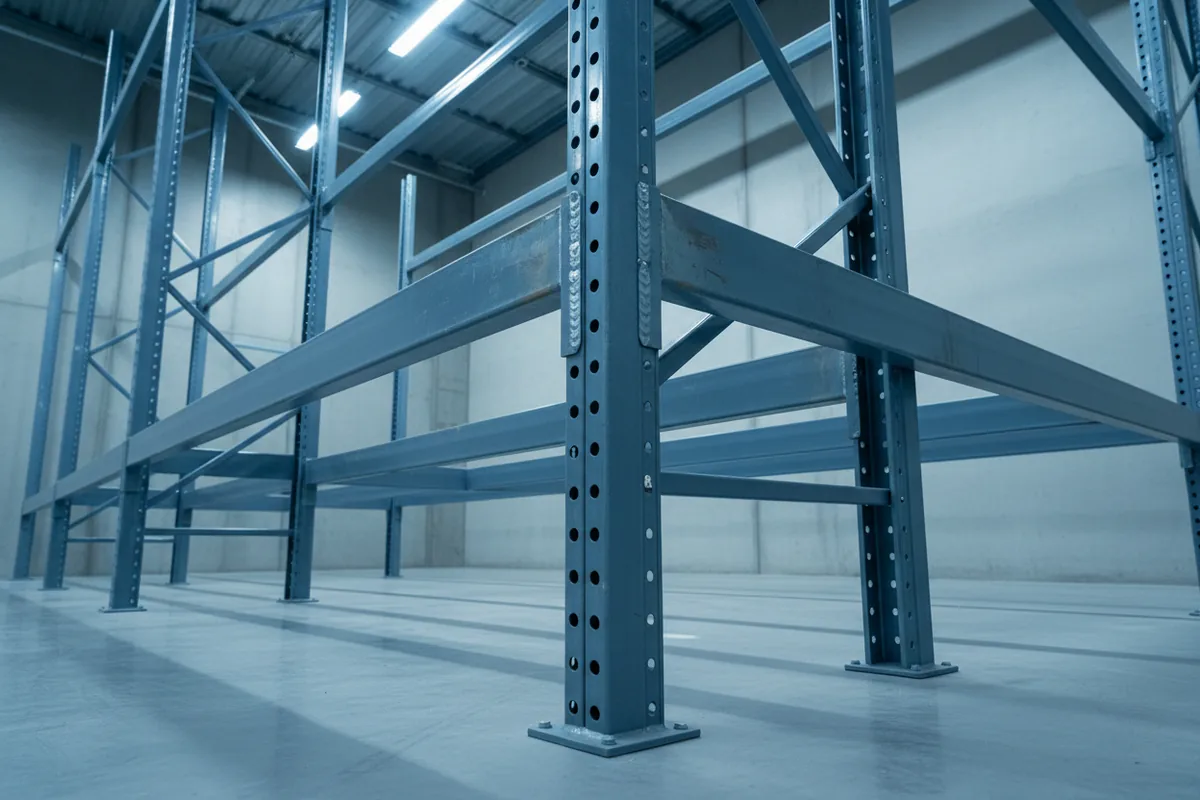
A heavy-duty warehouse rack upright and beam connectors viewed from below.
Immediate answer

Hurt by falling stock or a collapsed rack at work? How these accidents happen, what 29 C.F.R. § 1910.176(b) requires, who may be answerable, and which records matter.

On this page
  1. Key Takeaways
  2. When a Falling Inventory Claim May Be Worth Pursuing
  3. Why the Rack or Stack Fell Matters for Your Claim
  4. Who May Be Responsible for Your Injury
  5. Records That Often Matter After a Rack Collapse or Falling Stock Injury
  6. Injuries and What the Law May Allow in Damages
  7. Why Your State's Law and the Facts of Your Accident Shape the Case
  8. Frequently asked questions
  9. Sources

If stored goods fell on you or a rack collapsed at work, a falling inventory injury claim looks at who besides your employer may be answerable: a site operator that is not your employer, a rack maker or installer, or the employer of a forklift operator. Whether any claim exists turns on the facts of what happened and on your state's law.

Most people facing this kind of injury did not see it coming. One moment you were picking an order, walking an aisle or working beside a stack of pallets, and the next, cartons, bundles or a whole rack section came down. Now there may be a cast, a scan, a hospital stay or a funeral, along with missed paychecks and a quiet, nagging question about whether this was simply bad luck or something someone could have prevented. If you are a family member reading this after a death or a serious injury, the questions are heavier still. This page walks through how falling inventory accidents in warehouses and industrial workplaces happen, what federal safety rules say, who may be answerable by type, and the records that tend to matter.

Key Takeaways

  • A falling inventory case can rest on premises liability, product liability or both. Which one fits depends on whether the problem was how the space was run, how the rack or storage equipment was made or installed, or some combination.
  • Federal workplace safety rules set a baseline. Under 29 C.F.R. § 1910.176(b), storage of material may not create a hazard, and under 29 C.F.R. § 1910.178(l)(1), employers must ensure forklift operators are competent to operate safely. Neither rule, on its own, shows that anyone was at fault.
  • Your relationship to the site matters as much as the accident. A worker employed by the company that runs the facility can stand in a different legal position from a contractor, a temporary worker placed by an agency, a delivery driver or an employee of another company sharing the same building.
  • Limitation periods, fault rules and damages rules differ from state to state. No single national rule decides these cases.
  • Photos of the rack and load, inspection and maintenance records, and facility camera footage often carry the most weight, and they describe a moment that is hard to reconstruct later.
  • A conversation with an attorney can help clarify which legal paths the facts of a particular accident may open.

When a Falling Inventory Claim May Be Worth Pursuing

A premises liability claim generally asks four things: whether the party that controlled the space owed a duty of care to the injured person, whether it breached that duty, whether the breach caused the injury, and whether the injury caused real losses. For someone hurt in a warehouse aisle, premises liability is the part of the law that can hold whoever owned or controlled that space responsible, in some circumstances, for unsafe conditions on it, and each of those four elements is measured against what actually happened to you. The question is rarely just "did something fall?" It is who controlled the aisle, the rack and the stacking practices, and what they knew or should have known.

A separate path may open if the equipment itself was the problem. Product liability is the area of law that addresses injuries caused by a product that was defective in its design, its manufacture or its warnings. A rack, a shelving unit, a beam connector or another storage component could fall within it. A collapse does not prove a defect; the law asks whether a defect existed and whether it caused the harm. If you are wondering whether the rack failed or whether it was overloaded or struck, that distinction may shape which path, if any, fits.

Employment status is often the fact that matters most at the start. A worker employed by the site's operator may face workers' compensation rules that limit or shape a lawsuit against that employer, and those rules differ by state; this page does not state any state's rule. A contractor, a visitor, a temporary worker or an employee of a separate company on the same site may stand differently, because the party that controlled the space was not their employer. Many people in this position write down who hired them, who supervised their daily work, and who ran the building.

The facts that usually matter, then, are where you were, what fell and why, who controlled the space and equipment, and who employed you. Those facts, together with the law of the state where the accident happened, decide whether a claim exists and what it may cover.

Why the Rack or Stack Fell Matters for Your Claim

These accidents usually begin with a load that was no longer stable. Racks can be overloaded beyond what they were built to hold, or damaged by earlier impacts that bent an upright or loosened a beam. Stacks of cartons, bags or bundles can be built too high, left unblocked, or stacked without interlocking, so a small bump or vibration sets them sliding. And in many facilities, a forklift striking a rack upright or catching a pallet edge is the moment a stable load becomes an unstable one. Forklift strikes and crush injuries raise their own questions, and the page on a forklift injury lawyer addresses them more fully.

Federal storage rules speak directly to stacking. Under 29 C.F.R. § 1910.176(b), "storage of material shall not create a hazard," and bags, containers, bundles and similar items stored in tiers "shall be stacked, blocked, interlocked and limited in height so that they are stable and secure against sliding or collapse." In plain words, a workplace covered by this general industry rule is expected to store goods so that the storage itself is not a danger, and tiered stock must be built and held in place so it stays put. For a person hurt by a falling stack, this gives a concrete standard to compare against what the scene looked like: how the stock was stacked, how high, and whether anything held it in place.

Forklift operation is the second federal piece. Under 29 C.F.R. § 1910.178(l)(1), the employer "shall ensure that each powered industrial truck operator is competent to operate a powered industrial truck safely, as demonstrated by the successful completion of the training and evaluation" the regulation specifies, and generally may not permit an employee to operate one, except for training purposes, until that training is complete. The same regulation lists training topics that include "load manipulation, stacking, and unstacking" and "pedestrian traffic in areas where the vehicle will be operated." If a forklift hit the rack that fell on you, the operator's training and evaluation may become part of the picture, and whose employee that operator was may matter as much as what happened.

A standard does not, by itself, show that anyone was at fault. Whether a departure from a rule happened, and whether it caused an injury, depends on the facts. No federal text quoted here sets a rack design or load rating, and this page states none.


Who May Be Responsible for Your Injury

Identifying the right party matters because each one is tied to a different legal theory and, sometimes, to different damages rules. Many injured workers reasonably assume the only question is their own employer. In falling inventory cases, other parties may be in the picture.

The site's operator, when it is not the injured worker's employer, may owe a premises liability duty to keep the space reasonably safe. This often comes up in shared facilities, in staffing arrangements, and when a contractor or driver is hurt in someone else's warehouse or distribution center. If the operator controlled the racking, the stacking practices or the aisles, its conduct may be measured against that duty. For you, the practical question is who actually ran the floor where you were hurt.

If the rack itself gave way, the companies behind it may matter to you. The manufacturer of a rack, shelving unit or storage component may face product liability if the equipment was defective in its design, manufacture or warnings, and an installer may be answerable if the way the rack was assembled or anchored contributed to the collapse. A maintenance or inspection company, if one was hired to look after the racking, may also be in the picture depending on what it was engaged to do. When the rack was installed, by whom, and whether it had been repaired or changed can all point toward these parties.

The employer of a forklift operator whose conduct contributed to the accident may be answerable under agency principles, meaning an employer can be responsible for an employee's conduct on the job, or under ordinary negligence principles if its own training or supervision fell short. When the operator worked for a different company from the injured worker, that relationship becomes especially important.

More than one party may share responsibility. A damaged rack, a high stack and a forklift strike can all be part of the same accident. How responsibility is divided turns on the facts and on state law; a regulation does not by itself establish fault.

Records That Often Matter After a Rack Collapse or Falling Stock Injury

If you were hurt, the records that usually matter include photos and video of the rack, the load and the surrounding scene, taken at or near the time of the accident. Images showing a bent upright, a missing beam lock, a leaning stack or scattered product capture a condition that may be cleaned up, restacked or repaired soon after. That is why injured people and families often gather whatever exists, including photos a coworker took on a phone.

Inspection and maintenance records for the rack or shelving unit can show whether damage had been noticed, reported or repaired, and who was responsible for inspecting the racking, which ties back to who may be answerable. Facility camera footage can show what fell, in what order, and whether a forklift or other equipment was involved. Incident and accident reports prepared by the employer or the site's operator often record the first account of what happened, the names of people present, and any immediate cause noted at the time.

Names and contact information of witnesses matter because coworkers and supervisors who saw the collapse may later change jobs or remember less. Medical records document the injury and treatment from the first visit forward, and they connect the accident to the harm the law asks about.

Workers also have record rights of their own. OSHA's Worker Rights and Protections page states that workers have the right to report an injury or illness and get copies of their medical records, to review records of work-related injuries and illnesses, and to request an OSHA inspection and speak to the inspector. It also states that federal law gives workers the right to work in a safe place and that employers must keep the workplace free from known safety and health hazards.

If you are not sure which of these records exist or who holds them, you can request a case evaluation to talk through the photos, reports and other materials connected to the accident.

Injuries and What the Law May Allow in Damages

Falling inventory accidents can cause fractures, crush injuries, head and spinal injuries, and deep cuts. Some injuries are obvious at the scene; others become clearer over the days and weeks of treatment. This page describes injuries only in general terms and offers no medical guidance.

When a claim against a responsible party succeeds, the law may allow several categories of damages. They can include medical expenses, past and future; lost wages; reduced earning capacity, meaning the loss of the ability to earn what you could have earned before the injury; and pain and suffering. Where a death occurred, a wrongful death claim may be available. Wrongful death is a claim that certain family members or a representative of the person who died may bring when a death was caused by another party's wrongful act or negligence. Who may bring it, and what it may cover, is set by state law.

Damages rules differ by state, including whether caps apply to some categories and how a share of fault assigned to the injured person affects what may be recovered. For a family adding up hospital bills and months without a paycheck, this means the same injury can be treated differently from one state to the next. This page does not estimate the value of any case and makes no prediction of outcome. A running record of treatment, time missed from work, and how daily life has changed reflects the losses the law asks about.

Why Your State's Law and the Facts of Your Accident Shape the Case

The rules that decide these cases come mainly from state law. Premises liability and product liability, defined above, are the two main theories, but each state frames their elements, defenses and limits in its own way.

Fault rules are one example. If you are worried that stepping into an aisle or reaching for a box will be held against you, the answer depends on your state's fault rule. Under comparative fault, what an injured person may recover is reduced, or in some versions barred, in proportion to that person's own share of fault. A smaller number of states use contributory fault, under which an injured person's own negligence can bar recovery.

Deadlines are another. A statute of limitations is the deadline to file a lawsuit. Limitation periods differ by state, and when one starts to run, and whether exceptions apply, can depend on when the injury occurred and who the defendant is; a product claim and a premises claim may be treated differently. Missing the applicable deadline can bar a claim entirely. This national page does not state any state's limitation period.

Who owned or controlled the space, who manufactured or installed the rack, who employed the forklift operator, and who employed the injured worker all affect which rules apply. The same accident in a factory or a warehouse can lead to different paths depending on those facts. A conversation with an attorney who knows the applicable state's law can help untangle which rules govern a particular accident and how the facts line up with them.

Free case evaluation

No Fee Unless We Win Your Case

A free case evaluation is how it starts. Tell us what happened, and we’ll help you understand your options. You pay no fee unless we win your case.

Industrial Injury Law Group

How it works

  1. Call us or request a free case evaluationTell us what happened, in your own words.
  2. Talk through your caseYour options, and what your case may be worth.
  3. No fee unless we winYou pay no attorney fee unless we win your case.
Free case evaluation

Tell Us What Happened

Frequently asked questions

What is a falling inventory injury claim?

It is a claim by a worker or visitor hurt when stored goods, a rack or shelving fell or collapsed. It may rest on premises liability, product liability or both, depending on whether the space, the equipment or both played a part. Whether a claim exists depends on the facts and the applicable state law.

Can I sue if I was hurt by falling merchandise at work?

The answer depends on your employment relationship with the site's operator and on your state's workers' compensation rules, which differ by state. A worker employed by the operator may be limited in suing that employer in some states, while a contractor, visitor or employee of another company on the site may have other options.

What federal safety rules apply to storage and falling inventory?

Under 29 C.F.R. § 1910.176(b), storage of material may not create a hazard, and tiered bags, containers and bundles must be stacked, blocked, interlocked and limited in height so they are stable against sliding or collapse. Under 29 C.F.R. § 1910.178(l)(1), employers must ensure forklift operators are competent to operate safely.

Who may be responsible when a rack or shelving unit collapses?

Possible parties include the site's operator when it is not the injured worker's employer, a rack or shelving manufacturer or installer if the equipment was defective, and the employer of a forklift operator whose conduct contributed. Responsibility may be shared, and who is liable turns on the facts and state law.

What evidence matters most in a falling inventory case?

Records that typically matter include photos and video of the rack, load and scene, inspection and maintenance records, facility camera footage, incident reports, witness names and medical records. Material created close to the time of the accident often shows conditions that are harder to reconstruct later.

What damages may be available after a falling inventory injury?

The law may allow medical expenses, past and future, lost wages, reduced earning capacity and pain and suffering, and wrongful death damages where a death occurred. Caps and fault rules differ by state, and whether damages are available, and in what amount, depends on the facts and the applicable state law.

How long do I have to file a falling inventory injury lawsuit?

The statute of limitations differs by state, and when it starts to run can depend on when the injury occurred and who the defendant is. No single national deadline applies, and missing the applicable deadline can bar a claim entirely. A conversation with an attorney can help identify which deadline governs.

Does an OSHA violation prove the property owner was negligent?

No. A departure from a rule such as 29 C.F.R. § 1910.176(b) or 29 C.F.R. § 1910.178(l)(1) may be relevant evidence in a civil case, but it does not by itself establish negligence or that it caused the injury. That depends on the facts and the applicable state law.

Sources

Statutes, regulations and court sources

  1. 0129 C.F.R. § 1910.176 — Handling materials—general (eCFR) · Electronic Code of Federal Regulations
  2. 0229 C.F.R. § 1910.178 — Powered industrial trucks (eCFR) · Electronic Code of Federal Regulations

Other sources

  1. 03Worker Rights and Protections — Occupational Safety and Health Administration, U.S. Department of Labor · Occupational Safety and Health Administration